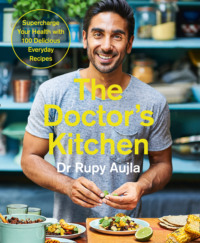
Читать книгу: «The Doctor’s Kitchen»


Copyright
Thorsons
An imprint of HarperCollinsPublishers
1 London Bridge Street
London SE1 9GF
www.harpercollins.co.uk
This edition published by Thorsons 2017
FIRST EDITION
Text © Dr Rupy Aujla 2017
Food photography © Faith Mason 2017
Cover layout design ©HarperCollinsPublishers Ltd 2017
Cover photograph © Faith Mason 2017
A catalogue record of this book is available from the British Library
Dr Rupy Aujla asserts the moral right to be identified as the author of this work
All rights reserved under International and Pan-American Copyright Conventions. By payment of the required fees, you have been granted the nonexclusive, non-transferable right to access and read the text of this e-book on screen. No part of this text may be reproduced, transmitted, downloaded, decompiled, reverse engineered, or stored in or introduced into any information storage retrieval system, in any form or by any means, whether electronic or mechanical, now known or hereinafter invented, without the express written permission of HarperCollins e-books.
While the author of this work has made every effort to ensure that the information contained in this book is as accurate and up-to-date as possible at the time of publication, medical and pharmaceutical knowledge is constantly changing and the application of it to particular circumstances depends on many factors. Therefore it is recommended that readers always consult a qualified medical specialist for individual advice. This book should not be used as an alternative to seeking specialist medical advice, which should be sought before any action is taken. The author and publishers cannot be held responsible for any errors and omissions that may be found in the text, or any actions that may be taken by a reader as a result of any reliance on the information contained in the text which is taken entirely at the reader’s own risk.
Find out about HarperCollins and the environment at www.harpercollins.co.uk/green
Source ISBN 9780008239336
Ebook Edition © December 2017 ISBN: 9780008239343
Version 2017-12-20
Instagram @doctors_kitchen
Twitter @doctors_kitchen
Facebook @thedoctorskitchen
www.thedoctorskitchen.com
Dedication
To my mother. Without her love and guidance I would not be the doctor I am today … or a cook. I owe her everything.

Contents
Cover
Title Page
Copyright
Dedication
Introduction: Food as Medicine
1 Breakfast
2 Sides and small plates
3 Mains
4 Desserts
5 Spices, dressings and pastes
References
Index of searchable terms
Acknowledgements
About the Publisher

Introduction: Food as Medicine

Hi, I’m Rupy. I love practising medicine as a doctor in the NHS and I also have a real passion for showing my patients and colleagues the health benefits of food.
I believe what you choose to put on your plate is the most important health intervention anyone can make.
Imagine a world where everybody appreciates the true impact of diet and lifestyle on disease and is empowered to make permanent, simple changes. Some of the most prevalent illnesses can be alleviated and managed by making educated modifications to what we eat and how we live. We have been conditioned to believe that the sole purpose of going to the doctor is to get prescriptions and pills to cure us when we are sick, but my aspiration is to teach patients to take control of their health and prevent illness from occurring in the first place by using a lifestyle medicine approach.
Every day, we make choices that either positively or negatively impact our bodies. But I haven’t written this book to scare you into a restrictive and bland way of life. I’m here to welcome you on a journey of colour, flavour and cultures that makes healthy eating delicious and accessible to everyone. I want to introduce you to the medicinal effects of food, while showing you how it can be vibrant and easy to slot into a hectic lifestyle.
As a GP in the NHS, I see hundreds of patients every week. From my desk I witness the outcome of poor diet and lifestyle time and time again: high blood pressure, low mood, chronic pain, diabetes, cognitive decline. The reality is, we are not taught the immense value of nutrition in our communities, or even as students at medical school. Addressing this problem will combat some of the most common and preventable illnesses in society.
I’m still practising as a doctor, so I understand that a busy working life and a lack of cooking skills have an impact on what we choose to eat. If we learn about the importance of food, we can stop it from slipping down our list of priorities. I’m here to help you navigate those roadblocks and motivate you to experiment with ingredients that have amazing benefits. You’ll discover the health qualities of everyday ingredients and discover the tools to cook delicious meals all the time.
After spending 15 years training in medicine, learning about human biochemistry and the effects of disease, my attention is now focused on the study of nutrition, the impact of food on our genes, our brain and our gut, and the power of a healthy lifestyle. As well as explaining the science, I aim to educate and inspire you to want to cook. You’ll realise why I believe a good understanding of nutrition is essential for everybody, at all stages of life. The foundation for your health journey starts on your plate and it’s more powerful than any pill I can prescribe.
The foundation for your health journey starts on your plate and it’s more powerful than any pill I can prescribe.
Nature has some incredible foods that ancient cultures have appreciated for thousands of years. Furthermore, the use of spices and herbs adds a wealth of aroma, warmth and enjoyment to cooking, and the intricate chemistry of these ingredients has a profound effect on our bodies. I hope to persuade you that adding these types of foods to your diet is fundamental to feeling energetic and youthful long into your life.
I’m here to smash the preconception that a healthy way of life is expensive and shed the pretence that any single book can be a ‘one-stop shop’ to changing your entire life. Today is simply the starting point. I will guide you through living-well principles so that you can create a plan of change yourself (if you need one at all) that suits your needs, motivation and lifestyle. Everyone stands to benefit from the recipes and tips in this book.
This is my unbiased, current and evidence-based medical opinion on healthy eating. Today’s ‘wellness’ industry can lack scientific credibility and has occasionally spread misinformation that is harmful to your health. The overwhelming, conflicting messages can be difficult to navigate, especially to those who are just starting out. It’s time we moved away from cherry-picking strands of evidence to support faddy diets and finally provide everyone with the wealth of knowledge available. Using science and my clinical perspective as guiding principles, this book gives you the delicious recipes and life tools that you need to feel fantastic and stay well.
You don’t need to know the fancy chemistry, the correct proportions of ‘macros’ or how to use calorie counters and scales. The majority of us just need to stick to sound diet and lifestyle principles (that I’ll introduce you to in this book), and our health will flourish.
Expect to feel happier with your weight, calmer in your mind and, overall, more content knowing that the changes you make are sustainable for life. The ability to reverse disease, improve mental health and feel fantastic has never tasted so good.

My story

Food and medicine go hand in hand and sometimes changing our diet can be the best intervention.
At the age of 12, I witnessed my mother take control of her medical condition that had baffled multiple physicians. She used to suffer random anaphylaxis attacks; the worst form of allergy where your airway can close and your blood pressure drops. The attacks are life threatening and require treatment with an adrenaline shot. After undergoing a barrage of medical tests to find a cause, none was found. As a last resort, her doctors recommended lifelong allergy medications, which unfortunately have a range of side effects. These included crushing fatigue and intolerable nausea but, worst of all, they didn’t completely eradicate the attacks. The daily unease of potentially having an episode was incredibly stressful for her.
Not content with being reliant on drugs that weren’t completely working, she decided to make radical changes to her daily life. Her Indian upbringing had instilled in her the value of food. As a trained lawyer, she used her research skills and analytical approach to examine the scientific literature and create a plan of action. I watched her completely overhaul her diet and lifestyle, while simultaneously running her businesses, our household and raising two demanding children. Her daily ‘prescription’ included a wholefoods diet packed with vegetables, good sleep patterns, exercise and meditation. She became more confident, stronger and gradually came off all medications with the support of her doctors. Thankfully, she has never needed to use an adrenaline shot again. This was my earliest introduction to the power of ‘food as medicine’.
My mother’s experience drove me to want to be a doctor. I worked hard to earn myself a place at Imperial College London. I started medical school with the understanding and strong belief that food could be as powerful as pharmaceuticals. However, despite being intrigued by ‘alternative therapies’ at a young age, I wanted to immerse myself in conventional medical training. The body has always fascinated me. Learning the anatomy, biochemistry and foundations of how we function was an incredible experience, but noticeably lacking from the curricula was an emphasis on nutrition. What we put into our bodies on a daily basis is just as important as medication, but I wasn’t taught to appreciate the power of lifestyle and food. Only when I became ill myself would I remember what inspired me to become a doctor in the first place.
After medical school, I experienced two gruelling years as a junior doctor in central London hospitals. The stress and responsibility on a newly trained medic is unfathomable. Within two weeks of qualifying, I found myself wandering the corridors of a hospital alone, at night, armed with nothing but a stethoscope and two bleeps, providing the sole junior cover for medical wards. No amount of book smart prepares you for hospital life.
I began to realise how self-sacrificing healthcare workers are for the service. We eat poorly, work awkward hours and the stress is intense. Our environment often dictates what we can eat, and in the interest of convenience, the choice is often a poor one. It’s no wonder that on average our lives are shorter, we’re more likely to suffer mental-health issues and obesity is greater among us than the general population. We are certainly not pillars of good health to look up to!

I remember vividly, in the last few hours of my weekend shift (after working for 12 consecutive days), I noticed I was having palpitations. I asked my registrar to check my pulse and within the hour I was admitted to the acute medical unit. They found I was in fast atrial fibrillation (AF), a condition where your heart beats irregularly, inefficiently and, in my case, very fast. Up to 200 beats per minute. Luckily, I didn’t require emergency treatment (a cardioversion, where an electronic shock is used to revert the heart rhythm back to a normal one), but this episode of atrial fibrillation was to be the first of many over the next two years.
For the next year I focused on my lifestyle and replaced elements in my diet, all while juggling the hectic job of being a junior doctor.
I went on to suffer AF episodes weekly throughout my junior doctor training. I would often have to take medication to revert my heart rhythm, which had some unpleasant side effects. Despite these episodes I continued to work – nothing was going to stand in the way of me being a doctor. My condition was rare in someone of my age, so I was a very unusual case. I underwent multiple investigations to find a cause; stress tests, ECGs, cardiac MRIs, bloods, electrophysiology testing, echocardiograms, none of which revealed a reason for it. According to my doctors I was otherwise in ‘great health’.
After discussing my case with some respected cardiologists, I was offered a choice of lifelong medication or a relatively new intervention called an ablation, a procedure where an area near the heart is ‘burnt’ using an accurate fine laser. It carries some serious potential complications including stroke, perforation to the heart and death. Despite the seriousness of the condition, I could control the episodes with high-dose drugs while I decided whether to opt for the ablation. With the blessing of my cardiologists, I followed in the footsteps of my mother and self-experimented with some alternatives while I weighed up the option of having a procedure.
For the next year I focused on my lifestyle and replaced elements in my diet, all while juggling the hectic job of being a junior doctor. I read everything I could on associations between diet and my condition, and entered a new world of wellness. Out went cereals and toast for breakfast, in came dark green leafy vegetables with miso, nuts and seeds. Gone were the soggy sandwiches at lunch: I never left for work without my Tupperware brimming with cruciferous vegetables cooked in delicious spices and tasty fats. I began to realise the impact of stress on my heart, so I started meditating. I appreciated the importance of sleep, so I made sure (when I wasn’t on night shifts!) I was tucked up on time. More importantly, I never sacrificed my enjoyment for life. I wasn’t to be owned or dictated to by a condition. I wanted to take control of it … if I could.
My AF episodes reduced from one or two a week to zero.
On discussing my experiences with cardiologists, general physicians and lifestyle medicine practitioners it was hard to retrospectively pinpoint exactly what had happened to make the AF episodes stop. My increased vegetable intake likely replaced electrolytes and vitamins in my cells that were lacking. Eating cruciferous vegetables on a daily basis flooded my body with plant chemicals that we now understand have profound effects on DNA. I continued to drink alcohol on occasion, but I removed sugary drinks completely. My added dietary fibre is likely to have improved the functioning of my gut bacteria, which can lower inflammation via a variety of chemical pathways. I potentially attenuated the stress in my life triggered by poor sleep and a demanding job by increasing essential fatty acids in my food and practising mindfulness.
Rather than focusing on ridding myself of a condition, I had concentrated my efforts on providing my body with the best environment I could. I worked at being well in mind and body as much as possible. The complex interplay of food on our physiology, our DNA and even the microbes residing in our gut is a universe of science in itself. Without delving further into the analysis, what my experience reaffirmed for me was the immense power of lifestyle and the incredible ability of the body to ‘self heal’ if given the correct nutrition.
My family’s story, my personal story and those of the thousands of patients across the world who have managed to reverse and prevent disease using lifestyle medicine is my motivation for writing this book. This is my opportunity to share the information I’ve gleaned on my journey so far, and the journey I am still on.

Medical experience

My GP training was brilliant. I was experienced in multiple medical specialities, equipped to diagnose and skilled at providing emotional support. However, I was horribly inept at addressing the root cause of the biggest problems facing primary care across the globe: lifestyle-related illness, including diabetes, obesity and heart disease.
Beyond the ineffective recommendations of a low-fat, low-calorie diet we propose for weight loss and cholesterol control, there are no tailored diets for conditions. From my personal experience, I knew there was much more to food than just a collection of macronutrients and the simplistic view that we eat for energy purposes. I was ill equipped to give advice because nutrition training at medical school was lacklustre. So, to help myself and my patients, I decided to do the research.
I scoured journals, watched presentations, attended international nutrition conferences and began to unravel a magnitude of clinical evidence highlighting the impact of food on disease. I read thousands of papers, studies, editorials and books dedicated to nutritional medicine, and was shocked that medical schools cover this entire body of evidence in just a few uninspiring lectures.
I began to start my consultations by enquiring what patients would eat on a daily basis: how do you start your day? What time do you eat at night? Do you snack incessantly after meals? My clinics were more engaging and my patients loved the emphasis on nutrition. Convincing them that the key to longevity and good health was accessible using delicious recipes that I would tailor to their lifestyle, was motivational. I was able to inspire people to take control of their conditions through food in a way I hadn’t done before with just medications. I began to focus on promoting wellness habits, rather than just diagnosing disease.
My diabetic patients would improve their blood-sugar control, arthritic patients would lose weight and become more active and even those who had no significant change in their body composition felt better in themselves. Realising that I could combine my passion for recipe creating and flavour with a career dedicated to healing people was a revelation for me.
But, I couldn’t keep writing recipes for every patient in my consulting room. I was seeing over 40 patients a day, plus home visits, plus paperwork and prescriptions. It was just not sustainable. And that’s when the idea of ‘The Doctor’s Kitchen’ was born: a multi-platform resource inspiring patients to appreciate the beauty of food and the medicinal effects of eating well. A YouTube channel, Instagram account and blog where I could confidently direct patients to gain evidence-based information, lend my perspective on healthy eating and teach them how to cook their way to health.

An accumulation of poor dietary and lifestyle choices often leads patients to the emergency room and it’s partly my experience in A&E that’s brought me on this journey. It’s often a surprise to patients when their emergency doctor starts enquiring about their dietary habits, but acute care and chronic disease are related in many ways. Sometimes it’s a culmination of factors that results in tragedies like a heart attack, stroke or even a nasty skin infection that’s linked to poor diabetes control. Separating diet and lifestyle from acute medicine blinds us to the solution for our overburdened healthcare systems. I truly believe the answer lies in the quality of our community care where food plays a pivotal role. Practising good nutrition and lifestyle medicine means we can pre-empt disease rather than react to it in the emergency department.
Plates over pills

I want to make this clear so there is no doubt on this statement: food is medicine. It’s not my opinion, I’m not saying it because it’s fashionable and trendy, it’s quite frankly a fact.
We have a library of studies that demonstrate the effectiveness of nutritional interventions on lifestyle diseases that are society’s biggest killers. My job is to give you a flavour of the science and encourage you to value the importance of mealtimes. We need to understand that what we put into our bodies dictates how they function and deal with illness.
When I refer to food as ‘medicine’ I’m not talking about simply using ‘natural medications’ or food supplements instead of pharmaceuticals. I don’t advocate swapping your cholesterol-lowering drugs for a bag of nuts if you have abnormal biochemistry, for example. A traditional pharmaceutical model of healthcare where symptoms are treated individually is not the answer to our Western healthcare woes. It’s important that we don’t look at food like a ‘pill’. No magic bullet in the form of turmeric supplements, green tea shots or pomegranate juice exists, I’m afraid.
A complex interplay of diet, sleep, exercise and stress underlies the root cause of disease. This relationship between our environment and human biochemistry is alien to most conventionally trained doctors like myself, and we must redress the balance.1 The reason why I’m so nutrition focused and I believe in the power of ‘plates over pills’ is because it’s the easiest, most cost-effective and evidence-based method of preventing and reversing disease. The effect of a Mediterranean diet on cancer,2 diabetes3 and cardiovascular risk4,5 is a simple example of this statement in action. By improving patients’ diets we can drastically reduce the likelihood of all three common debilitating conditions to a far greater degree than any number of pills or surgical interventions.2,5
This is the direction in which medicine should be heading. Nutrition, along with other lifestyle factors, is where we need to concentrate our studies and resources. I’ve come across enough research and had enough personal experience in clinic with patients to judge that nutritional medicine is not a fringe concept. Dietary strategies are being trialled to reverse diabetes6,7 and even address the tricky and controversial subject of dementia.8 The added advantage of taking a nutritional approach to tackling disease is the beneficial upshot of eating well, compared to the many side effects associated with medications. I’m always plagued with guilt whenever a patient suffers an adverse side effect from medication, of which there are many examples, from swollen legs as a result of blood-pressure drugs to an increased risk of fractures related to antacid medications.9
In general practice there is a clear need for medications, but where a cost-effective, evidence-based alternative exists and has a plausible mechanism of action I would encourage us as a scientific community to investigate and embrace it. I urge physicians and patients to explore the multitude of other treatment methods before we succumb to medications for chronic conditions. This needs to happen. Healthcare systems across the Western world are crumbling under the weight of growing financial demands10,11 and no matter how much we invest in novel therapeutics we must always start with simple diet and lifestyle measures. I am here to empower you.
Discovering the plethora of studies demonstrating how effective lifestyle interventions are was revolutionary to me. In fact, our current guidelines for some of the most common lifestyle-related diseases reflect this. The first step to tackling diabetes, hypertension and high cholesterol according to the National Institute for Health and Care Excellence is ‘Lifestyle Change’.12,13,14 Yet most doctors wouldn’t know where to start when it comes to giving dietary advice and this poor ability to motivate our patients to embrace a healthy outlook is reflected by how over-medicated we are as a population. I’m convinced that our indulgence in pills over plates is a product of poor nutrition training in the medical curricula, which still stands at less than 20 hours of teaching during a five-year medical degree.15,16 If medical students were encouraged to learn more about the impact of lifestyle, we’d have a much healthier nation.17,18 Our lack of knowledge, short consultation times and patient demand for a quick fix creates a scenario where the easiest option is to provide pharmaceuticals. But, the first thing we should be asking before reaching for that prescription pad is, ‘What are you eating?’
Our population is plagued by obesity, stress and cardiovascular disease, and the prevalence of these conditions is rising fast.19 The answer to our epidemic of chronic disease is staring at us from the grocery aisles. I want to prevent the need for invasive devices, powerful prescription medications or painful procedures and offer a delightful alternative: eating fresh produce, colourful plants and igniting a passion for flavour! Best of all, the creativity and pleasure of preparing and eating good food is attainable for everyone.
The answer to our epidemic of chronic disease is staring at us from the grocery aisles.
Rather than using this section to bombard you with myriad papers, details of trials and large studies to prove a point, I’ve speckled all the recipes with bite-sized chunks of information to give you a sense of this interesting research. I’ve also included amongst the recipes some further information on my favourite ingredients and their amazing health benefits (see here). You might expect ‘health food’ to be bland and lacking variety, but I’m going to show you it’s the exact opposite. Flavour as well as function is what I’m passionate about, and diversity of ingredients is essential. Our health depends on it.
Health is not a privilege

As a GP in the NHS, I’m passionate about accessible healthcare for everyone. I am fully aware that people’s circumstances are different and there is a perception that using fresh produce and eating well is expensive and attainable only for the privileged. It doesn’t have to be.
Well-branded supplements, yoga on top of luxury hotels and eye-wateringly expensive turmeric lattes … You’d be forgiven for thinking a ‘healthy’ life was akin to an exclusive, invite-only club. Most of my colleagues expect me to cynically dismiss this trend. After all, it’s damaging to people’s self-esteem, it promotes an unhealthy attitude towards body image and excludes those in society that are the most vulnerable. But, actually, I believe we need to think beyond a ‘them’ and ‘us’ attitude. Despite its many flaws and shortcomings, the wellness industry has done an unbelievable job of motivating a generation of millennials to drink green smoothies, include kale as a staple in their shopping baskets, and exercise. No number of doctor visits could create such impressive behavioural change!
Without the allure of healthy living promoted by aspirational figures, ‘food in medicine’ wouldn’t have gained such attention in recent years. So, while doctors and health professionals can be damning of the industry, I’m grateful for the spotlight and want to know, where we can steer this trend in the future?
My aim is to make healthy eating inclusive and accessible to all. I personally witness a sense of elitism around eating well and many of my patients associate health with wealth. I’m constantly challenged in the consulting room by patients who believe they don’t have the time or money for a good diet. I see patients from all walks of life and let me share this with you: just because you are well off doesn’t automatically make you healthy, even if you can afford expensive ingredients.
Forget all of your preconceptions of ‘wellness’.
The most nutritionally dense foods are the least expensive on the shelf. These are the real ‘superfoods’ available in supermarkets, and that’s why I focus on them. Once you understand the principles of eating well, health doesn’t become a privilege. It’s a choice no more expensive than the average household can afford.
The most nutritionally dense foods are the least expensive on the shelf.
I’m proud to work with a lottery-funded community kitchen, Made in Hackney, to dispel these myths. We inform people about where to get local organic produce, veg drop boxes and, ultimately, how to use wholesome ingredients in our daily life cheaply and efficiently. As the only doctor in the organisation, I lend a clinical perspective to the kitchen sessions. It’s humbling to have the opportunity to explore people’s experiences of food in medicine and break the cycle of ‘can’t cook, won’t cook’ attitudes.

Think of the repercussions for public health if everybody nationwide had access to simple nutritional advice and was taught the fundamentals of healthy living? Healthy eating is attainable whatever your background. This isn’t an exclusive club; it’s how we shape the future of wellness.
Why I eat ‘plant-focused’

On social media people often mistake me for a vegetarian or vegan because I get so excitable about vegetables. I do actually eat all types of meat and fish but I focus my diet around plants.
Rest assured there is logical reasoning underpinning my enthusiasm for chicory, cabbages and – of course – the greens! Abundant in vitamins and minerals, everybody generally knows they’re ‘good for us’, but the story goes a lot deeper.
Phytochemicals, the chemicals found in plants, are another explanation for the incredible health benefits of fruits and vegetables.20 These are what give plants their pigment, smell and, importantly, flavour.21 It’s the study of these chemicals that ignited my passion for nutritional medicine. A number of research papers look at their effect on inflammation,22 bone health23 and even cancer.24 We have only scratched the surface when it comes to investigating just how influential these thousands of bioactive compounds are to human health. But, looking at the associations between food and disease, the positive impact of diets largely based on plants and whole foods is indisputable.25 This is why they make up the bulk of my daily plate and why they should feature heavily on yours, too.
Eat mostly plants and you’ll stand a better chance at living a healthier, more vibrant and fulfilling life, free of disease.
These compounds exist in a multitude of produce that is commonplace in grocery stores nationwide. Everything from a simple carrot to your basic apple is brimming with phytochemicals like quercetin and carotene.26 These simple, affordable and accessible ingredients are key to good health. What’s more, eating plates of a variety of colourful plants is the easiest way to guarantee a complete range of these phytochemicals,27 which is why my dishes appear so vibrant. Using a multitude of herbs and spices (which have their own health benefits) to complement the ingredients is an easy undertaking for a home cook once you know how.
Having sifted through piles of studies involving thousands of people (followed up for years) and experiments examining the biological mechanisms behind the health-promoting effect of food, I can tell you the evidence is convincing. You can lower your risk of stroke, cancer and heart disease by increasing your fruit and vegetable intake.28,25,29,30 Eat mostly plants and you’ll stand a better chance at living a healthier, more vibrant and fulfilling life, free of disease.
I enjoy animal protein of all varieties – fish, poultry, chicken, game and beef – about once or twice a week. Animal products are an easy and delicious source of complete proteins. Key micronutrients such as zinc and vitamin B12 are nutritional qualities very hard to obtain in purely plant-based diets.31 But, I see meat and animal products as a luxury item in the same way our ancestors would have treated them.32,33
On the subject of meat, I do have concerns about the harmful effects of cheaper mass-produced livestock on our health and the environment. On balance, a stressed, improperly reared animal is not likely to be good for us despite the benefits of convenient protein and nutrients. The type of feed, use of medications and the space an animal has been allowed to roam in all have an impact on their health and can negatively impact ours.34
The most well-studied diet we have access to has examined the eating habits of thousands of patients over decades. That is the Mediterranean diet. I am unapologetic for it not being a new, sexy, alternative eating plan that will grab headlines. Instead, it’s solid, evidence-based nutritional advice about how the majority of us would benefit from eating.35 It’s a launch-pad to start a healthy lifestyle journey, I know it’s safe and … it’s actually quite vegetarian! It doesn’t mean piles of pasta, bread and quick-releasing carbohydrates. It focuses on plant-based sources of protein and fibre, such as nuts and legumes, good-quality fat and a limit on meat intake.36
Eating based on the principles of a Mediterranean diet is a good starting point, and is one I personally follow. For these science-grounded arguments, I think focusing meals around plants is a good, well-established entry point for most people.
Instead of pushing a particular dietary dogma I want to encourage you to choose a fitter lifestyle by tempting your taste buds rather than making you eat vegetables because you feel you ought to. This way of eating doesn’t have to be boring. I’m using the principles of this diet to create enticing multi-ethnic dishes that you can tweak according to your preferences. This journey is not limited in its culinary scope and I hope to show you why it’s also medicinal.

Plant-based protein
As I eat a largely plant-based diet I’m all too familiar with the question, ‘So where do you get your protein from?’ It’s imperative to bring attention to all the amazing sources of plant-based protein available to us. A more pressing public health concern is actually the lack of nutrient density in our diets, not to mention a lack of fibre. Fortunately, plants that are high in protein also have a large amount of fibre and a wealth of other health-promoting plant chemicals. I still enjoy meat and fish, but the majority of my protein comes from a selection of these wonderfully delicious plant sources. Here are some of my favourites.


Health is in the gut of the beholder

I want to take you on a journey through recent scientific discoveries in nutrition that are shaping our knowledge of food in medicine. We could not start anywhere more exciting than with our digestive system.
Despite the exhausting and confusing gut-health messages in the media, the science behind our microbiome (the population of microbes that live in or around the body) is compelling. Studies looking at the microbiome have accelerated over the last decade and doctors are calling it ‘the forgotten organ’.37
The trillions of microbes (including fungi, bacteria and viruses) largely concentrated in our colon are thought to protect us from infections,38 break down molecules of food,39 create neurotransmitters and even alter our immune system.40,41 These microbes could impact diseases as far-ranging as dementia42 and diabetes.43 Neurologists, endocrinologists and psychiatrists are all looking at gut-focused treatments for a range of conditions we never thought were related. Even critical-care specialists who work in intensive care are getting involved in the conversation about how the gut impacts treatment of the sickest patients in hospital.44
The hype is real. Gut health is very important and the current discussion in medicine is going far beyond the expensive yoghurt drinks on supermarket shelves. Rather than a fad, I see the popularity of foods to help our microbiome as a return to traditional methods of eating that our ancestors developed. And there’s evidence for this across all cultural backgrounds. In Japan, pickled ginger is consumed with sushi and miso broth is prepared before large meals. Indians drink fermented yoghurt-based drinks (‘lassi’) and eat a range of pickles with curries. Middle Easterners enjoy kefir, Nordics have smörgåsgurka and Koreans love their kimchi. Spotting a trend? Fermented foods have a long, well-established history throughout different societies’ eating habits, but a lot has changed in Western diets.
Food just doesn’t have the same qualities it used to. We pasteurise, radiate and add a ton of additives to processed foods to make them sterile for convenience and shelf life. All of which have been shown to negatively impact the microbiome.45
This concept of bacteria being beneficial is alien to a lot of people because we’re taught to think of them as harmful. But the vast majority of bacteria that live in our body are performing vital functions that allow us to maintain our health. These bacteria are in constant communication with our own cells and it’s important we look after them. I want to encourage you to eat foods that protect and boost your microbiome while introducing bacteria back into your diet.
Eating a diet that nurtures our microbiome is what the current research lends itself toward, but that does not necessarily mean you need to consume expensive supplements and tinctures. Instead, here are some evidence-based and safe dietary interventions to improve your gut health … deliciously!
Eating a diet that nurtures our microbiome is what the current research lends itself toward, but that does not necessarily mean you need to consume expensive supplements and tinctures.
• Prebiotic foods are where the power is! These are specialised types of fibre that are indigestible by the human intestine, but our microbes are able to break them down. Prebiotic fibres essentially feed our microbes and keep them healthy. Not only are they cheap and accessible, they bring a wealth of different flavours and textures to a meal. Jerusalem artichokes, asparagus stem, flax, chicory, wholegrains and pulses are great examples of fibre-rich foods your bugs and taste buds will love, and this book is full of examples of how to get them into your diet. I make everything from stews, meatballs and roasts from these ingredients. This ‘health’ food is delicious and easy to incorporate into your way of eating. Plus, by generally increasing all types of fibre, we can potentially reduce the incidence of cancers, cardiovascular disease and inflammation of the bowel.46

• Probiotic foods taste delicious and are a natural way of introducing live bacteria into your body. Despite the popularity of probiotic capsules and powders it’s important to remember that none of these products is created equal. It’s true that some research has shown benefits for urinary-tract disorders47 and irritable bowel,48 but the study of which bugs can potentially impact a condition is still very much in its infancy.49,50
For now, I encourage experimenting with different ingredients like traditionally prepared kimchi, sauerkrauts and probiotic yoghurts that are full of different strains of bacteria that may have benefits.51,52,53 Look for unpasteurised varieties usually found in the fridge section of supermarkets. Experiment by folding them through salads or simply adding them to the side of a dish as a garnish. They can complement the simplest of dishes and add another dimension of flavour.
I see the popularity of foods to help our microbiome as a return to traditional methods of eating …
• Polyphenol-rich foods like cacao, dark green leafy vegetables, beetroot and green tea are richly coloured and intensely flavoured ingredients that bring a host of benefits to your body.54 Polyphenols are chemicals we find in plants of which there are literally thousands. Some of them have been shown to improve the gut lining, encourage growth of microbe patterns that are beneficial as well as have other advantages to general health. My recipes are designed to incorporate as many different polyphenol-rich foods as possible.
• Spice your food. Turmeric, cumin, sumac, cinnamon and caraway are just some of the ingredients that improve the aroma and taste of foods, but spices in general are another source of polyphenols. We’ll talk more about them in the Medicinal Spices section (see here), but for now consider that the inclusion of these fabulous ingredients could potentially have positive effects on your gut bugs by reducing inflammation.55
• A varied diet is key. Your microbes thrive on new, interesting foods, which is why eating seasonally, for example, may encourage you to change things up throughout the year. We want to make sure your microbes are not bored with having the same meals and studies suggest they tend to favour diversity!56,57 There appears to be an improvement in the range of gut bacteria populations when a variety of foods are consumed, so here’s yet another reason to try out some gorgeous, colourful recipes and mix things up.
• Raw foods. I’m not a raw foodist, nor do I advocate a completely raw diet. And, contrary to popular belief, cooking doesn’t destroy all the micronutrients in foods. Sometimes, cooking can actually increase the availability of phytochemicals,58 like in the case of tomatoes59 and broccoli.60 But, having some raw foods in your diet like celery, kohlrabi or radicchio is great for the bugs. It makes another argument for not overcooking your vegetables and keeping a little more texture to your food, too. Nobody likes overcooked sprouts!
When it comes to a holistic approach of how to look after our microbiomes there are some other suggestions outside of our diets that I encourage patients to think about as well.
• Avoid antibiotics. Your doctor is trained to recognise and prescribe these when there is a clear need for them, but far too often we see them used inappropriately.61 Antibiotic medications indiscriminately remove large proportions of bacteria including the beneficial types that are good for us,62 so I always encourage a reserved attitude to using and requesting them. You are more likely to convince your doctor to hand them over inappropriately by pressuring them, than if you trust their pragmatic and informed decision.
The Royal Colleges of medicine and editors of medical journals are very aware of the growing problem of antibiotic resistance.63 The huge impact on our gut microbe population64–67 is another reason why the medical community is trying very hard to reduce antibiotic use. Our microbiome is integral to health and antibiotics have far-reaching implications that we are just beginning to realise the magnitude of. So, for now, trust your doctor’s opinion and keep in mind that while you’re on antibiotics it’s even more important to follow my suggestions to keep your microbiome as nurtured as possible.
• Refined carbohydrates, sugars and sweeteners all have a number of links with poor health outcomes. Their effect on your microbiome is an addition to the growing list. I would exercise caution for any ‘diet’ versions of popular drinks and any foods with synthetic sweeteners as they can adversely affect your microbes.68 I still use a little sugar in recipes as an ingredient to heighten flavour and taste because it’s not a bad thing when used sparingly. But there are clear disadvantages to consuming it in excess, and indulgence will affect your microbiome population for the worse.69
• Exercise, laughter and mindfulness are not what you’d typically expect on a conventionally trained doctor’s prescription pad, but it’s definitely on mine! As well as the wealth of positive effects on mental health and wellbeing, daily meditation and exercise may also have a positive impact on the microbiome.70 You don’t need to wear fluorescent leggings and stare blankly into the abyss. Mindfulness is any action that quietens your inner thoughts and allows active mental rest. Try a guided meditation app, breathing exercises or simply gardening as a way of releasing inner tension and letting the mind relax.
The science examining our microbiome is accelerating at an incredible pace. I’m sure we will learn more in the coming years about how to nurture this inner population that is inseparable from our wellbeing. I truly believe that future approaches to medicine will involve a significant appreciation for ‘gut health’. My recipes will show you how to keep your gut bugs happy, which will ultimately have a wealth of good effects for you.
I’ve written more about these lifestyle changes on my website: www.thedoctorskitchen.com
Fibre champions
We need a greater awareness of where we can get fibre into our diets, and these are some of my absolute favourite fibre-rich ingredients. The official recommendation is at least 30g of fibre per day, but I see that amount as the bare minimum.


Бесплатный фрагмент закончился.