Читать книгу: «House of Echoes»


Copyright
Published by HarperCollinsPublishers Ltd
1 London Bridge Street
London SE1 9GF
www.harpercollins.co.uk
First published in Great Britain by HarperCollinsPublishers 1996 This edition published by HarperCollinsPublishers 2016
Copyright © Barbara Erskine 1996
Cover layout design © HarperCollinsPublishers Ltd 2016
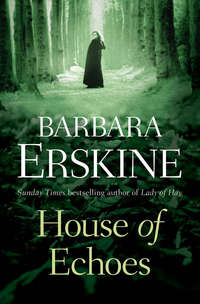
Cover photographs © PhotoAlto/Frederic Cirou/Getty Images (leaves); Colin New/Trevillion Images (woman & trees).
Barbara Erskine asserts the moral right to be identified as the author of this work.
A catalogue copy of this book is available from the British Library.
This novel is entirely a work of fiction. The names, characters and incidents portrayed in it are the work of the author’s imagination. Any resemblance to actual persons, living or dead, events or localities is entirely coincidental.
All rights reserved under International and Pan-American Copyright Conventions. By payment of the required fees, you have been granted the non-exclusive, non-transferable right to access and read the text of this e-book on screen. No part of this text may be reproduced, transmitted, down-loaded, decompiled, reverse engineered, or stored in or introduced into any information storage and retrieval system, in any form or by any means, whether electronic or mechanical, now known or hereinafter invented, without the express written permission of HarperCollins.
Source ISBN: 9780007280780
Ebook Edition © March 2016 ISBN: 9780007320943
Version: 2017-09-07
Joss Grant’s family tree

Contents
Cover
Title Page
Copyright
Prologue
Chapter One
Chapter Two
Chapter Three
Chapter Four
Chapter Five
Chapter Six
Chapter Seven
Chapter Eight
Chapter Nine
Chapter Ten
Chapter Eleven
Chapter Twelve
Chapter Thirteen
Chapter Fourteen
Chapter Fifteen
Chapter Sixteen
Chapter Seventeen
Chapter Eighteen
Chapter Nineteen
Chapter Twenty
Chapter Twenty-One
Chapter Twenty-Two
Chapter Twenty-Three
Chapter Twenty-Four
Chapter Twenty-Five
Chapter Twenty-Six
Chapter Twenty-Seven
Chapter Twenty-Eight
Chapter Twenty-Nine
Chapter Thirty
Chapter Thirty-One
Chapter Thirty-Two
Chapter Thirty-Three
Chapter Thirty-Four
Chapter Thirty-Five
Chapter Thirty-Six
Chapter Thirty-Seven
Chapter Thirty-Eight
Chapter Thirty-Nine
Chapter Forty
Chapter Forty-One
Chapter Forty-Two
Chapter Forty-Three
Chapter Forty-Four
Author’s Note
Keep Reading Barbara Erskine’s Novels
Keep Reading Sleeper’s Castle
About the Author
Also by Barbara Erskine
About the Publisher
Prologue

A beam of cold sunshine finds its way through a knot hole in the wood of the shutters and strays across the dusty boards. Laser like, it creeps from right to left until it reaches the flower lying in its path. One by one, in the spotlight, the petals fall open, their thin creamy whiteness already edged with brown.
In the silence the skirt skimming over the boards makes no sound; the footsteps from the past are quiet.
With no ear there to hear them the echoes in the house are silent.
1
Had she really not wanted to know?
Joss put her foot down and accelerated into a bend. Or had she been afraid of the truth?
‘Are you sure you don’t want me to come with you?’ Before she left home her husband Luke reached in through the open window and put his hand over hers as it rested on the wheel. On the seat beside her was the gazetteer and the file with the copy of her birth and adoption certificates and the note of the address. Belheddon Hall. She had glanced up at him and shaken her head. ‘I must do this alone, Luke. Just this first time.’
The gate, hidden behind the yews and laurels, had not been opened for a long while. The wood was damp and swollen and slimy with lichen. It caught on the untrimmed grass as she pushed it back and it hung open behind her as she stepped out onto an overgrown path which appeared to lead into an area of woodland. Pushing her hands down into her pockets she walked cautiously forward, feeling half guilty, half exhilarated as the wind whipped her hair into her eyes. The woods around her smelled of rotting leaves and beech mast, bitter and sharp with early autumn.
Somewhere near her a pheasant crashed out of the undergrowth with an explosion of alarm calls and she stopped, her heart thundering under her ribs, staring round. As the frightened bird flew low through the trees and out of sight the silence returned. Even the cheerful rustling of the leaves overhead died away as the wind dropped. She stared round, straining her ears for some kind of sound. Ahead, the path curved out of sight around a stand of holly trees, their glossy leaves almost black in the dull afternoon light, their berries shocking in their abundant redness.
The holly bears a berry as red as any blood.
The line from the carol floated through her head. She gazed at the trees for a moment, strangely reluctant to walk any further, the hairs on the back of her neck prickling as she became aware suddenly that eyes were watching her from the thicket on her left. Holding her breath she turned her head.
For several seconds she and the fox stared at each other, then he was gone. He made no sound but the space he had filled beneath the old hawthorn bush was empty. She was so relieved she almost laughed out loud. Whatever thoughts had raced through her head at that moment they had not included a fox.
With a lighter heart she stepped forward, aware that the wind was once more blowing strongly in her face and two minutes later she rounded the corner near the holly bushes to find herself on the edge of an overgrown lawn. In front of her stood the house.
It was an old grey building with gabled roofs and mullioned windows, the plastered walls covered in ivy and wisteria and scarlet Virginia creeper. She stood quite still, staring. Belheddon Hall. Her birthplace.
Almost on tiptoe she crept forward. Internal shutters gave the windows which faced her a strangely blind aspect, but for a moment she had the strangest feeling that she was being watched from somewhere behind those shutters. She shivered and turned her attention firmly to the porticoed front door which looked up the long tree lined drive leading out of sight, presumably to the front gates. Where once there had been gravel there were now knee-high thistles and ragwort and wind-blown rose bay.
She sniffed. Emotions she didn’t know she had been harbouring seemed to be welling up inside her: loss, grief, loneliness, disappointment, even anger. Abruptly she turned her back on the house and gazed down the drive, rubbing her eyes with the back of her hand.
She spent a long time wandering round the overgrown gardens and lawns, exploring the lake with its perimeter of reeds and bulrushes and weeds, and the stableyard and coach houses which lay through the archway at the side of the house. Her shoulders hunched against the wind she tried the front door and the back, both locked and bolted as she had known they would be, and she stood at last on the terrace at the back of the house looking down towards the lake. It was a wonderful house; wild, deserted, locked in its dreams of yesterday. With a sigh she turned and stared up at the blind windows. It had been her home if only for a few months, and presumably the scene of whatever unhappiness had made her mother give her away. It was in her blood and it had rejected her.
It was for Tom she was doing this she had reflected wryly as she drove through the network of quiet North Essex lanes. Tom. Her baby son. Until she had held him in her arms and gazed into that small, crumpled red face, so like his father’s, she had been content to leave her origins a mystery.
She had been happy and secure with her adoptive parents. She was special after all; a chosen child. Her day dreams about her real parents had been vague and stereotypical, her mother in turn princess, parlour maid, poet, painter, prostitute. The choices and permutations were endless; harmless fun. One day she would search for the truth but if she were honest she knew she had put off looking for fear that the truth might be dull. It was not until she had looked down at Tom and known what it was like to hold her own baby in her arms that she realised she had to find out not just who her own real mother was, but how and why she had been able to give away her daughter. Between one minute and the next vague curiosity had become burning obsession.
At first it was too easy. Her mother, it appeared from the records, was Laura Catherine Duncan, née Manners, her father Philip George Henry Duncan, deceased. He had died seven months before she was born. She was born at Belheddon Hall, in Essex on 21st June, 1964.
Alice and Joe, her adoptive parents, long prepared for this moment, had tried to persuade her to go to one of the agencies which tracks down families for adopted children but she had said no, this was something she had wanted to do for herself. Even if her mother no longer lived at Belheddon Hall she wanted to see it, to explore the village where she was born; to see if she could feel her roots.
On the map Belheddon featured as a small village on the coast of East Anglia on the border between Suffolk and Essex. Surprisingly remote, it looked north across the broad expanse of water where the Stour Estuary met the North Sea, some five miles from the small town of Manningtree.
She had hoped for something more romantic than Essex, the West Country perhaps, or Scotland, but her brief to herself had been strict. She was not going to prejudge anything or anyone. She was keeping an open mind.
Her mouth was dry with nerves as at last she drove into Belheddon and pulled up outside the single small shop, its window unaesthetically lined with yellowing cellophane paper. Belheddon Post Office and Stores. She had closed her eyes, as she put on the hand brake and turned off the engine, surprised to find that her hands were shaking.
On the cold pavement a scatter of dead leaves cartwheeled past the car. The sign above the door swung violently backwards and forwards in the wind as, climbing stiffly out, Joss glanced round. It had been a long journey. If she had pictured the whole of Essex as a suburban wasteland irrevocably merged into north-east London she couldn’t have been more wrong. The drive had taken more than two and a half hours from Kensington, where she and Luke lived, and for at least the last hour it had been through deep country.
Ahead of her the street was empty of both cars and people. Straight at this point, it ran between two lines of pretty cottages before curving away across the village green towards the estuary. It was only a small village – no more perhaps than a couple of dozen houses, a few thatched, two or three timber framed, the last spires of windswept hollyhocks standing sentinel in their gardens. There was no sign of a church.
Taking a deep breath she pushed open the door of the shop which was to her surprise a great deal more sophisticated than she had expected. To her left the window of the small post office was enclosed behind piles of postcards and stationery and racks of sweets; to her right she found herself facing an attractive and well stocked delicatessen counter. The woman serving behind it was small, stocky, perhaps some sixty years old, with wispy white hair and piercing grey eyes. Reaching with a plastic gloved hand into the display for a lump of green cheese she glanced up at Joss and smiled. ‘I won’t keep you a moment, my dear.’
The woman in front of Joss in the queue succumbed to her curiosity and turned round. Tall, with dark hair escaping from a knotted head scarf, and with a weather-beaten face which spoke of years living within reach of the cold east wind, she gave Joss a friendly grin. ‘Sorry, I’ve been buying up the shop. Won’t be two ticks now.’
‘That’s all right.’ Joss smiled. ‘I actually came in to ask if you can direct me to Belheddon Hall.’
Both women looked surprised. ‘It’s up by the church.’ The woman in front of her had narrowed her eyes. ‘It’s all closed up, you know. There’s no one there.’
Joss bit her lip, trying to master her disappointment. ‘So the Duncans don’t live there any more?’
Both women shook their heads. ‘It’s been empty for years.’ The woman behind the counter shivered theatrically. ‘Spooky old place.’ Wrapping the cheese deftly in some cling film she slipped the parcel into a paper bag. She glanced up at her customer. ‘There you are, my dear. That will be four pounds ten pence altogether. My husband and I have only had the shop since ’89.’ She smiled back at Joss. ‘I never knew the people up at the Hall.’
The other woman shook her head. ‘Nor I. I believe old Mrs Duncan who used to live at the schoolhouse was a relation. But she died a couple of years back.’
Joss pushed her hands down into her pockets. Her sense of let down was acute. ‘Is there anyone who might know what happened to the family?’
The post mistress shook her head. ‘I always heard they kept themselves to themselves at the end. Mary Sutton, though. She would remember. She used to work up at the Hall. She sometimes acts a bit ga-ga, but I’m sure she could tell you something.’
‘Where could I find her?’
‘Apple Cottage. On the corner of the green. With the blue gate.’
The gate was stiff and warped. Joss pushed it open and made her way up the narrow path, dodging between overhanging thistles, downy with blown silk. There was no bell or knocker on the door so she rapped with her knuckles. Five minutes later she gave up. There was obviously no one at home.
Standing at the gate she stared round. Now that she had walked a little way out of the village street she could see the church tower partially concealed by trees on the far side of the green. And the Hall was somewhere beside it.
Leaving the car where it was she began to walk across the grass.
‘So, do you like our little church? It’s thirteenth century, you know.’ The voice behind her made her jump as she leaned thoughtfully on the lych gate staring up the path which disappeared round the church.
Behind her a tall, thin man in a dog collar was propping his bicycle against the hedge. He saw her glance at it and shrugged. ‘My car’s in dock. Something wrong with the brakes. Anyway I enjoy cycling on these lovely autumn afternoons.’ He had seen the pensive woman as he turned out of New Barn Road. Coming to a stop he had watched her for several minutes, impressed by her stillness. As she turned now and smiled at him he saw that she was youngish – late twenties or early thirties perhaps – and attractive in a quirky sort of way. Her hair was dark and heavy, cut in a bob with a fringe across her eyes – eyes which were a vivid Siamese cat blue. He watched as his bicycle subsided into the nettles and gave a humorous shrug. ‘I was just coming to collect some books I left in the vestry. Would you like to see round before I lock up?’
She nodded. ‘I was actually looking for the Hall. But I’d love to see the church.’
‘You can reach the Hall through the gate over there, behind the yews.’ He led the way up the path. ‘It’s empty, alas. Has been for many years.’
‘Did you know the people who lived there?’ The intensity of the gaze she fixed on him disarmed him slightly.
‘I’m afraid not. It was empty when I came to the parish. It’s a shame. We need a family there.’
‘Is it for sale then?’ She was dismayed.
‘No. No, that’s the problem. It still belongs to the Duncan family. I believe Mrs Duncan lives in France now.’
Mrs Duncan. Laura Catherine. Her mother.
‘You don’t have her address, do you?’ Joss could hear her voice shaking slightly. ‘I’m a sort of relative. That’s why I came.’
‘I see.’ He gave her another quick glance as they reached the church. Taking out a key he unlocked the door in the porch and ushering her into the dim interior he reached for the light switches. ‘I’m afraid I don’t know where she is, but my predecessor might. He was in the parish for twenty-five years and I think he kept in touch with her when she left. I can give you his address at least.’
‘Thank you.’ Joss stared round. It was a beautiful small church, plain, with a whitewashed interior which showed off the carved stone of the thirteenth-century windows and the arched doorways and the brasses and plaques with which it was lined. On the south side there was a side aisle where the oak pews gave way to rows of rush seated chairs. The church had been decorated for Harvest Festival and every window sill and shelf and pew end was piled with fruit and vegetables and flowers. ‘It’s lovely.’
‘Isn’t it.’ He surveyed it with fond pride. ‘I’m lucky to have such a charming church. I have three others of course with three other parishes, but none is as nice as this.’
‘Is my –’ Joss was looking round. My father, she had been going to say. ‘Is Philip Duncan buried here?’
‘Indeed he is. Out by the oak tree. You’ll see his grave if you walk through to the Hall.’
‘Is it all right if I go and look at the house? Is there a caretaker or something?’ Joss called after him as he disappeared to collect his books.
‘No. I’m sure it will be all right if you go and wander round. There’s no one to mind any more, sadly. The gardens used to be beautiful, but they’re a wilderness now.’ He reappeared from the shadows and closed the vestry door behind him. ‘Here, I’ve scribbled down Edgar Gower’s address. I don’t know his phone number off hand, I’m afraid. He lives near Aldeburgh.’ He pushed a piece of paper into her hand.
She watched from the churchyard as he strode back to his bike, vaulted onto it and rode away, his pile of books heaped in the bicycle basket. Suddenly she felt very lonely.
The grave stone by the oak tree was simple and unadorned.
Philip Duncan Born 31st January 1920 Died 14th November 1963
Nothing else. No mention of his grieving widow. Or his child. She looked down at it for several minutes. When at last she turned away pulling the collar of her coat up with a shiver against the strengthening wind she found there were tears in her eyes.
It was a long time before she could drag herself away from the old house and walk, thoughtfully, back to the car. Climbing in, savouring the familiar atmosphere of home, she leaned back in her seat and looked round. On the shelf lay one of Tom’s socks, pulled off as he sat in his car seat behind her, as a prelude to sucking his toes.
She stayed slumped for several minutes, lost in thought, then suddenly she sat upright and gripped the steering wheel.
In her pocket she had the address of someone who knew her mother; who remembered her; who would know where she was now.
Leaning across the seat she reached for the road atlas. Aldeburgh was not all that far away. She glanced up. The sky was a patchwork of scudding black clouds and brilliant sunshine. Evening was still a long way off.
2
Pulling into the long broad main street in Aldeburgh she sat still for a moment peering through the windscreen at the shops and houses. It was an attractive place, bright, neat and at the moment very quiet.
Clutching her piece of paper she climbed out of the car and approached a man who was standing staring into the window of an antique shop. At his feet a Jack Russell terrier strained at the leash anxious to get to the beach. He glanced at her piece of paper. ‘Crag Path? Through there. Overlooking the sea.’ He smiled. ‘A friend of Edgar Gower’s are you? Delightful man. Delightful.’ Unexpectedly he gave a shout of laughter as he strode away.
Joss found she was smiling herself as, intrigued, she followed the direction of his pointing finger and threaded her way down the side of a fisherman’s cottage, crossed a narrow road and found herself on a promenade. On one side stood a line of east-facing houses, on the other, beyond the sea wall, a shingle beach and then a grey, turbulent sea. The wind was very cold here and she shivered as she walked down the road looking for house numbers. Edgar Gower’s house was tall and narrow, white painted with a high balcony overlooking the sea. To her relief she could see lights on in the downstairs room and there was a stream of pale wood smoke coming from the chimney.
He opened the door to her himself, a tall, angular man with a ruddy complexion and a startling halo of white hair. His eyes were a brilliant blue.
‘Mr Gower?’
Under his piercing gaze Joss suddenly felt extraordinarily self conscious. He did not appear to be gentle or reassuring as his successor at Belheddon had been; this man of the cloth was a complete contrast.
‘Who wants me?’ The eyes did not appear to have blinked. Although his gaze was fierce his voice was comparatively soft, scarcely audible as behind her the waves, crashing successively onto the beach, rattled the shingle in a shifting deafening background roar.
‘I was given your address by the rector at Belheddon. I’m so sorry to come without telephoning –’
‘Why have you come?’ He cut short her floundering. He had made no move to ask her in and she realised suddenly that he had a coat on over a thick rough knit sweater. He had obviously been on the point of going out.
‘I’m sorry. This is obviously not a good time –’
‘Perhaps you will allow me to be the judge of that, my dear.’ He spoke with ill-concealed though mild irritation. ‘Once you have told me the purpose of your visit.’
‘I think you know my mother.’ She blurted it out without preamble, transfixed by the unblinking eyes.
‘Indeed?’
‘Laura Duncan.’
For a moment he stared at her in complete silence and she saw that at last she had succeeded in disconcerting him. She held her breath, returning his gaze with difficulty.
‘So,’ he said at last. ‘You are little Lydia.’
Suddenly Joss found it difficult to speak. ‘Jocelyn,’ she whispered. ‘Jocelyn Grant.’
‘Jocelyn Grant. I see.’ He nodded slowly. ‘You and I should walk, I think. Come.’ Stepping out onto the path he slammed his door behind him and turned right, striding purposefully along the road behind the sea wall without a backward glance to see if she were following.
‘How did you find out about your mother?’ He spoke loudly against the noise of the wind. His hair was streaming behind him, reminding Joss irresistibly of an Old Testament prophet in full cry.
‘I went to St Catherine’s House to find my birth certificate. My name is Jocelyn, not Lydia.’ She was growing short of breath, trying to keep up with him. ‘Jocelyn Mary.’
‘Mary was your great grandmother, Lydia your grandmother.’
‘Please, is my mother still alive?’ She had had to run a few steps to stay beside him.
He stopped. His expression, beaten by the wind into fiery aggressiveness suddenly softened with compassion. Joss’s heart sank. ‘She’s dead?’ she whispered.
‘I’m afraid so, my dear. Several years ago. In France.’
Joss bit her lip. ‘I had so hoped –’
‘It is as well there is no chance of your meeting, my dear. I doubt if your mother would have wanted it,’ he said. The kindness and sympathy in his voice were palpable; she was beginning to suspect that he must have been a very good pastor.
‘Why did she give me away?’ Her voice was trembling and she felt her tears on her cheeks. Embarrassed she tried to wipe them away.
‘Because she loved you. Because she wanted to save your life.’
‘Save my life?’ Shocked, Joss echoed him numbly.
He looked down at her for a moment, then he reached into his pocket and drew out a handkerchief. Carefully he wiped her cheeks. He smiled, but there was unhappiness in his eyes as he shook his head. ‘I prayed you would never come to find me, Jocelyn Grant.’
He turned away from her and took several steps back along the path then he stopped and swung back to face her. ‘Are you able to forget that you ever went to Belheddon? Are you able to put it out of your mind forever?’
Joss gasped. Confused she shook her head. ‘How can I?’
His shoulders slumped. ‘How indeed.’ He sighed. ‘Come.’
Abruptly he began to retrace his steps and she followed him in silence, her stomach churning uncomfortably.
His narrow front hall, as he closed the door against the roar of wind and sea, was uncannily quiet. Shrugging off his own coat he helped her with her jacket and slung both onto a many branched Victorian hat stand then he headed for the staircase.
The room into which he showed her was a large comfortable study overlooking the sea wall and the white-topped waves. It smelled strongly of pipe smoke and the huge vase of scented viburnum and tobacco flowers mixed with Michaelmas daisies, which stood on a table amidst piles of books. Gesturing her to a deep shabby arm chair he went back to the door and bellowed down the stairs. ‘Dot! Tea and sympathy. My study. Twenty minutes!’
‘Sympathy?’ Joss tried to smile.
He hauled himself onto the edge of his large untidy kneehole desk and looked at her thoughtfully. ‘Are you strong, Jocelyn Grant?’
She took a deep breath. ‘I think so.’
‘Are you married?’ His eyes had travelled thoughtfully to her hands and his gaze rested on her wedding ring.
‘As you see.’
‘And do you have children?’
She glanced up. His gaze was steady. She tried to read it and failed. ‘I have a little boy, yes. He’s eighteen months old.’
He sighed. Standing up he walked round his desk and went to stand at the window, staring down at the sea. There was a long silence.
‘It was after I had Tom that I realised I wanted to find out about my real parents,’ she said at last.
‘Of course.’ He did not turn round.
‘Is that my father – the Philip who is buried in the churchyard at Belheddon?’ she went on after another silence.
‘It is.’
‘Did you bury him?’
He nodded slowly.
‘What did he die of?’
‘He had a riding accident.’ He turned. ‘I liked Philip very much. He was a kind and courageous man. He adored your mother.’
‘Was it because of the accident she gave me away?’
He hesitated. ‘Yes, I think that was part of it, certainly.’ Sitting down behind his desk he leaned forward on his elbows and rubbed his face wearily. ‘Your mother was never very strong physically, although emotionally she was the strongest of us all. After Philip’s death she gave up. There had been two other children before you. They both died before they reached their teens. Then there was a long gap and then you came along. She had already planned to leave. I don’t think she and Philip wanted any more children …’ His voice died away thoughtfully. ‘I’m sorry, my dear, but you must have been expecting some tale of woe; why else would a woman of Laura’s background give away her child?’
‘I …’ Joss cleared her throat and tried again. ‘I didn’t know anything about her background. Only the address.’
He nodded. ‘Jocelyn. Once more, can I beg you to forget about all this? For your own sake and the sake of your family don’t embroil yourself in the affairs of the Duncans. You have your own life, your own child. Look forward, not backwards. There is too much unhappiness attached to that house.’ His face lightened as a quiet tap sounded at the door. ‘Come in, Dot!’
The door opened and the corner of a tray emerged, pushing it back. Mr Gower did not stand up. He was frowning. ‘Come in, my love and join us for tea. Meet Jocelyn Grant.’
Joss half turned in her chair and smiled at the small, slim woman who had appeared, bent beneath the weight of the tray. Leaping to her feet she reached out to help her. ‘It’s all right, my dear. I’m stronger than I look!’ Dot Gower’s voice was not only strong but also melodious. ‘Sit down, sit down.’ She plonked the tray down in front of her husband where, balanced on top of his papers it sloped alarmingly towards the window. ‘So, shall I pour?’
‘Dot,’ Edgar Gower said slowly. ‘Jocelyn is Laura Duncan’s child.’
Dot Gower’s eyes were, Joss suddenly discovered, as piercing as her husband’s. Disconcerted by the woman’s stare she subsided back into her chair.
‘Poor Laura.’ Dot turned after a moment back to her teapot. ‘She would have been so proud of you, my dear. You are very beautiful.’
Joss felt suddenly very uncomfortable. ‘Thank you. What was she like?’
‘Middle height; slim; grey hair, even when she was comparatively young; grey eyes.’ Edgar Gower appraised Joss once more. ‘You don’t have her eyes – or Philip’s. But you do have her build, and I should imagine her hair was like yours once. She was kind, intelligent, humorous – but the deaths of the boys – she never got over that and once Philip had gone …’ He sighed as he reached out to take his tea cup. ‘Thank you, my dear. Jocelyn, please. For your own sake, forget Belheddon. They have all gone. There is nothing there for you.’
‘Edgar!’ Dot straightened from the tray and turned on her husband, her face sharp. ‘You promised!’
‘Dot. No!’
They were locked for a moment in some intense silent conflict which Joss didn’t understand. The atmosphere in the room had become tense. Abruptly Edgar slammed down his cup, slopping tea into the saucer and stood up. He strode over to the fireplace. ‘Think, Dot. Think what you are saying …’
‘Excuse me,’ Joss said at last. ‘Please. What are you talking about? If this is something to do with me, I think I should know about it.’
‘Yes it is.’ Dot’s voice was very firm. ‘Edgar made your mother a solemn promise before she left England and he has to keep it.’
Edgar’s face was working furiously, reflecting some inner battle as yet unresolved. ‘I promised, but nothing but unhappiness will come of it.’
‘Come of what?’ Joss stood up. ‘Please. I obviously have a right to know.’ She was growing afraid. Suddenly she didn’t want to know, but it was too late.
Edgar took a deep breath. ‘Very well. You are right. I have to abide by Laura’s wishes.’ He sighed again and then, straightening his shoulders, walked back to his desk. ‘In fact, there is nothing very much that I can tell you myself, but I promised her that should you ever come back to Belheddon I would see to it that you were given the address of her solicitors in London. I suspect she has left you something in her will; I know she wrote you a letter the day you were legally adopted. She gave it to John Cornish, her lawyer.’ He reached into a bottom drawer of his desk and after a moment or two riffling through the papers produced a card. He pushed it across the desk towards her.
‘But why didn’t you want me to know about it?’ Joss looked at him in confusion. ‘Why did you feel I shouldn’t know?’ A jolt of excitement had shot through her. She clutched the card tightly. A glance had shown her it was a large firm of solicitors in Lincoln’s Inn Fields.
‘Belheddon Hall is an unhappy house, my dear, that’s why. The past is the past. I feel it should be allowed to rest. Your mother felt that way too. That is why she wanted you to have a fresh start.’
‘Then why did she write to me?’
‘I suspect to comfort herself.’
Joss looked down at the card. ‘Can I come and see you again after I have seen the solicitors?’
For a moment she thought he was going to shake his head. A shadow had crossed his face, and something else. Fear. She stared at him aghast, but as quickly as it had appeared the expression had gone. He gave her a grave smile. ‘You may come whenever you wish, my dear. Dot and I will help you in every way we can.’
It was not until she was out in the rapidly falling dusk and retracing her steps towards the car that she thought again about that remark and wondered what exactly he had meant. Why should she need help – help was the word he had used – and why was he afraid?
3
It was very late before she drove at last into the narrow mews in Kensington and backed the car into an impossibly small space near the house. Wearily she climbed out and reached for her front door keys.
The light was still on in the kitchen at the back. Luke was sitting wedged into the corner behind the small table, staring down at a cup of cold coffee. His tall frame and broad shoulders dwarfed the narrow room; his elbows, spread over a scattering of papers, supported his chin as though he could scarcely lift his head. His normally ruddy complexion was pale.
‘Hi, darling!’ She bent and kissed him on the top of the ruffled dark hair. ‘I’m sorry it’s so late. I had to go all the way up to Aldeburgh. Is Tom asleep?’ She was aching to go up and cuddle the little boy.
He nodded. ‘Hours ago. How did it go?’
At last noticing his drawn, tired face her bubbling excitement died. ‘Luke? What is it? What’s wrong?’ She slid onto the stool next to him and reached out to touch his hand.
He shook his head slowly. ‘Joss, I don’t know how to tell you. Henderson and Grant is no more.’
She stared at him in shock. ‘But Barry said –’
‘Barry has done a bunk, Joss. And he’s taken all the money. I thought he was my friend. I thought our partnership was secure. I was wrong. Wrong!’ He slammed the table suddenly with his fist. ‘I went to the bank and the account had been emptied. I’ve been with accountants all day and the police. Your sister came and looked after Tom. I didn’t know what to do.’ He ran his fingers through his dishevelled hair and it dawned on Joss that he was near to tears.
‘Oh, Luke –’
‘We’re going to lose the house, Joss.’ He blundered to his feet, sending the stool on which he was sitting sliding across the tiles. Wrenching open the back door which led into their pocket handkerchief sized garden he stepped out onto the dark terrace and stared upwards towards the sky.
Joss hadn’t moved. All thoughts of her day had vanished. She was staring at the pale terracotta tiles on the wall above the worktop. It had taken her eighteen months to save up for those tiles, to find them and get someone to put them up for her. It had at long last finished the kitchen, the dream kitchen of their first home.
‘Joss.’ Luke was standing in the doorway. ‘I’m sorry.’
She rose to her feet and went to him, resting her head on his chest as he folded his arms around her. He smelled comfortably of Luke – a mixture of engine oil and aftershave and old wool and – Luke. She snuggled against him, drawing strength from just being near him. ‘We’ll think of something,’ she murmured into his jersey. ‘We’ll manage.’
He clutched her even tighter. ‘Will we?’
‘I’ll go back to teaching. That will tide us over. Especially if Lyn will look after Tom. I’m lucky to have a sister who likes babies. She gets on with him so well …’ her voice trailed away.
She had hated teaching towards the end; loathed it, feeling frustrated and confined by the syllabus, not enjoying the challenge of the kids any more. She had been in the wrong job; she knew that, though she was good at it; very good. She was not a born teacher, she was an academic and a romantic. The two did not go well together. Her pregnancy had been a godsend – unplanned, unexpected – and unbelievably, a joy and one of its greatest good points had been the fact that she could finish with teaching forever. She had resigned at the end of the spring term, resisted the blandishments of David Tregarron, the head of department, to change her mind and thrown herself into the joys of approaching motherhood. She sighed. There was a chance the school could have her back. She had only recently heard that her replacement was already leaving. But even if that didn’t happen they would certainly give her a good reference. The trouble was she didn’t want to teach any more. She wanted to look after Tom.
Taking a deep breath she stood back. The comforting normality of filling the kettle and plugging it in gave her time to gather her wits a little. ‘Hot drink and then bed. Neither of us is any good at thinking when we’re tired,’ she said firmly. ‘Tomorrow we will make a plan.’
‘Bless you, Joss.’ He hugged her quickly. Then guiltily he remembered where she had been. ‘So, tell me what happened. How did you get on? Did you find your mother?’
She shook her head, spooning the coffee into the mugs. ‘She died several years ago. The house is empty. I don’t think there is any family left.’
‘Oh, Joss –’
‘It doesn’t matter, Luke. I’ve found out about them. She was unhappy and ill and her husband had died. That was why she gave me away. And,’ suddenly she brightened, ‘apparently she left me a letter. There is a firm of solicitors I’ve got to contact. Who knows,’ she laughed suddenly. ‘Perhaps she has left me a fortune.’
‘Mrs Grant?’ John Cornish appeared at the door of his office and ushered her inside. ‘Forgive me for keeping you waiting.’ He waved her towards a chair and sat down himself at his desk. A slim plastic file lay on the blotter in front of him. He drew it towards him and then glanced up at her. A man in his early sixties, his dark suit and austere manner belied the kindness in his gentle face. ‘You brought your birth and adoption certificates and your wedding certificate? I’m sorry. It’s a formality –’
She nodded and pulled them out of her shoulder bag.
‘And you got my name from Edgar Gower?’
Joss nodded again.
Cornish shook his head. ‘I must say, I have always wondered if you would get in touch. There were only two years to go, you know.’
‘Two years?’ Joss sat tensely on the edge of the chair, her fingers knotted into the soft leather of her bag.
He nodded. ‘It’s a strange story. May I give you some coffee before I start?’ He gestured towards a tray already standing on the table by the wall.
‘Please.’ She needed coffee. Her mouth was very dry.
When they were both served John Cornish resumed his seat and sat back in his chair. He did not touch either the file on his desk or the envelope of certificates she had given him.
‘Your mother, Laura Catherine Duncan died on 15th February 1989. She moved to France from Belheddon Hall in Essex in the spring of 1984 and since then the house has remained empty. Her husband, your father, Philip Duncan, died in November 1963, his mother, who lived in the village of Belheddon, died three years ago and the two sons of Laura and Philip, your brothers, died in 1953 and 1962 respectively. I am afraid to my knowledge there is no close family extant.’
Joss bit her lip. Dragging her eyes away from his face she stared down into her cup.
‘Your mother left two letters for you,’ Cornish went on. ‘One, I understand, was written at the time of your adoption. The other was entrusted to me before she left the country. It had some rather strange conditions attached to it.’
‘Conditions?’ Joss cleared her throat nervously.
He smiled. ‘I was instructed to give it to you only if you appeared within seven years of her death. I was not to seek you out in any way. It had to be your decision to look for your roots.’
‘And if I hadn’t contacted you?’
‘Then you would not have inherited Belheddon Hall.’
Joss’s mouth fell open. ‘What did you say?’ Her hands had started to shake.
He smiled at her, clearly delighted at the effect of his words. ‘The house and its grounds which I believe extend to about ten acres, are yours, my dear. It has been waiting for you. I understand a lot of the contents are still there as well, although some things were sold before Laura left England.’
‘What would have happened to it if I hadn’t contacted you?’ Stunned, Joss frowned. She was still trying to make sense of his words.
‘Then the house was to be sold at auction with its contents and the proceeds were to go to charity.’ He paused. ‘My dear, I should warn you that although enough provision was made for the payment of any inheritance taxes there is no money to go with the bequest. It is possible that you have been left an appallingly large white elephant, and there are conditions and covenants attached to the bequest. You may not turn it down, even though of course you cannot be forced to live there, and, you may not sell the property for a period of seven years starting from the first day you set foot inside the house.’ He turned to the file before him and stood up. ‘I shall give you her letters and leave you alone for a moment while you read them.’ He handed her two envelopes with a smile. ‘I shall be in my secretary’s office if you need me.’
She sat looking down at the two envelopes for several minutes without moving. One was addressed: To my daughter, Lydia. The other had her name – the name she had taken from her step parents, Jocelyn Davies – and the date April 1984.
She picked up the one addressed to Lydia and slowly ran her finger under the flap.
The single page was embossed with the address: Belheddon Hall, Belheddon, Essex.
My darling Lydia, One day, I hope you will understand why I have done as I have done. I had no choice. I love you. I shall always love you. Please God you will be happy and safe with your new mother and father. My blessings go with you, my darling baby. God bless you always.
There was no signature. Joss felt her eyes flood with tears. She sniffed frantically, dropping the letter onto the desk. It was several seconds before she tore open the second envelope. It too was headed Belheddon Hall. This letter was longer.
My dearest Jocelyn. I am not supposed to know your name but there are people who find out these things and once in a while I have had news of you. I hope you have been happy. I have been so proud of you, my darling. Forgive me, Jocelyn, but I can no longer fight your father’s wishes, I have no strength left. I am leaving Belheddon with all its blessings and its curses, but he will only let me escape if I give in. He wants Belheddon to be yours and I have to obey. If you read this letter, he will have got his way. God bless you, Jocelyn, and keep you safe.
Laura Duncan.
Joss read the letter again, puzzled. So, it was her father’s wish that she inherit the house. She thought of the lone grave beneath the oak tree and shook her head slowly.
It was five minutes later that John Cornish put his head around the door. ‘All right?’
She nodded numbly. ‘I’m finding it hard to assimilate all this.’
He resumed his chair and gave her a kind smile. ‘I can imagine.’
‘What happens now?’
He shrugged eloquently. ‘I give you a box of keys and you go away and, as our American cousins say, enjoy.’
‘And that is all?’
‘Bar a few small formalities – papers to sign and so forth – that is all.’
She hesitated. ‘My husband’s engineering company has just folded. He’s been swindled by his partner. There is a chance he is going to be made bankrupt. We’ve lost our house – I won’t lose Belheddon?’
He shook his head. ‘I’m so sorry. But this house is yours, not your husband’s. Unless you yourself are being made bankrupt, it is safe.’
‘And we could go and live there?’
He laughed. ‘Indeed you can. Though you should remember it has been closed up a long time. I have no idea what condition it is in.’
‘I don’t care what condition it’s in. It is going to save our lives!’ Joss could hardly contain herself. ‘Mr Cornish, I don’t know how to thank you!’
He beamed at her. ‘It is your mother you should thank, Mrs Grant, not I.’
‘And my father.’ Joss bit her lip. ‘I gather it was my father who wanted me to have the house.’
It was several minutes before John Cornish’s secretary, on his instructions, appeared in his office carrying a small tin box which she laid reverently on the desk.
‘The keys, if I remember, are all neatly labelled.’ John Cornish pushed it towards Joss. ‘If you have any problems, let me know.’
She stared down at it. ‘You mean, that’s it?’
He smiled happily. ‘That’s it.’
‘It’s my house?’
‘It’s your house, to do with as you wish, provided you abide by the conditions.’ He stood up again, and extended his hand. ‘Congratulations, Mrs Grant. I wish you and your husband every happiness with your inheritance.’
4
‘I don’t believe it. Things like that don’t happen in real life.’ Lyn Davies was sitting opposite her adoptive sister at the small kitchen table, her eyes round with envy.
Joss reached down to Tom, sitting playing by her feet and hoisted him onto her knee. ‘I can’t believe it’s true either. I have to keep pinching myself. It makes up for losing this.’ She glanced round her at the little kitchen.
‘I’ll say. Talk about falling on your feet!’ Lyn scowled. ‘Have you told Mum and Dad about all this?’ Two years younger than Joss, she had been conceived after Joss’s adoption, five years after Alice had been told she could never have a child of her own. Totally unlike Joss to look at – she was squarely built, had short, curly blond hair and deep grey eyes. Nobody ever had taken them for sisters.
Joss nodded. ‘I rang last night. They think it’s like a fairy story. You know, Mum was so worried I’d be disappointed when I wanted to look for my real parents; but she was so good about it.’ She glanced at Lyn. ‘She didn’t mind.’
‘Of course she minded!’ Lyn reached for the pot and poured herself another mug of thick black coffee. ‘She was desperately unhappy about it. She was frightened you might find another family and forget her and Dad.’
Joss was shocked. ‘She wasn’t! She can’t have believed that.’ She narrowed her eyes. ‘She didn’t feel that at all. You’re stirring again, Lyn. I wish you wouldn’t.’ She took a deep breath. ‘Look, are you sure you want Tom tomorrow?’ She hugged the little boy close. ‘Luke and I can take him with us –’
Lyn shook her head. ‘No. I’ll have him. He’ll only get in your way while you’re measuring for curtains or whatever.’ Catching sight of Joss’s face she scowled again. ‘All right, sorry. I didn’t mean it. I know you can’t afford curtains. Go on, you and Luke go and enjoy your day out. It will do him good to get away from all this mess with H & G. Mum and I will love having Tom!’
Luke drove, his handsome square face haggard with worry and loss of sleep. For a second Joss reached over and touched his hand. ‘Cheer up. You’re going to love it.’
‘Am I?’ He turned to her and finally he grinned. ‘Yes, you’re right, I am. If the roof keeps most of the rain out and there is a garden big enough to grow vegetables in, I’m going to love it. I don’t care what it looks like.’
The last week had been a nightmare of solicitors, bank managers and police investigators. Meetings with them and with creditors and accountants had filled Luke’s every waking hour as he watched the small engineering company which had been his whole life being taken apart and put under the microscope. They were not to be bankrupted at least. But it was no comfort to know that Barry Henderson was being sought by Interpol. The sour taste Barry’s betrayal had left in his mouth and the inevitable loss of the mews cottage had detracted badly from his pleasure in Joss’s windfall. And from the relief he felt when he realised that for the time at least they would have a roof, however leaky, over their heads whilst they decided what to do with the rest of their lives.
They pulled up at last outside the village shop. ‘Are you going to introduce yourself?’ Luke smiled at her. ‘The new lady of the manor.’
Joss shrugged. ‘What do I say?’
‘Tell them the truth. You’ve got to tell them, Joss. They are the post office. They’ll be delivering mail pretty soon. Go on. Give the village something to gossip about.’ He swung himself out of the car.
The wind was icy, worrying the branches of the ash tree which grew at the road junction opposite like an angry dog, tearing off the remaining leaves. Joss followed him, turning up the collar of her jacket with a shudder as the wind tore at her hair and whipped it into her eyes.
The shop was empty. They stood looking round, savouring the mixed smells of cheese and ham and exotic smoked sausages and the silence after the wind. Moments later the post mistress appeared from a doorway at the back of the counter. She was carrying a cup of coffee. ‘Hello, my dears. How can I help you?’ She set the cup down. Then she peered at Joss. ‘Of course, you were in here the other day, asking about the Hall. Did you manage to find Mary Sutton?’
Joss shook her head. ‘There was no one there when I knocked but I met the vicar up at the church and he gave me the address of his predecessor who knew the Duncans.’
‘I see.’ The woman put her head on one side. ‘You’ve some special interest in the Hall, have you?’ Her eyes were bright with curiosity.
Joss heard Luke chuckle. She trod heavily on his toe. Smiling, she held out her hand. ‘Perhaps I should introduce myself. I am Joss Grant – this is my husband, Luke. It looks as though we are going to be living there, at least for a while. Laura and Philip Duncan were my parents. They gave me up for adoption when I was a baby, but it appears that they left the house to me.’
The woman’s mouth dropped open. ‘Well I never! Oh, my dear! That great place!’ Far from being pleased as Joss expected, she appeared to be horrified. ‘You’re never going to live there! You couldn’t possibly.’
Taken aback, Joss frowned. ‘Why on earth not? It didn’t look to me as though it was in too bad condition.’
‘Oh, I didn’t mean that.’ The woman was immediately embarrassed. ‘Take no notice of me! It’s a lovely place. You are very lucky. The village will be pleased. The Hall has been empty too long. Much too long.’ She shook her head. ‘There’s me forgetting my manners. I’m Sally Fairchild. My husband Alan is the post master here; I’m the deli counter.’ She laughed. ‘Alan retired from his accountancy five years back and we thought we’d take over a village shop in our declining years. Thought it would be a nice restful job. Haven’t had time to sit down since …’
Luke looked across at Joss as they settled themselves back into the car. On the back seat there was a box of supplies – enough for an army for three days at least, Luke had said with a smile, as they selected a picnic for themselves from Sally Fairchild’s luxurious counter. ‘So. What do you make of all that?’
Joss reached for her seatbelt. ‘Nice woman. I had the feeling though, that whatever she said about the village being pleased, they wouldn’t be.’
Glancing into the mirror Luke pulled the car away from the kerb. ‘Up here? She certainly had reservations, didn’t she. Do you still want to stop off and see this Mary Sutton?’
Joss shook her head. ‘Let’s go to the house first. I can’t wait to see what it’s like inside.’ She reached into the glove compartment and brought out the box of keys, hugging it against her chest. ‘We can’t expect the locals to accept us just like that. When I rang David Tregarron to tell him our plans he said it would take twenty years for anyone round here to accept a stranger. As I was a blood relation, probably nineteen years eight months.’
Luke laughed.
‘Up there now, round the green,’ Joss went on. ‘I think the drive must lead off the lane beyond the church. He said he would come and see us.’ David had been more than just her boss. Confidant, friend, sparring partner, his warmth and genuine regret when she had phoned him a couple of days earlier had touched her deeply. ‘There. That must be it.’
The wrought iron gate, standing between two stone gate posts, topped with moss-covered pineapples, was standing half open in the tall hedge. Luke drew the car to a halt. Climbing out he peered up the drive as he tried to force the gate back over the muddy gravel. There was no notice to say this was Belheddon Hall, no sign of the house as the overgrown driveway curved out of sight between the high laurel hedges.
He climbed back into the car. ‘OK?’ Her excitement was tangible. He reached across and squeezed her hand. ‘The return of the prodigal daughter. Let’s go.’
The drive was not very long. One sweep past the hedges and they were there, drawing up on the grassy gravel in front of the house. Luke pulled up and cut the engine.
‘Joss!’ It was all he said. For several seconds they sat in silence, staring through the windscreen.
It was Joss who moved first, opening the door and stepping out into the freezing wind. Silently she stood staring up at the house. It was her birthplace. Her inheritance. Her home.
Behind her Luke stood for a moment watching her. He was intensely proud of his wife; she was beautiful, intelligent, hard working, sexy – sternly he cut short that train of thought – and now an heiress as well! Silently he stepped up behind her and put his hands on her shoulders. ‘So, how does it feel to be home?’ he said softly. He had read her thoughts exactly.
She smiled, brushing her cheek against his hand. ‘Strange. A little frightening.’
‘It’s a big house, Joss.’
‘And we have no money.’ She turned and looked up at him. ‘You have always liked challenges.’ Her eyes were sparkling.
‘If we’re seriously going to live here for any length of time, we’ll need cash from somewhere for taxes, heat, electricity and food. On top of that there will be endless ongoing repairs. Shouldn’t be a problem.’ He grinned. ‘Your mother did leave you a magic lamp, a bag of gold coins and six live-in servants?’
‘Of course.’
‘Then, as I said, no problem. Come on. Where’s the key? Let’s go in.’
The keyhole in the front door was two inches high. Joss already knew the contents of the key box by heart; there was nothing in there which would fit. She reached for a couple of yale keys. Both were labelled ‘Back door’.
They walked along the front of the house, passing the shuttered lower windows and turned through the stone archway. There a square range of coach houses, garages and stables surrounded a cobbled courtyard one side of which was the east wall of the house. By the back door stood a black iron pump.
‘Joss!’ Luke stared round. ‘You realise what I could do here, don’t you! I’ve had the most brilliant idea! Looking for jobs in London will probably be a dead loss, but I could work here!’ In three steps he had reached one of the doors. Pulling it open he peered into an empty garage. ‘Cars! I can restore cars. I can start again. My God, there would be room to do it, too. It would give us a living of sorts.’ Excitedly he peered into the stable and outbuildings.
Behind him Joss was smiling. The house was working its spell. She could see his depression lifting as she watched. She stood there for a few minutes more, then, unable to resist it any longer she turned alone to the back door.
It was swollen with damp and grated against the York stone flags of a narrow dark hallway. ‘Wait for me!’ Coming up behind her, Luke caught her hand. ‘I think this is somewhere I should carry you over the threshold, don’t you?’
Giggling, Joss clung to his neck as he swept her off her feet and he walked with her into the darkness of the first room down the passage. There he set her down, panting. ‘My God, woman. What have you been eating? Bricks?’
They stared round in silence. The huge room was shadowy, a pale, reluctant light filtering around the edge of the shutters. ‘It’s the kitchen,’ Joss whispered. A huge fireplace took up the whole of one wall. In it a double size cooking range slumbered like some great black engine. On it stood an iron kettle. In the centre of the room stood a scrubbed oak table with round it six bentwood chairs. One was pulled out, as though the person seated on it had only a moment before stood up and left the room. To the left a glass-fronted dresser, dusty and hung with spiders’ webs, showed the gleam of china.
Silently, hand in hand like two trespassing children, Joss and Luke moved towards the door in the far wall. Over it a board hung with a line of fifteen bells, each controlled by a wire, showed how in days gone by the servants had been summoned from the kitchen quarters to other parts of the house.
Beyond the kitchen they found a bewildering range of small pantries and sculleries, and at the end of the passage a baize-lined door. They stopped.
‘Upstairs and downstairs.’ Luke smiled, running his hands over the green door lining. ‘Are you ready to go above stairs?’
Joss nodded. She was trembling. Luke pushed the door open and they peered out into a broad corridor. Again it was shadowy, bisected by fine lines of dusty sunlight. Here the scrubbed flags finished and they found themselves walking on broad oak boards which once had carried gleaming polish. Instead of an array of exotic carpets a drift of dried leaves had blown in under the front door and lay scattered over it.
To the right on one side of the front door they found the dining room. A long table stood there in the shuttered darkness, surrounded by – awed, Luke counted out loud – twelve chairs. To the left a large door, much older than anything they had seen so far, Gothic, churchlike, led into an enormous, high-ceilinged room. Amazed they stood staring up at the soaring arched beams and the minstrel’s gallery, screened by oak panelling, carved into intricate arches. ‘My God.’ Joss took a few steps forward. ‘It’s a time warp.’ She stared round with a shiver. ‘Oh Luke.’
There was very little furniture. Two heavy oak coffer chests stood against the walls and there was a small refectory table in the middle of the floor. The fireplace still held the remains of the last fire that had been lit there.
On the far side of the room an archway hung with a dusty curtain led into a further hallway from which a broad oak staircase curved up out of sight into the darkness. They stood peering up.
‘I think we should open some shutters,’ Luke said softly. ‘What this house needs is some sunlight.’ He felt vaguely uneasy. He glanced at Joss. Her face was white in the gloomy darkness and she looked unhappy. ‘Come on, Joss, let’s let in the sun.’
He strode towards the window and spent several minutes wrestling with the bars which held the shutters closed. Finally he managed to lift them out of their sockets and he threw open the shutters. Sunshine poured in across the dusty boards. ‘Better?’ He hadn’t been imagining it. She was deathly pale.
She nodded. ‘I’m stunned.’
‘Me too.’ He looked round. ‘What this room needs is a suit of armour or two. You know, we could run this place as a hotel! Fill it with tourists. Make our fortune.’ He strode across the floor to a door beyond the hall and threw it open. ‘The library!’ he called. ‘Come and look! There are enough books here even for you!’ He disappeared from sight and she heard the rattle of iron on wood as once again he fought with a set of shutters.
She did not follow him for a moment. Turning round slowly she stared about her at the empty room. The silence of the house was beginning to oppress her. It was as if it were listening, watching, holding its breath.
‘Joss! Come and see.’ Luke was in the doorway. He was beaming. ‘It’s wonderful.’
Joss gave herself a small shake. With a shiver she followed him through the doorway and immediately she felt better. ‘Luke!’ It was, as he had said, wonderful. A small, bright room, full of mellow autumn light, looking down across the back lawns towards the small lake. The walls were lined to the ceiling with books except where an old roll top desk stood, with in front of it a shabby leather chair. Round the fire stood a cluster of three arm chairs, a side table, an overflowing magazine rack and a sewing basket, still with its silks and needles, witness to the last hours of Laura Duncan’s occupancy.
Joss stared round, a lump in her throat. ‘It is as if she just stood up and walked out. She didn’t even take her sewing things –’ She ran her hand over the contents of the basket. There were tears in her eyes.
‘Come on.’ Luke put his arm around her again. ‘Everything was planned. She didn’t need her sewing things, that’s all. She was looking forward to a life of leisure in France. I bet in her shoes, you wouldn’t take your darning needles either.’ He squeezed her shoulder. ‘The desk is locked. Is the key there, in the box?’
It wasn’t. They tried a succession before they gave up and resumed their tour of the house. The only other room on the ground floor was a small sitting room which looked out across the drive. The squeaking shutters opened reluctantly to show their car, already dusted with crisp brown leaves from the chestnut tree on the edge of the front lawn. On the grass a trio of rabbits grazed unconcerned within a few feet of its wheels.
At the foot of the stairs Joss paused. Above them a gracious sweep of oak treads curved around out of sight into the darkness. Aware that Luke was immediately behind her she still hesitated a moment, her hand on the carved newel post.
‘What’s the matter?’
She shrugged. ‘I don’t know. I just had the feeling – as if there was someone up there. Waiting.’
Luke rumpled her hair affectionately. ‘Perhaps there is. The skeleton in the cupboard. Come on, let Uncle Luke go first.’ He took the stairs two at a time, disappearing around the corner and out of sight.
Joss did not move. She heard his footsteps echoing across the floor, the now familiar rattle of shutters and suddenly the stairs above her head were flooded with light. ‘Come on. No skeletons.’ His footsteps crossed the floor again, growing fainter until she could hear them no more.
‘Luke!’ Suddenly she was frightened. ‘Luke, where are you?’ Slowly she began to climb.
The stairs creaked slightly beneath her weight. The polished handrail was smooth and cold under her palm. She looked up, her concentration focused on the upper landing as she rounded the curve towards it. A broad corridor ran crossways in front of her with three doors opening off it. ‘Luke?’
There was no reply.
She stepped onto a faded Persian rug and glanced quickly into the doorway on her right. It led into a large bedroom which looked out across the back garden and beyond it, over the hedge towards a huge stubble field and then the estuary. The room was sparsely furnished. A bed, covered by a dust sheet, a Victorian chest of drawers, a mahogany cupboard. There was no sign of Luke. The doorway half way down the landing led into a large, beautiful bedroom dominated by an ornate four-poster bed. Joss gasped. In spite of the dust sheets which covered the furniture she could see how exquisite it all was. Stepping forward she pulled at the sheet which lay over the bed to reveal an embroidered bedcover, matching the hangings and tester.
‘So, Mrs Grant. What do you think of your bedroom, eh?’ Luke appeared behind her so suddenly she let out a little cry of fright. He put his arms around her. ‘This is the kind of style to which you would like to be accustomed to live, I suspect?’ He was laughing.
Her fear forgotten, Joss smiled. ‘I can’t believe it. It’s like Sleeping Beauty’s palace.’
‘And Sleeping Beauty needs a kiss from a prince to wake her up and show her she’s not dreaming!’
‘Luke –’ Her squeal of protest as he pulled her onto the high bed and began to kiss her was muffled as he climbed up beside her. ‘I think we need to stake our claim on this bed, don’t you, Mrs Grant?’ He was fumbling for the buttons on her jersey under her jacket.
‘Luke, we can’t –’
‘Why not? It’s your house, your bed!’
She gasped as his hands, ice cold from the chill in the house, met the warm flesh of her breasts and pulled away her bra. Her excitement was rising to match his. ‘Luke –’
‘Shut up.’ He dropped his mouth teasing her with his tongue, his hands busy with her skirt and tights. ‘Concentrate on your husband, my love,’ he smiled down at her.
‘I am.’ She reached up pulling away his sweater and shirt and pushing them back so that she could kiss his chest, his shoulders, pulling him down towards her, oblivious to everything now but the urgency which was building between them.
In the corner of the room a shadowy figure stood motionless, watching them.
‘Yes!’ Luke’s cry of triumph was muffled by the hangings of the bed. In the ceiling beams the stray sunlight from the garden wavered and died as dark clouds raced in from the east.
Clinging to Luke, Joss opened her eyes, staring up at the embroidered tester above her head. A rosette of pale cream silk, threadbare, cobwebbed, nestled in the centre of the fabric. Stretching, contented as a cat, Joss gazed round, not wanting to move, enjoying Luke’s weight, his warmth, his closeness. It was a moment before her eyes registered something in the corner, another fraction of a second before her brain reacted. She blinked, suddenly frightened, but there was nothing there. Just a trick of the light.
Luke raised his head at last and looked down. Joss was crying.
‘Sweetheart, what is it?’ Contrite he wiped the tears with a gentle hand. ‘Did I hurt you?’
She shook her head. ‘Take no notice. I’m all right. I don’t know why I’m crying.’ Sniffing she wriggled away from him and slid off the bed.
Pulling down her skirt she went to retrieve her tights from the dusty boards. It was as she was putting them on that the sound of a bell pealed through the house.
Luke stood up. Pulling his sweater on over his head he padded across to the front window and looked out. ‘There’s someone at the front door!’ He smothered a laugh. ‘How embarrassing! Our first visitor and we’re caught in delicto!’
‘Not caught!’ She pushed her feet into her shoes and smoothed her hair. ‘Go on, then. Let them in.’
They couldn’t. Of the front door key there was no sign. By dint of shouting through the two-inch keyhole, Luke directed their visitor to the back door and it was in the shadowy kitchen that they received their first guest, a tall distinguished-looking woman, dressed in a heavy woollen coat, swathed in a tartan scarf.
‘Janet Goodyear. Next-door neighbour.’ She extended a hand to them both in turn. ‘Sally Fairchild told me you were here. My dears, I can’t tell you how excited the village will be when they hear you’ve arrived. Are you seriously going to live here? It’s such a God-forsaken pile.’ Pulling off her gloves and throwing them on the table she walked over to the range and pulled open the door of one of the ovens. She wrinkled her nose cheerfully. ‘This kitchen is going to need at least twenty thou spent on it! I know a brilliant designer if you need one. He would make a really good job of all this.’
Luke and Joss exchanged glances. ‘Actually, I want to leave the kitchen as it is,’ Joss said. Luke frowned. Her voice was ominously quiet. ‘The range will refurbish beautifully.’
Their visitor looked surprised. ‘I suppose so. But you’d do much better, you know, to swop it for a decent Aga. And God help you when it comes to the roof. Laura and Philip were always having trouble with the roof.’ She turned back from her poking around, her smile all warmth. ‘Oh, my dears, I can’t tell you how lovely it will be to have neighbours here. I can’t wait for you to move in. Now, what I’ve actually come for is to ask if you’d like to pop over for lunch. We live just across the garden there; in the farmhouse.’ She waved a vaguely expansive hand. ‘My husband owns most of the land round here.’
Joss opened her mouth to reply, but Luke was ahead of her. ‘It’s kind of you, Mrs Goodyear, but we’ve brought our own food. I think on this occasion we’ll take a rain check, if you don’t mind. We’ve got a lot of measurements and notes to take while we’re here.’
‘Twenty thou!’ He exploded with laughter when at last they had managed to get rid of her. ‘If she knew that we are going to move in here without a penny to our name she would probably have us struck off her Christmas card list before we were ever on it!’
‘I don’t think she meant to sound so frightening. I quite liked her.’ Joss had pulled open one of the tall cupboards. ‘She’s right in one way, though, Luke. There is a lot to do. The roof – presumably – water, electricity; we don’t know if it all works. And the stove. I suppose we could get it going –’ she stared at it doubtfully ‘– but it is going to gobble fuel.’
‘We’ll cope.’ He put his arms round her again and gave her a hug. He was, she noticed, looking happy for the first time since he had found out about Barry’s treachery. Really happy. ‘For a start there was a massive amount of coal in one of the sheds in the courtyard, did you notice?’ he said. ‘And there will be logs. We’ll manage, Joss. Somehow. You’ll see.’
Бесплатный фрагмент закончился.