

Читать книгу: «Collins Japanese Visual Dictionary»

COPYRIGHT
Published by Collins
An imprint of HarperCollins Publishers
Westerhill Road
Bishopbriggs
Glasgow G64 2QT
First Edition 2019
© HarperCollins Publishers 2019
Collins® is a registered trademark of HarperCollins Publishers Limited
Ebook Edition © March 2019
ISBN: 9780008319939
Version: 2019-03-28
All rights reserved under International and Pan-American Copyright Conventions. By payment of the required fees, you have been granted the non-exclusive, non-transferable right to access and read the text of this ebook on screen. No part of this text may be reproduced, transmitted, downloaded, decompiled, reverse engineered, or stored in or introduced into any information storage and retrieval system, in any form or by any means, whether electronic or mechanical, now known or hereafter invented, without the express written permission of HarperCollins.
Entered words that we have reason to believe constitute trademarks have been designated as such. However, neither the presence nor absence of such designation should be regarded as affecting the legal status of any trademark.
HarperCollins does not warrant that any website mentioned in this title will be provided uninterrupted, than any website will be error free, that defects will be corrected, or that the website or the server that makes it available are free of viruses or bugs. For full terms and conditions please refer to the site terms provided on the website.
If you would like to comment on any aspect of this book, please contact us at the given address or online.
E-mail dictionaries@harpercollins.co.uk
www.facebook.com/collinsdictionary
INTRODUCTION
Whether you’re on holiday or staying in Japan for a slightly longer period of time, your Collins Visual Dictionary is designed to help you find exactly what you need, when you need it. With over a thousand clear and helpful images, you can quickly locate the vocabulary you are looking for.
The Visual Dictionary includes:
1. 10 chapters arranged thematically, so that you can easily find what you need to suit the situation
2. images – illustrating essential items
3. YOU MIGHT SAY… – common phrases that you might want to use
4. YOU MIGHT HEAR… – common phrases that you might come across
5. VOCABULARY – common words that you might need
6. YOU SHOULD KNOW… – tips about local customs or etiquette
USING YOUR COLLINS VISUAL DICTIONARY
The points below explain a few basic concepts of Japanese pronunciation and grammar and will help ensure that your Collins Visual Dictionary gives you as much help as possible when using Japanese:
1)There are several systems for writing Japanese in Roman characters, but the most understandable for English speakers is called the Hepburn system, which has been adapted slightly for use in this dictionary. Long vowels (pronounced with twice the length of normal vowels) have been written with a bar over the top, except for the double i:
ā ii ē ō ū
bus stop バス停 basu-tē
street 通り tōri
2)Japanese grammar is simple in many ways compared to European languages: there is no gender and there are no definite or indefinite articles; there is no difference between singular and plural; and verbs only have past and non-past (present or future) forms and do not change according to who is performing an action.
3)There are different levels of politeness in Japanese, but polite forms suitable for general use have been used in the phrases in this book.
Verbs are shown in the “plain” form. This is the form used among family members and close friends, and to form more complex structures, so you may hear people using it. However, it is safest to stick to using the polite form to avoid appearing over-familiar or rude. In the polite form, Japanese verbs end in “-masu”. Negative forms and past tenses are made by changing the verb ending.
4)Japanese uses small words called particles to show how different parts of the sentence relate to each other. Some are similar to English prepositions, but in Japanese they come immediately after the nouns they refer to. These particles have the following functions:
wa
topic marker
ga
subject marker
o
direct object marker
ni
indirect object marker, goal and location marker
to
connects nouns, ‘and’ or ‘with’
de
indicates by which means an action is carried out or where an action takes place
no
indicates that the second noun is described in some way by the first, e.g. possession
mo
“also/as well”
kara
“from/since”
made
“until/as far as”
Other particles occur at the end of sentences to change the meaning from a straightforward statement. The most common ones are:
ka
question marker
ne
asks for agreement or confirmation
yo
adds emphasis
Finally, some particles are used to link clauses to make more complex sentences. Two of the most useful are kara “because/so” (which always comes after the reason or cause) and ga “but/although”.
5)Japanese word order is subject – object – verb, with the verb at the end of the sentence. The basic Japanese sentence has a topic and a comment section. The topic, indicated by the topic marker wa, usually comes at the beginning of the sentence, but if it is understood among the speakers or from the context, it is often omitted. Personal pronouns are avoided; instead, the person’s name is normally used, even for “you”. The most neutral order for additional phrases in longer sentences is time – manner – place.
FREE AUDIO
We have created a free audio resource to help you learn and practise the Japanese words for all of the images shown in this dictionary. The Japanese words in each chapter are spoken by native speakers, giving you the opportunity to listen to each word twice and repeat it yourself. Download the audio from the website below to learn all of the vocabulary you need for communicating in Japanese.
www.collinsdictionary.com/resources
THE ESSENTIALS
| 必須事項
Whether you’re going to be visiting Japan, or even living there, you’ll want to be able to chat with people and get to know them better. Being able to communicate effectively with acquaintances, friends, family, and colleagues is key to becoming more confident in Japanese in a variety of everyday situations.
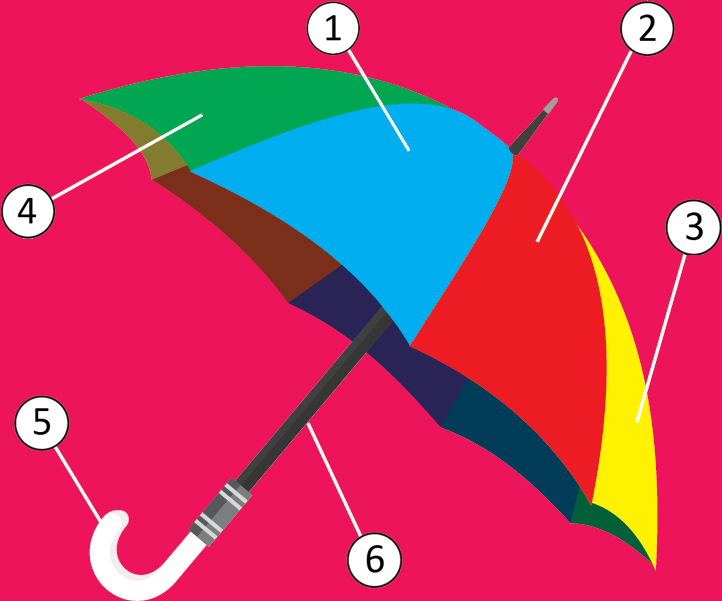
umbrella
傘
kasa
1. blue
青い
aoi
2. red
赤い
akai
3. yellow
黄色い
kiiroi
4. green
緑の
midori no
5. white
白い
shiroi
6. black
黒い
kuroi
THE BASICS
| 基本
Hello.
こんにちは。
konnichiwa.
Good morning.
おはよう(ございます)。
ohayō (gozaimasu).
Good afternoon.
こんにちは。
konnichiwa.
Good evening.
こんばんは
konbanwa.
Good night.
おやすみ(なさい)
oyasumi (nasai).
See you soon.
じゃあ、また。
jā, mata.
See you tomorrow.
また、明日。
mata, ashita.
Goodbye.
さようなら
sayōnara.
Bye!
じゃあね。
jā ne.
YOU SHOULD KNOW…
Japanese people bow to express their respect and appreciation. People bow to accompany greetings, words of appreciation, or apologies. The strength of the respect, gratitude, or apology dictates how low your bow should be.
There are two other common ways of saying goodbye in Japanese. The first, いってきます itte kimasu, is said by someone who is leaving but will return later. The second, いってらっしゃい itte rasshai, is said by the other person in response to that and literally means “go and return”.
Yes.
はい。
hai.
No.
いいえ。
iie.
I don’t know/understand.
分かりません。
wakarimasen.
please
お願いします。
onegai shimasu.
No, thanks.
いいえ、結構です。
iie, kekkō desu.
Excuse me.
すみません。
sumimasen.
Sorry?
何ですか。
nan desu ka?
I’m sorry.
すみません。
sumimasen.
OK!
はい!
hai!
Thank you.
ありがとう(ござい
ます)。
arigatō (gozaimasu).
You’re welcome.
いいえ(どういたしまして)。
iie (dō itashimashite).
Go ahead./Here you are.
どうぞ
dōzo
ABOUT YOU
| 自分について
How old are you?
何歳ですか。
nan-sai desu ka?
May I ask how old you are?
お年を聞いてもいいですか。
o-toshi o kiite mo ii desu ka?
When is your birthday?
誕生日はいつですか。
tanjōbi wa itsu desu ka?
I’m … years old.
…歳です。
…sai desu.
My birthday is on…
誕生日は…です。
tanjōbi wa …desu.
I was born in…
…で生まれました。
…de umaremashita.
Where are you from?
出身はどちらですか。
shusshin wa dochira desu ka?
Where do you live?
どこに住んでいますか。
doko ni sunde imasu ka?
I’m from…
私は…から来ました。
watashi wa … kara kimashita.
I live in…
…に住んでいます。
…ni sunde imasu.
I’m…
私は…です。
watashi wa …desu.
Scottish
スコットランド人
sukottorando-jin
English
イングランド人
ingurando-jin
Irish
アイルランド人
airurando-jin
Welsh
ウェールズ人
wēruzu-jin
British
イギリス人
igirisu-jin
Are you married?
結婚していますか。
kekkon shite imasu ka?
I have a partner.
パートナーがいます。
pātonā ga imasu.
I’m single.
独身です。
dokushin desu.
I’m married.
結婚しています。
kekkon shite imasu.
I’m divorced.
離婚しました。
rikon shimashita.
Do you have any children?
お子さんがいますか。
o-kosan ga imasu ka?
I have … children.
子供が…人います。
kodomo ga …nin imasu.
I don’t have any children.
子供がいません。
kodomo ga imasen.
FAMILY AND FRIENDS
| 家族と友だち
Different versions of words for family members are used depending on whether you are talking about your own family members (in-group) or someone else’s (out-group). In the list below, the terms before the slash are for your own family members, and those after it are honorific terms used to refer to someone else’s. Usage is changing, however: younger people today sometimes use the honorific terms to talk about their own family.
Mr/Mrs/Miss/Ms
…さん
…san
husband
夫/ご主人
otto/go-shujin
wife
妻/奥さん
tsuma/oku-san
boyfriend
ボーイフレンド
bōi furendo
girlfriend
ガールフレンド
gāru furendo
partner
パートナー
pātonā
fiancé/fiancée
フィアンセ
fianse
son
息子/息子さん
musuko/musuko-san
daughter
娘/娘さん
musume/museme-san
mother
母/お母さん
haha/okā-san
father
父/お父さん
chichi/otō-san
older brother
兄/お兄さん
ani/onii-san
younger brother
弟/弟さん
otōto/otōto-san
older sister
姉/お姉さん
ane/onē-san
younger sister
妹/妹さん
imōto/imōto-san
uncle
おじ/おじさん
oji/oji-san
aunt
おば/おばさん
oba/oba-san
nephew
甥/甥ごさん
oi/oigo-san
niece
姪/姪ごさん
mē/mēgo-san
cousin
いとこ
itoko
grandfather
祖父/おじいさん
sofu/ojii-san
grandmother
祖母/おばあさん
sobo/obā-san
grandson
孫(息子)/お孫さん
mago(musuko)/omago-san
granddaughter
孫娘/孫娘さん
magomusume/magomusume-san
stepfather
血の繋がらない父
chi no tsunagaranai chichi
in-laws
義理の親戚
giri no shinseki
mother-in-law
義母
gibo
father-in-law
義父
gifu
daughter-in-law
義理の娘/…娘さん
giri no musume/…musume-san
son-in-law
義理の息子/…息子さん
giri no musuko/…musuko-san
brother-in-law
義理の兄弟
giri no kyōdai
sister-in-law
義理の姉妹
giri no shimai
friend
友達
tomodachi
neighbour
近所の人
kinjo no hito
baby
赤ん坊/赤ちゃん
akanbō/akachan
child/children
子供/お子さん
kodomo/o-ko-san
teenager
ティーンエージャー
tiin’ējā
parents
両親/ご両親
ryōshin/go-ryōshin
siblings
兄弟/ご兄弟
kyōdai/go-kyōdai
This is/These are…
こちらは…です。
kochira wa … desu.
This is my husband.
こちらは夫です。
kochira wa otto desu.
YOU SHOULD KNOW…
When speaking to family members, the honorific terms are used, except for younger brother/sister, when name + さん san, or more familiarly ちゃん chan (for boys and girls) or 君 kun (for boys) are used.

GENERAL HEALTH AND WELLBEING
| 健康
How are you?
お元気ですか。
o-genki desu ka?
How’s it going?
最近、いかがですか。
saikin, ikaga desu ka?
Very well, thanks, and you?
元気です。…さんは?
genki desu. …san wa?
Fine, thanks.
ありがとう。元気です。
arigatō. genki desu.
Great!
すごく元気です。
sugoku genki desu.
Not bad, thanks.
ありがとう。まあまあです。
arigatō. māmā desu.
Could be worse.
まずまずです。
mazumazu desu.
I’m fine.
大丈夫です。
daijōbu desu.
I’m tired.
疲れました。
tsukaremashita.
I’m hungry.
お腹が減っています。
onaka ga hette imasu.
I’m thirsty.
のどが渇いています。
nodo ga kawaite imasu.
I’m cold.
寒いです。
samui desu.
I’m warm.
あたたかいです。
atatakai desu.
I’m hot.
あついです。
atsui desu.
I am/feel…
(私は)…
(watashi wa) ….
happy
うれしいです
ureshii desu
excited
わくわくします
wakuwaku shimasu
surprised
びっくりしました
bikkuri shimashita
annoyed
イライラしています
iraira shite imasu
angry
怒っています
okotte imasu
sad
悲しいです
kanashii desu
worried
心配です
shinpai desu
afraid
怖いです
kowai desu
bored
退屈です
taikutsu desu
well
健康です
kenkō desu
unwell
気分が悪いです
kibun ga warui desu
better
よくなりました
yoku narimashita
worse
悪くなりました
waruku narimashita
WORK
| 仕事
Japanese people tend to say where they work, rather than the kind of work they do. Working for a major company at whatever level is prestigious.
Where do you work?
どこで働いていますか。
doko de hataraite imasu ka?
What’s your occupation?
お仕事は何ですか。
o-shigoto wa nan desu ka?
Do you work/study?
働いて/勉強していますか。
hataraite/benkyō shite imasu.
I’m self-employed.
自営業です。
jiēgyō desu.
I’m unemployed.
失業中です。
shitsugyō-chū desu.
I’m at university.
大学で勉強しています。
daigaku de benkyō shite imasu.
I’m retired.
退職しました。
taishoku shimashita.
I’m not working.
無職です。
mushoku desu.
I’m travelling.
旅行中です。
ryokō-chū desu.
I work from home.
家で働いています。
uchi de hataraite imasu.
I work part-/full-time.
パート/常勤で働いています。
pāto/jōkin de hataraite imasu.
I work at/in…
…で働いています。
… de hataraite imasu.
I work in a bank.
銀行に勤めています。
ginkō ni tsutomete imasu.
business
商売
shōbai
company
会社
kaisha
factory
工場
kōjō
government
政府
sēfu
hospital
病院
byōin
hotel
ホテル
hoteru
office
事務所/会社
jimusho/kaisha
restaurant
レストラン
resutoran
school
学校
gakkō
shop
店
mise
I’m a/an…
私は…です。
watashi wa … desu.
I work as a/an…
…の仕事をしています。
…no shigoto o shite imasu.
architect
建築家
kenchikuka
builder
建築業者/大工
kenchiku-gyōsha/daiku
chef
シェフ
shefu
civil servant
公務員
kōmuin
cleaner
清掃人
sēsō-nin
decorator
内装業者
naisō-gyōsha
dentist
歯医者
haisha
doctor
医者
isha
driver
運転手
untenshu
electrician
電気技師
denki-gishi
engineer
技師
gishi
firefighter
消防士
shōbōshi
IT worker
IT 技術者
aitii gijutsusha
journalist
ジャーナリスト
jānarisuto
lawyer
弁護士
bengoshi
mechanic
機械工
kikaikō
nurse
看護師
kangoshi
office worker
事務員
jimuin
plumber
配管工
haikankō
police officer
警察官
kēsatsukan
postal worker
郵便局員
yūbinkyokuin
sales assistant
店員
ten’in
teacher
教師/先生
kyōshi/sensē
vet
獣医
jūi
waiter/waitress
ウェイター/ウェイトレス
weitā/weitoresu
YOU SHOULD KNOW…
Бесплатный фрагмент закончился.

Начислим +24
Покупайте книги и получайте бонусы в Литрес, Читай-городе и Буквоеде.
Участвовать в бонусной программе