Читать книгу: «Hellfire»
Ed Macy
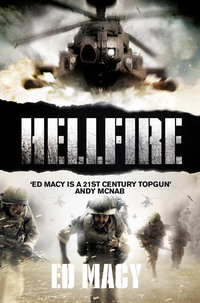
Hellfire

Copyright
HarperPress An imprint of HarperCollinsPublishers Ltd 1 London Bridge Street London SE1 9GF www.harpercollins.co.uk
First published in Great Britain by HarperPress in 2009
Copyright © Ed Macy 2009
FIRST EDITION
Ed Macy asserts the moral right to be identified as the author of this work
A catalogue record for this book is available from the British Library
Maps © HarperPress Drawn by HL Studios
All rights reserved under International and Pan-American Copyright Conventions. By payment of the required fees, you have been granted the non-exclusive, non-transferable right to access and read the text of this e-book on-screen. No part of this text may be reproduced, transmitted, down-loaded, decompiled, reverse engineered, or stored in or introduced into any information storage and retrieval system, in any form or by any means, whether electronic or mechanical, now known or hereinafter invented, without the express written permission of HarperCollins e-books.
This book is sold subject to the condition that it shall not, by way of trade or otherwise, be lent, re-sold, hired out or otherwise circulated without the publisher’s prior consent in any form of binding or cover other than that in which it is published and without a similar condition including this condition being imposed on the subsequent purchaser.
HarperCollinsPublishers has made every reasonable effort to ensure that any picture content and written content in this ebook has been included or removed in accordance with the contractual and technological constraints in operation at the time of publication
Source ISBN: 9780007288199
EPub Edition © SEPTEMBER 2009 ISBN: 9780007342921
Version: 2019-01-03
In memory of my grandparents and their unconditional love
Table of Contents
Cover Page
Title Page
Copyright
Dedication
Prologue
Air Attack, Air Attack
Arrested and Tested
Skylined With No B Ackup
Chopp Er Palmer’ S Wings
Booby-trapped In Northern Ireland
Bombing Freddie Mercury
Facing Tommo
One On One
The Hunter
The Killer
Learning To Fly - Learning To Fight
Dusty Hellfire
Mo Ose Time
Wildman Of Helmand
Visiting The Shrine
The 7 Ps
Go-go-go
Late
Embarrassingly Late
Operation Mutay
Signed, Sealed and Delivered
Scramble
Broken Arrow
The Plan
The Anti-aircraft Gunner
Hellfire
Siege
Operation Snakebite
Sniper Team
Epilogue
Afterword
Glossary of Terms
Acknowledgements
Index
About the Publisher
PROLOGUE
TUESDAY, 4 JULY 2006
Camp Bastion, Helmand province, southern Afghanistan
2255 hours local
The helicopter god was nearly out of miracles.
3 Para’s A Company had never intended to stay in Sangin; they’d just dropped by to reassure the local elders that we were on their side. Then Intelligence reported that they’d walked right into the hornet’s nest—the Taliban’s only senior command and control location in southern Helmand—and the head shed ordered them to hold out at all costs.
Sangin had been under siege for weeks now; the Taliban had been hammering the place morning, noon and night. Their objective was simple: to injure a British soldier seriously enough to force a casevac helicopter insertion, and take out the ‘cow’ as it landed.
In the meantime they were amassing enough anti-coalition militia to rip the District Centre (DC) to shreds.
Thirty or so Paras were locked down in the platoon house, running perilously short of food and ammunition. Three of them had died a couple of days ago, and another was killed this morning while trying to secure the landing site for a casevac mission launched to recover a badly injured survivor. The Taliban were a hair’s breadth away from bringing down a Chinook with its crew, surgeon, anaesthetist, and the rest of the medical team on board.
We were called into Ops just before last light. More soldiers had been hit. One of them had spiralled from badly injured to critical. He’d last the night, but needed to be in the Bastion field hospital before lunchtime tomorrow. In any other theatre of conflict he’d have been Priority One and flown out immediately.
Lieutenant Colonel Stuart Tootal, Commanding Officer (CO) of 3 Para, only had a brief window in which to pull out his injured and Killed in action (KIA) and replenish the DC with men and supplies. The Taliban usually attacked ferociously at night, melted away before first light, then kicked back in with snipers after morning prayers. But now they knew that a casevac was imminent, we reckoned that rest and prayers would have to wait.
We’d been given permission to fire into known Taliban positions to prevent them from engaging the Chinooks. The enemy could only engage the landing site (LS) from two long, irrigated tree lines and a smashed-up building with four firing ports in its wall. I’d spotted a bunch of empty shells and an escape ladder there, so the ground troops had nicknamed it ‘Macy House’.
Our plan was simple.
Jake and Jon in their Apache had the callsign Wildman Five Two and Simon and I in ours were Wildman Five Three. We would go in all guns blazing. We’d run in from the south with rockets then engage Macy House and the wooded hedge lines with 30 mm High Explosive Dual Purpose (HEDP) rounds as the Chinooks landed from and departed to the north. Bad light, the element of surprise and a curtain of dust from the Chinook rotors should do the rest.
It was blunt and effective, and we were good to go.
Until Whitehall intervened…
The Commanding Officer of the Joint Helicopter Force (Afghanistan) (JHF(A)) called the Officer Commanding 656 Squadron Army Air Corps (AAC) on a secure telephone to explain. He was put on speakerphone.
Major Will Pike, A Company’s OC, had assured them that there were no civilians in that area of Sangin. They had also been made aware that a soldier had lost his life trying to secure the LS, and that a Chinook would soon follow. But the British government would not allow Apaches to use prophylactic firing into known Taliban positions. We could only fire in self-defence, or in defence of troops in contact.
In other words, we couldn’t engage until we’d received incoming fire.
The CO apologised; he’d done everything he could. Whether we risked it was now down to us.
The OC, Major Black replaced the handset.
The surgeon confirmed that the soldier would die without his intervention, but it was down to Squadron Leader Woods. Woody was leading this casevac. He never asked his pilots to do something he wasn’t prepared to do himself.
Eventually we agreed that the Apaches would go to Sangin early and cause a deception. We’d pretend we were out looking for the Taliban firing positions. Just before the Chinooks arrived we’d appear to find them at Macy House and in the woods and engage them; to satisfy the Rules of Engagement (ROE) we’d fire just in front of their positions.
With the plan set and Lieutenant Colonels Felton and Tootal satisfied we were doing all we could within the constraints of the ROE, we crashed out for another couple of hours. We’d be over Sangin at 0300 hours and the Chinooks would land forty-five minutes later—at first light.
We were up at 0115 hours and into Ops for 0130. Kenny, our watchkeeper, briefed us that Widow Seven Six—Sangin’s Joint Terminal Attack Controller (JTAC)—would call the codeword Pegasus when the area around the DC was secure and we were cleared to engage.
During our couple of hours of broken sleep there had been another huge firefight. The Taliban had used mortars, Chinese rockets, recoilless rifles, Rocket propelled grenades (RPGs), a plethora of machine guns and small arms. We’d responded with B1 bombers, 105 mm light guns, Javelin anti-tank missiles, 81 mm mortars, .50 cal machine guns, machine guns and small arms.
‘It’s the fucking Alamo out there.’ Kenny was a Lynx pilot and an ex-Para with over thirty years’ experience, and he knew the score.
‘Only bad news from me, I’m afraid,’ Jerry said. Jerry was an RAF Flight Lieutenant, our Intelligence Officer. ‘The threat remains very high and the risk to the CH47s is off the scale. They may not know there will be two, or have the exact time of your arrival, but Taliban intercepts have confirmed that they know we have injured men in Sangin, and they know a cow is coming.
‘They’ve ordered all anti-coalition militia—every man with a weapon—to close in. The Apache is the only weapon that can really hurt them, and intercepts over the last twenty-four hours have been full of talk of bringing one down. More specifically, we have heard them say, Bring in the Stingers and fire when they arrive. The mosquitoes are scared, so don’t be afraid to shoot them down. Their morale is very high after the recent killings and they believe their plan to use up our ammo and force a resupply has worked. Any questions?’
The silence spoke volumes.
‘Then all I can say is good luck…’
The chocolate bars were dished out on the short walk to the aircraft. Jake immediately paid for the privilege of eating into Jon’s private stash.
‘Do you actually know what time it is Dolly?’
Jake had got his nickname during our Apache training, when he shaved the odd hour off our fourteen-hour working days. As often as he could manage it, his family came first.
Jon restrained himself from singing the Parton theme tune to 9 to 5, but he never failed to lift our spirits.
Sangin
0300 hours
‘Widow Seven Six this is Wildman Five Two and Five Three. We are a pair of Apaches with four Hellfire missiles, thirty-eight rockets and 600 cannon rounds. Confirm you know of our deception plan?’
The JTAC would only speak to us on the secure frequency when we arrived in the overhead.
Jon and Simon set up a high orbit opposite each other around the DC, like two circling buzzards.
‘Widow Seven Six affirmative. I don’t care what you do as long as you get the injured out and reinforcements in. Confirm L Hour?’ The JTAC wanted to know what time the Chinooks would hit the LS.
‘Wildman. L Hour is set for Zero-Three-Forty-Five hours. H Hour is set for Zero-Three-Forty-Three hours. Confirm all men are east of the canal and no civilians have been seen west of the canal.’
‘My position is at the building just west of Bridge Two over the canal. I have the injured with me. There are no troops further south or west than my position. Copy so far?’
We copied. The DC lay on the east side of the canal. To its south were trees and buildings that hid the Taliban. To its east the town sprawled for a couple of hundred metres to a now empty marketplace and gave the attackers concealed avenues of approach. The dry wadi spread east beyond its northern entrance, splitting the town in two. The gap allowed heavy weapons and recoilless rifles uninterrupted fields of fire from the north and protection to melt away without fear of a follow-up. North-west by a hundred metres was the fast flowing Helmand River and the only safe avenue of approach for the load-carrying Chinooks. The canal stretched south as far as the eye could see, its tree-lined bank affording the Taliban a highway along which to move up to Macy House and the irrigation ditches surrounding the LS.
The JTAC, the protection party, the injured and the dead now occupied the only building west of Bridge Two. The LS was a 150-metre wide, 300-metre deep field south-west of them.
‘And we haven’t seen a civilian this side of the canal for weeks,’ he continued. ‘But be aware that the Taliban know you’re here already. We’ve heard their commanders telling them to aim at the cow first-then the mosquitoes.’
We flicked onto the insecure Common Tactical Air Frequency (CTAF) so the Taliban could get the full benefit of everything we said. Jake began by telling us that he was looking to the south down the canal near Bridge Three ‘where the Taliban killed our soldier’. Confirming he was dead may have raised their moral but we hoped it would also persuade them a Chinook wasn’t inbound.
Neither of us was looking out for Taliban. We were too worried that we might miss the open ground when we did fire and hit their positions by accident. I’d spent the best part of four hours truing up the rocket launchers before we went to bed. It was strictly against the rules, but given the circumstances the CO had allowed me to do so.
I’d balanced an inclinometer on the live rockets and adjusted their launchers to the correct angles before tightening them. It broke every rule we could think of, and then some.
Jake had grabbed my shoulders with both hands and looked me straight in the eye before asking if I was 100 per cent sure. I told him that as long as he could shoot straight they’d work.
If we missed the target and hit the woods, or worse still our own troops, I’d be directly accountable for tampering with a live weapon system. They had to be bang-on, or I’d be banged up. Second chances were in short supply right now.
It was still dark. I could only make out the landscape from the thermal picture on the right-hand Multi-Purpose Display (MPD) screen just above my knee. The fields were dark and the river pitch-black, but the two tree lines positively glowed.
I aimed the Target Acquisition and Designation Sight (TADS) crosshair between them. Holding it steady I squeezed the laser trigger and pushed a switch.
T10 appeared at the bottom of my MPD screen, below the thermal image.
I now had the position stored, but the fear of an inquiry forced me to double-check it. I knew Jake would be doing the same a hundred metres further north.
We discussed looking for mortar base plates and heavy machine gun positions to give the Taliban something to talk about then lased and stored our firing positions in front of the 100 metre tree line on the LS.
T11…
‘Wildman Five Two this is Wildman Five Three,’ I called. ‘I have detected Taliban hiding in the buildings to the south of the DC.’
I hoped they’d assume I’d located whoever was waiting.
T12-right in front of Macy House.
‘Wildman Five Two,’ Jake said ‘I have Taliban in both tree lines to the south-west of the DC. Stand by.’
Neither of us had so much as begun to look for the Taliban.
We called the JTAC and he confirmed that the Taliban commanders were telling their men to stand their ground and fight.
It was now 0330 local.
The bluff and counterbluff had continued for the best part of twenty-five minutes-but they knew our ROE better than we did, so we just had to sit tight until the time was right.
Jake decided it was time to raise the stakes.
‘Wildman Five Three this is Wildman Five Two. Fireplan: we will engage the Taliban in the trees to the south-west of the DC with Apache rockets. Copy?’
‘Copied.’
‘Then we will use the Apache guns. You shoot at the buildings to the south. I will shoot at the trees. Copy?’
I copied.
‘We will fire from the south on my order. Kill all of the Taliban. Read back.’
I read it back as Simon banked us gently towards the south.
It was beginning to get light, but not light enough to bring colour to the silhouettes of trees, the canal that ran from Bridge Two or the rooflines of the town.
Four klicks to the south of the DC Simon and Jon turned back in a perfectly obvious and synchronised manoeuvre. We were nice and high so we stood out against the rapidly lightening sky.
We began to run in at forty knots.
Simon made the call we’d been waiting for on the secure inter-aircraft radio. ‘I have two rotary icons on the FCR in the desert to the north-west. The Hardwood callsigns are inbound to Sangin and on time.’
‘Widow Seven Six this is Wildman,’ Jake called the JTAC on the secure frequency. ‘Chinooks inbound; confirm we are clear to engage.’
I felt our nose dip and level again as Simon increased to ramming speed. A quick glance left with the naked eye confirmed Jon was 500 metres away and on level-pegging with us. We were in full view of the Taliban.
‘This is Widow Seven Six. Pegasus. Clear hot. Clear hot.’
I pressed T10 and called ‘Come Co-op’ to Simon after I actioned the rockets.
‘Co-op,’ Simon replied.
The MPD confirmed everything I needed to know: co-op bottom right and T10 bottom left. My crosshair was smack in the middle of the field and I was hands off. The Apache would hold the TADS on the position without any help from me. More importantly I could see where Jake was supposed to be firing.
Please be dead on. Please hit the target…
‘Running in to engage Taliban positions with rockets,’ Jake said. That should encourage them to look south.
The range was counting down above T10.
3.5KMS…3.4KMS…
‘On Jake’s executive word of command, Simon: match and shoot.’
‘Match and shoot with Jake,’ Simon replied.
The crosshair was static and Simon lined up the rocket steering cursor by adjusting our flight path. We were a hair trigger from firing.
‘Engaging with rockets,’ Jake called on the secure radio before switching back to the Taliban frequency.
3.0KMS…2.9KMS…
‘Wildmen engaging in five…’ Jake paused to allow the JTAC a final opportunity to call off the firemission.
Nothing…
‘Three…two…one…’
2.8KMS…Rockets peeled off both sides of our gunships with a whoosh.
I couldn’t bring myself to look out of the cockpit window…
Their time of flight (TOF) crept down on the MPD.
TOF4…
Four seconds to impact and they were far too high on my screen to judge if they’d hit.
‘Hardwoods have about three klicks to run…’ The tension was getting to Simon too.
TOF3…
The rockets were still too high and fading fast to a pinpoint glow.
‘Engaging,’ Jon called, for the benefit of the boss back at Camp Bastion.
TOF2…
They began to drop down the screen, but far too slowly for my liking. Then they disappeared entirely.
What the fuck…?
TOF1…
Two huge dust clouds blossomed right under my crosshair.
My focus shot up the screen; Jake’s rockets had also landed bang on the button.
‘Get in…’ I punched in T11.
Both sets of rockets had landed safely.
The TADS jumped right in front of the 100 metre tree line. I deslaved the lock because the rockets were so accurate. I moved the crosshair to a gnat’s knacker away from the foliage and called to Simon to match and shoot again.
A gentle right bank followed by a roll out, then another set of rockets rippled off our gunship and landed with pinpoint accuracy. They too disappeared just before impact as their thermal signature matched the surroundings. A confirmatory glance told me Jake had matched us shot for shot. Simon and Jon were doing a storming job.
‘Hardwoods have about a klick to run,’ Simon said.
‘Switch to guns,’ Jake responded.
I had already slaved the TADS to T12.
I pushed up the weapon select button and the rocket symbology on my MPD was replaced by 300 rounds of cannon.
With the crosshair twenty metres in front of Macy House I let rip with a ranging burst. Ten white hot pins of light dropped down the screen. My heart started to pound as they passed through my aiming mark and headed towards the building. They ploughed into the ground with a metre to go, kicking up a column of earth and dust fifty metres high—enough to screen the LS from the sniper’s positions.
‘Fuck…that was close…’ I changed the burst limit to twenty.
‘Not close enough for my liking, but I’d still aim off a bit if I were you,’ Simon replied before updating us on the secure radio. ‘Hardwoods are about to cross the river and come into view of the Taliban.’
I deslaved the TADS from T12, adjusted the sight, lased and fired a twenty-round burst. I felt every one of them through my calf muscles as they poured off the gunship like steel rain.
I switched to the field south of the LS and ripped up the ground in front of the trees with a series of twenty-round bursts of HEDP bullets.
‘They’re over the river,’ Simon called.
It was getting lighter by the second. I could now see that the south was well and truly blocked from view.
I switched my fire to the right, next to the canal bank.
Jake switched his left, further up the tree line.
We opened up in unison, providing a clear avenue for the Chinooks. Cannon rounds stitched their way along the edge of their approach path as they flared to land. The dust rolled south as the monstrous machines hit the ground. I fired fifty metres to their south-east and Jake did the same to their south-west-far closer than we had considered safe twenty-four hours ago.
No sooner were they down than they had lifted again.
We kept on ploughing up the LS until they were over the river and in the sanctuary of the open desert.
‘Checkfire,’ Jake ordered.
I stowed the M230 cannon.
The entire field was a dustbowl with a lone building in the north-east corner. A succession of Paras made their way over the bridge like ants in the pale dawn light. As the dust cloud drifted further south the last of them crossed into the DC.
‘Wildman this is Widow. That’s us all across safely and not a single shot fired.’
‘End of firemission. You’re clear back to Bastion. Thanks for the support-and stay on this freq for a Taliban update.’
We were only a mile from Sangin when he called back to explain what he’d meant. One of his interpreters with a radio scanner had heard a senior Taliban commander asking why they’d failed to shoot down the cows and the mosquitoes.
Their reply said it all: ‘The mosquitoes were firing at us and we couldn’t shoot…’
‘Wildman copied,’ I said. ‘I don’t think we’ll get away with that twice…’
AIR ATTACK, AIR ATTACK
OCTOBER 1989
Aldershot, England
The echo of voices…
The whisper of tyres on wet tarmac…
A burst of blinding sunlight…
The Royal Artillery (RA) instructor stood with his hands on his hips. A hint of a smile suggested he knew something we didn’t. ‘To be an effective anti-aircraft gunner, you have to be a very good judge of speed and distance.’ He paced up and down in front of us like he was Captain Mainwaring. ‘You cannot afford to waste shots. If you miss first time and adjust quickly, you may, if you’re lucky, get a second chance, but only if the pilot’s below par. If he’s not, if he can fly half decently, like some of the Argies in the Falklands, he’ll manoeuvre unpredictably and then it’s spray-and-pray time. Spray, because that guy’s jinking all over the sky and you’ll never hit him in a month of fucking Sundays; pray, because by now he’s seen your tracer and he knows where you and your little pop-gun are hiding.’
He tapped one of the four pintle-mounted general purpose machine guns (GPMGs). ‘Now which of you sad, sorry bastards is first up?’ He rubbed his hands and blew on them.
I pulled myself to my feet and squinted against the cloudless sky. Behind me, my 2 Para mates gave me some low grunts of encouragement. Behind them, I swore I could hear the sniggers of the RA captain’s support team, but I didn’t let that put me off. I expected nothing less. In the eyes of a young Para the British Army was divided between those wearing the coveted red beret and the rest-the crap-hats.
I’d been given a fifty-round belt of 7.62 and told to fire twenty-to twenty-five-round bursts at the bright red remote-controlled drone that would appear over the frost-bitten ridgeline any second now. Two posts set ten feet away at eleven and one o’clock determined my arc of fire. Outside them, my rounds would land in the nearby village. As a Para marksman, regimental honour weighed heavily on my shoulders, but how difficult could it be? The propellerpowered drone had a wingspan of a metre and a half; at this range it would be the size of a barn door.
The drone would be flying right to left, straight and level. Bang, bang; I’d collect my prize and we could all go home.
I heard a sound like a buzz-saw and pulled the butt of the GPMG hard into my shoulder. There. A bright red cross, its bulbous engine glinting in the sunlight, a hundred feet or so off the deck.
‘Air Attack, Air Attack,’ Mainwaring screamed at the top of his voice.
I placed the drone squarely in the centre of the sights.
Three, two, one…It passed the right-hand post and I gave it a sustained burst. The drone beetled on and disappeared over the ridgeline. I couldn’t believe it. There was a chorus of wolf-whistles from the crap-hats as I breathed in the smell of burnt gun oil. I flushed with embarrassment.
Captain Mainwaring was in my face quick as a wink. ‘Not so easy is it, son? Trouble is, you can’t actually see where your rounds are going, can you? So this time, we’re going to help you.’
A RA bombardier gave me a fresh belt of ammo.
‘We’re loading you up with 1BIT; now you’ll be able to see where your rounds are going.’
(1BIT: one standard 7.62 mm ball round for every one tracer round (1Ball1Tracer = 1BIT).)
I’d be able to adjust my aim and walk the bullets onto the target.
The drone appeared again, nice and steady. With the belt of ammo draped over my left forearm I tracked it and pulled the trigger, spitting out red streaks the very moment it crossed the right-hand post.
Every single glowing round passed behind the stupid fucking thing by yards. I was so stunned I was unable to get in a second burst. The drone wobbled off and the catcalls intensified; some of them this time from my mates.
Mainwaring told me where I was going wrong. I needed to ‘lead’ the aircraft-at this distance, I had to aim a second in front of it and let it fly into the bullets. I should have known about this from the Saturday afternoon war movies I used to watch with my granddad; the ones where the Spitfire pilots talked about ‘deflection shots’-firing at an angle ahead of a crossing enemy aircraft, taking its speed and distance into account.
Round three. This time, my lead was perfect, but for some reason all my bullets disappeared below the drone.
Next time, Mainwaring said, be aware of distance, then fire. Cheeky bastards had flown it further away than last time, catching me out. My lead had been good, but because of ‘ballistic drop’, the bullets had fallen well below the target. I’d show him this time!
Round four. My bullets passed behind it again. The drone-operator had increased its speed. Watch your range, Mainwaring told me, but don’t forget the speed of your target.
Round five. It came screaming in from the left, jinking up and down as well as accelerating and decelerating. The dodgy bastards were taking the piss. I wasn’t even close.
The laughter behind me grew to a cacophony.
‘Am I right in thinking, Para-boy, that you’re an SAS wannabe?’
I said nothing. I didn’t like the way this was going.
‘Didn’t I warn you,’ Mainwaring shrieked, ‘that if you miss, the enemy aircraft will see your tracer and your position will be compromised? Stand by for incoming—’
I began to run.
I ran as fast as I could, legs pounding the rock-hard earth, arms swinging, as I made for the nearest cover, a concrete pillbox around 200 metres away. Over the whistles and catcalls behind me I heard the buzz-saw signature of the drone. The louder it got, the faster I ran. Cary Grant running for his life in North by North-west had nothing on me…
The drone swept in behind me, drowning out the laughter.
I was still thirty metres from the pillbox when it slammed into the small of my back. I hit the ground and the lights went out. I thought I’d been split in two.
I tried to open my eyes, but couldn’t. I heard people talking, but they made no sense. Where were Mainwaring and my mates? Where was I?
‘You okay, mate?’ a bloke said.
‘I think he’s dead…’ A woman’s voice.
‘He fell off his bike in front of that man’s car. He was in the air, upside down, when the car hit him.’
I wanted to tell them that wasn’t what had happened at all. I wanted to tell them I’d been on Salisbury Plain in a live firing exercise against a target drone when the bloody thing decided to go rogue and everything turned to ratshit.
Fuck! The pain…
Someone was trying to move me. I felt like I was being pulled, pushed and prodded. Every time they touched me I wanted to open my mouth and scream, but I couldn’t even whimper.
‘I thought it had taken his head off. It hit him in the back and he was upside down, mate. His head went under the bumper and his feet went through the windscreen. His back must be broken.’
If my back’s broken, why the fuck are you trying to move me? If my back’s broken, how am I going to do SAS Selection?
They’ll pay for this, I thought. A drone goes rogue, hits me in the back and kills all my dreams. My God, I’ll have them…
‘Get the boards. Quick.’ Another woman. Stern, authoritarian.
‘I tell you, he flew off the bonnet and then the guy drove over him…’
‘Drove over his head,’ the first woman said.
‘No, it drove over his shoulder…’
Whatever, I thought. The pain that had threatened to overwhelm me was replaced by a feeling of immeasurable tiredness. I felt myself sliding and falling.
‘Sir, wake up. Can you open your eyes for me?’
I opened my eyes and my confusion deepened as I slowly saw a black woman backlit by a bright orange halo. I thought for a moment that Diana Ross had come to take me away…
‘Can you feel my hand?’
I couldn’t, but all was not lost: I felt something on my face-the rain I could see sparkling in the glow of the street lamp.
‘Can you feel me touching your fingers?’
I was aware of having hands and feet, but I couldn’t feel her touching them.
‘Can you grip my fingers?’
I couldn’t. I couldn’t move a muscle. I tried to shift my head, but it wouldn’t respond. Nothing responded. I couldn’t even speak. I was totally fucked.
The woman unzipped my Barbour jacket. ‘Sweet Jesus, he’s wearing a bin-bag under his coat.’ At best she must be thinking I’m mad and at worst a weirdo pervert.
Leave me alone, I wanted to tell her, because all I want to do is sleep.
Suddenly and with no warning I felt like I was being hit on the back of the head with a road worker’s mallet every time my heart beat.
‘Yeah, he arrested,’ a paramedic yelled. ‘He’s military. Suspected spinal and internal injuries…’
I couldn’t open my eyes but at least the pain was telling me I wasn’t dead.
I wanted to go to sleep again, but a voice in the back of my head told me I needed to stay awake.
And someone seemed to be shoving the end of a broom shank deep into me, just below my rib cage, next to my spine. Every time the ambulance hit the tiniest bump it felt like it was going to burst through my chest. I was John Hurt in my own nightmare version of Alien.
We hit a pothole and I suddenly found my voice. I screamed-full throat, full belly. It filled the ambulance and blotted out the sound of the siren.
‘Fuck me!’ the paramedic said.
I passed out again.
‘Corporal Macy, can you hear me?’
Of course I can hear you; just give me some bloody morphine…
Then: closed abdominal injury, mate, the voice at the back of my head said. Fat chance of the love-drug.
The pain had got worse.
If I couldn’t put up with this, how would I ever be able to pass Selection? Fuck Selection, I’m tired…
‘Corporal Macy, can you hear me?’
I opened my eyes a crack and found myself blinking against bright, brilliant white. No wonder people said they saw angels in places like this. They were delusional; just like I was now.
A guy in a green smock leaned over and shone something into my eyes. ‘You’ve been in an accident, mate.’
Now there’s a surprise.
My head and back were on fire. I tried to move my feet and legs, but couldn’t. With a supreme effort, I managed to raise my head and shoot a glance down my body.
I was on a bed wearing a green gown, in an operating theatre with a lamp suspended over me. It was pushed up and switched off. Maybe they’d already given up on me…
A six-inch square rubber block was strapped tightly to my belly. The strap had some kind of winch attached to it. It was fucking killing me.
At least I now knew why I was paralysed. My wrists and ankles were cuffed to the bed with more straps.
‘Can you tell me where the pain is?’ the guy in green asked.
‘Everywhere,’ I said. ‘Please, morphine…’
Someone else approached the bed, a stethoscope around his neck. They looked at each other, then at me. ‘Not yet,’ he said. ‘Can you tell us where it hurts most?’
He injected my right arm with a clear liquid from a big syringe. Whatever it was, it wasn’t pain relief.
I screamed.
‘My back is killing me.’
‘Where specifically?’
‘The small of my back. Please. You’ve got to give me something for the pain. I’m begging you—’
He cranked the handle several notches. The clicks were like machine-gun fire. I screamed again.
‘I’m sorry, Corporal Macy, really I am.’
Like fuck, I thought, as another wave of pain crashed through me.
The lights went out again.
My torso sprang upwards as soon as they took the tension off the strap. They lifted me onto another bed and finally relieved some of the pain.
They’d had to pump X-ray dye into my arm to identify the source of my internal bleeding. Then they’d squeezed the blood out of my kidneys. When they released the pressure, the blood had seeped back into them, the rupture clotted and my life had been saved.
‘Think of your internal organs as being connected together by pipes.’ The junior doctor’s bloodshot blue eyes were set in a broad, unsmiling face. ‘When you get hit as hard as you did, all your organs get thrown around and the pipes connecting them detach. Then you bleed internally and the bleeding can’t be stemmed. You die from a loss of circulating body fluid. We think you were hit at about 50 mph, a lot faster than is considered survivable. Fortunately, your stomach muscles are so strong and your body so fit that the impact did not rearrange your internal organs as it would have for most people, so all your pipes remained miraculously connected. The force of the collision did, however, rupture your kidneys and damage a number of other organs. Your heart arrested as it fought to keep you alive. You arrested twice, in fact.’
He smiled. ‘You’re a very lucky man. The surgeon couldn’t operate and didn’t give you more than a 20 per cent chance of pulling through. Thank God you’ve been keeping yourself fit, Corporal Macy. By rights you should be dead.’
Funny what you dream about when you’re on the point of checking out. Being pursued by a drone across a military firing range must have been on my mind because we’d recently done antiaircraft drills at Larkhill.
‘What hit me?’
‘You don’t remember?’
I’d have shaken my head if I wasn’t in so much pain.
He told me that a number of witnesses had come forward. I’d been cycling along Queen’s Avenue, close to the barracks. It was dark and it had been raining.
Slowly, it came back to me. I remembered the orange glow of the street lamps and their reflection in the puddles as I’d held my bike’s front wheel between the yellow lines at the edge of the road. I’d followed the same routine for several weeks: two hours in low gear at full pelt with a bin-bag under my clothes to raise my temperature and make me sweat. After that, I’d get off the bike and go for a long run.
I’d been getting myself fit for SAS Selection.
Something had hit my right handlebar; I remembered the bang. I’d looked up and seen a Volvo. It had overtaken too close and clipped me with its wing mirror. I’d struggled for balance and my wheel had clipped the kerb and I’d careered into the oncoming lane.
I remembered headlights very bright in my face, the world turning upside down and then something colliding with me…
The rest was filled in by the policeman who came to take my RTA victim’s statement.
When the front wheel of my bike locked at ninety degrees I’d gone over the handlebars and been hit by a car going too fast in the opposite direction. I was totally inverted when it ploughed into me, its radiator grille striking me in the small of the back. My head went under the bumper and my feet went through the windscreen. The driver had slammed on the brakes but not quickly enough to prevent him ploughing over my shoulder. No wonder I was a complete fucking mess.
I finally summoned the courage to ask the doctors the only question that mattered. SAS Selection. What were my chances?
A big fat zero, as it turned out. They told me I’d been lucky not to be invalided out of the Paras. The good news was that they were discharging me from hospital; I was heading home-if you could call army accommodation on the edge of Aldershot ‘home’.
Over the next few months, my mates came in to bathe me because I was in too much pain to move. I had a livid purple bruise from the toes on my right foot-where it had gone through the windscreen-all the way up my leg, across my arse, my back and my shoulder, finally petering out somewhere under my hairline.
After several weeks, I started to walk again with the use of a putter and a pitching wedge. As far as 2 Para was concerned, this wasn’t a military injury; in the old days it was a case of ‘get on with it and let us know when you’re capable of fighting again’.
I was in too much pain to even think about that.
Months later when I was sent back to hospital for another checkup, they spotted my other injuries; the ones they should have discovered before they discharged me.
I’d suffered multiple fractures all over my body and some had healed in the wrong positions.
Like the guy said, my fighting days were over.
ARRESTED AND TESTED
I’d joined the Paras in 1984 and thought I’d found my niche in life. Being accepted by this elite regiment had been my sliding-doors moment. The accident had slammed the doors firmly back in my face.
I was born and raised in the north-east, but, as a kid, constantly found myself in trouble. My parents split up when I was very young. Against my will I remained with my mother as did my younger brother. He was even more out of control than me and ended up in a secure institution; a boarding school for the ‘socially challenged’ they called it back then. One day he was with us, the next he was gone. He was the closest thing I had-the only real constant in my life-and I was angry that ‘they’, whoever they were, had taken him from me.
I didn’t know at the time that my mother couldn’t cope. Looking back, though, I wasn’t surprised. We were like the Bash Street Kids on crack, my brother and I; trouble through and through.
When I wasn’t skipping school, I was fighting the playground bullies and generally causing mayhem. It was only by a complete fluke that I managed to avoid a correctional institution. I had good reason to be grateful. However hard I thought I was, I’d seen the movie Scum, starring a young Ray Winstone, and didn’t like the look of it one little bit. A Residential School for Boys, Special School, Borstal or whatever you want to call these places-it would have killed me. It’s a miracle it didn’t kill my brother.
As soon as I could leave school, I did, and without a qualification to my name.
Finally back in the company of my father, I took a job as an engineering apprentice at a small workshop ten miles from home. The high point of my apprenticeship was turning, milling and drilling the portholes for Britain’s first iron-hulled warship. HMS Warrior was under restoration in Hartlepool dockyard and I had an important job to do. It was the early eighties, unemployment was going through the roof, and I thought I’d live and die in the north-east.
A thousand fox doorknockers and sixty-seven poorly paid portholes later, my work on Warrior was done-and so was I, until I met Stig down the pub one day. A local hard man, he was home on leave from the Paras. Two things impressed me about Stig. He had money-more money than I thought possible-and he could tell a story. Most of his stories concerned the Falklands, where the Paras had just been in the thick of it. If I could join the Parachute Regiment, I reasoned, I’d not only have money, but would end up seeing the world-even better, fighting in far-flung parts of it.
Stig laughed when I told him this, but when he saw I was serious he told me I’d have to train and train hard. So I pounded the beach every day before and after work; come rain, wind or snow, it didn’t matter. Gradually, I built up my fitness. When it became easy, I tied a rope to a tractor tyre, fixed it round my waist and ran up and down the beach dragging the tyre behind me. People thought I was mad, but in August 1984 it got me where I wanted.
I was a fully fledged member of 2 Para by April of the following year, but as time passed, even that wasn’t enough: I set my sights on joining the SAS. Being in the Paras was no guarantee of passing Selection. The SAS needed specialists, so I concentrated with every fibre of my being on becoming the battalion’s best signaller, then on coming top of the combat medics’ course. Nothing was going to stop me achieving my goal. Or so I thought.
On a cold, rainy October night in Aldershot, the Paras’ garrison town in Hampshire, some twat in a Volvo clipped my bike and sent me over the handlebars. Flying through the air, upside down and facing backwards, I was hit by a car driving too fast in the opposite direction.
With their unorthodox methods, the surgeons saved me from death by internal bleeding. Too bad the hospital didn’t also check if I’d broken any bones before it discharged me. By the time I’d got a second opinion, my right foot, both ankles and right hip had set in the wrong positions. They were completely fucked, as were my back, knees and right shoulder. Not only was I out of contention for the SAS, I was medically unfit for duty in any front line regiment.
To compound matters, the hospital had ‘lost’ my medical records. Closing ranks, they’d removed all the evidence. It was like my case never existed.
As far as the lads alongside me saw it it didn’t make much difference: my soldiering was over. But I refused to accept a desk job and the quest was on to find a way back into combat without a Bergen.
A mate of mine suggested I should apply for the Army Air Corps (AAC). ‘You want to be in the thick of it?’ he said. ‘You could end up flying for the SAS.’
He showed me a book. Inside was a photo of a pilot in an army helicopter, his eyes blacked out with censor-ink. Behind him were four fully tooled-up members of the Special Air Service. He was right. If I couldn’t fight for the SAS, maybe I could fly for them. How cool would that be? I could get back to the front line without getting off my arse.
All I had to do now, I figured, was to con my way past the medicals that awaited anyone who wanted to become a pilot. Fate had already stepped in and given me a hand. Because I had no recent medical records, there was no paperwork to attest to the fact that little over a year ago I’d been mangled in a life-threatening accident.
Although 2 Para weren’t keen on anyone leaving eventually my application was processed. I passed the aptitude tests and managed to bluff my way through the medicals.
Switching from the Paras to train as a pilot-provided I was accepted-meant I’d be stuck as a corporal for another four years, but I wasn’t rank hungry. I was on a mission.
Within weeks I was told I’d been accepted for ‘grading’ at Middle Wallop, the AAC’s main airfield a stone’s throw from Salisbury Plain.
Grading was a process for assessing a potential pilot’s ability to listen, absorb and replicate simple flying manoeuvres. It was a baseline test that included ground school and was designed to see if we had the ability to cope with the army pilots’ course.
I was to start in July 1991.
I didn’t know if I could fly or not, but by hook or by crook I would give it everything I had.
I was waiting outside the clothing store for my flying suit when a giant of a man nudged me out of the way with a dismissive, semi-hostile look and threw a pair of tatty old gloves onto the counter. The civvie behind the counter half-jumped to attention, threw the man-mountain a sickly smile and laid out a nice new pair of pristine white chamois-leather gloves in front of him.
‘There you go, Mr Palmer. Your size if I’m not mistaken.’ They must have skinned a whole mountain antelope to make just one pair for him.
Mr Palmer never said a word. He flicked a glance at my maroon beret, leaned into my personal space and stared into my eyes. I figured he either had something against the way I wore my silver-winged cap badge-2 Para style-round by my left ear, or he just didn’t like Paras, full stop.
He gave me a thin smile, tucked his gloves into his pocket and walked out.
I filed Mr Palmer’s name away. I had other things to worry about right then. The trouble with grading was the fact that none of the instructors-crusty old pilots who had been in the RAF, but were now civvies, well beyond retirement age-gave you any feedback on your chances of success. I had no idea how I was doing.
Captain Tucker called us together in the Chipmunk hangar briefing room. A tall, softly spoken, well-to-do Royal Electrical and Mechanical Engineers officer, he was a candidate just like us, but because of his rank he was the grading course leader. We were told we needed an average score of fifty for each exercise. There would be twelve exercises altogether, with a final handling assessment tacked on the end.
When they debriefed us, the instructors wrote everything down in blue A4 ring binders that had our names on the spines.
I desperately wanted to know what was in my binder.
Standing outside the hangar with the smokers one day, I could see through the window into the room where the instructors kept them. The folders were in a neat row on the second shelf of a steel cabinet. As I glanced nonchalantly past the smokers, in came Chopper Jennings, one of the instructors, and locked the cabinet. Then he opened the top-right drawer of the desk, lifted out a big orange folder and flung in the key. Jennings took the key to the drawer away with him, but that didn’t bother me. I could pick a drawer lock, no problem. Doors didn’t present an obstacle either.
I asked one of the ground crew what time the hangar opened the following morning. I told him I wanted to practise my checks in peace. Six, he told me, and from that moment my mind was set.
I told my Para mate Chris my plan but he wasn’t getting up early. He didn’t want me to tell him if he was failing; only to let him know if he was passing.
Suit yourself, I told him.
The next morning, I hung around for the ground crew to open the hangar and push out the ‘Chippies’-our De Havilland Chipmunk T10 training aircraft-into the crisp summer morning light. I crept past them, made my way to the corridor and reached the door to the office. Skills I’d learned from my mates at school for cracking locks and flipping Yales came in very handy. The key for the steel cabinet was where Chopper Jennings had put it. I opened the cabinet and selected the folder with ‘MACY’ on the spine.
I was scoring 54s and 55s. Each piece of airmanship was carefully marked. I studied the details closely. Mr Fulford, my sweet old instructor, had marked me down for not looking out enough. This, he said, could lead to a mid-air collision, and would need to be rectified if I was to become a pilot.
No sooner said than done, Mr Fulford.
I looked at my mate’s folder and he was bombing big-style. Then I looked at some of the other guys to see how they were doing. Only a few were doing okay, the majority were borderline and some were totally losing it.
When I got back, Chris asked how he was getting on and I told him I hadn’t been able to get into the office, but would try again. What else could I say?
The following day, bombing along in my Chippie with Mr Fulford behind me, I made sure that my head never stopped moving as I scanned the Hampshire skies for other aircraft.
When I broke into the office and sneaked a look at my file the following day, I was gratified to see that my situational awareness had improved greatly, but I needed to work on my navigational accuracy.
Your wish, Mr Fulford, is my command.
My eighth sortie was to perform a loop. I went for it, big-time. Approaching the top of the loop the blood drained from my thick skull and my vision became impaired by dark grey spots. By the time I had the red and white bird completely inverted, the spots had grown and merged and I was totally blind.
From the tone of his voice I could tell that it had caught nice Mr Fulford out too.
‘Are…your…wings…level…?’ he gasped.
I didn’t have a clue; I was fighting a losing battle to stay conscious.
I grunted my reply.
I woke to hear the Gypsy Major engine screaming, quickly pulled out of the dive and levelled back off at the altitude I had started my first aerobatic manoeuvre. That’s it, I thought. I must have failed now. But the following morning I’d somehow got away with it.
By the ninth sortie, I’d accumulated enough points to chill out a bit. I stopped sneaking into the office after my tenth flight, knowing I was almost home and dry.
Along the way, I had also learned why they’d given Jennings his nickname. He wasn’t some helicopter ace after all; in fact, he’d never flown choppers. He just marked us so harshly that he chopped more people off the grading course than any other instructor. It was all I needed to justify my early morning sorties. You had to fight fire with fire.
On the day we were due to leave, two weeks and thirteen flying hours after the grading course started, we were lined up outside the Flying Wing Chief Instructor’s office in rank order.
Decision time. I knew pretty much who had passed and who had failed, but there were still a few borderline cases I wasn’t so sure about.
As a corporal I was way down the line, just behind my pal Chris.
A lieutenant was called into the office. I held my breath, knowing he was about to have the carpet pulled from under him. He emerged a moment or two later, punching the air. ‘I’ve passed. I’m a training risk, but I’ve passed.’
I knew that from the files. How on earth did he scrape a pass?
A sergeant came out looking devastated. But from my peeks at his file I knew he was better than the lieutenant.
What the fuck was going on here? My heart sank; it seemed little better than a lottery.
I began to panic. What if I’d blown it in the last few sorties? Had I taken my eye off the ball? That was it, I convinced myself; the lieutenant must have greatly improved in the final few days and the sergeant had let down his guard.
Jesus. How had I done?
Chris slunk in and reappeared with the inevitable news. His grades were awful.
Then it was my turn, the moment of truth. The Flying Wing Chief Instructor, the Chippie Chief Instructor and a high-ranking, big cheese AAC officer were all ranged behind a table in front of me. I came to a halt and saluted. I could see my heart pounding through my shirt. This was it. This was my one shot.
‘Corporal Macy, how do you think you have done?’ the Big Cheese asked.
Бесплатный фрагмент закончился.