Читать книгу: «Being Henry Applebee»
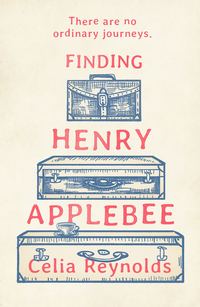
Finding Henry Applebee
Celia Reynolds

One More Chapter
an imprint of HarperCollinsPublishers Ltd
1 London Bridge Street
London SE1 9GF
www.harpercollins.co.uk
First published in Great Britain in ebook format by HarperCollinsPublishers 2019
Copyright © Celia Reynolds 2019
Cover design by Andrew Davis © HarperCollinsPublishers Ltd 2019
Cover illustrations © Shutterstock.com
Celia Reynolds asserts the moral right to be identified as the author of this work
A catalogue record for this book is available from the British Library
This novel is entirely a work of fiction. The names, characters and incidents portrayed in it are the work of the author’s imagination. Any resemblance to actual persons, living or dead, events or localities is entirely coincidental.
All rights reserved. No part of this publication may be reproduced, stored in a retrieval system, or transmitted, in any form or by any means, electronic, mechanical, photocopying, recording or otherwise, without the prior permission of the publishers.
Ebook Edition © August 2019 ISBN: 9780008336318
Version: 2019-09-04
Table of Contents
Cover
Title Page
Copyright
Dedication
Epigraph
Prologue
Part One: ENCOUNTERS
Chapter 1
Chapter 2
Chapter 3
Chapter 4
Chapter 5
Chapter 6
Part Two: CONFESSIONS
Chapter 7
Chapter 8
Chapter 9
Chapter 10
Chapter 11
Chapter 12
Chapter 13
Chapter 14
Chapter 15
Chapter 16
Chapter 17
Chapter 18
Chapter 19
Part Three: SECRETS
Chapter 20
Chapter 21
Chapter 22
Chapter 23
Chapter 24
Chapter 25
Chapter 26
Chapter 27
Chapter 28
Chapter 29
Chapter 30
Chapter 31
Epilogue
Acknowledgements
About the Author
About the Publisher
To my mother, Joy,
&
especially, gratefully, Caroline and Brian, wherever you are – this is for you
‘It’s that—the thought of the few, simple things we want and the knowledge that we’re going to get them in spite of you know Who and His spites and tempers—that keeps us living I think.’
Dylan Thomas, The Collected Letters of Dylan Thomas
‘Periissem ni periissem.
I would have perished had I not persisted.’
Anstruther Clan Motto
Prologue

A Pollock on the Floor
KING’S CROSS STATION, LONDON, DECEMBER 6: DEPARTURE, 8:33 A.M.
Henry
What it all came down to, in the end, were the contents of a small brown suitcase, stored within stretching distance under the bed.
By Henry’s own admission the case itself was unremarkable. Scuffed and shabby, it had mouldered, half-hidden in the semi-darkness on a slightly dusty, carpeted floor. The handle, which was made of a robust, finely crafted cowhide leather, had grown ragged, and the once shiny metal clasps designed to spring open with a conspicuously satisfying click were tarnished and dull. And yet, Henry reminded himself, appearances can be deceptive; what mattered to him lay meticulously preserved within.
He kept a firm grip on the suitcase’s handle as he made his way onto the teeming concourse at King’s Cross train station. It was still early, the air charged with a melee of arrival and departure announcements, the throb of engines, the irritable drone of traffic from the nearby Euston Road. Henry felt a carousel of emotion crank into gear inside him. Focus! he told himself. Don’t let yourself get distracted until you’re seated on that train…
He drew to a stop in the centre of the concourse and placed his suitcase at his feet. Overhead, an indistinct mass of words blurred and flickered on the electronic departure board. Henry rubbed his eyes and tried desperately to remember his Mantra of the Day:
‘Applebee,’ he mumbled under his breath. ‘My name is Henry Applebee…’
Steadying himself with his walking stick, Henry lowered his gaze to the granite-grey concourse floor. Tiny spots of blood were raining down upon it, just inches from his black Derby shoes. It took him a moment to grasp where the blood was coming from, then he raised his hand to his face and realised with a start that it was trickling from his nose.
Henry’s heart sank. The sharp slick of red struck a violent chord of colour amongst an uninspiring sea of grey and black, navy and taupe – flat, wintry hues which hovered like low-lying clouds around the shoulders of the commuters who stood transfixed before the overhead departure board, or scurried backwards and forwards, zigzagging continuously across his path.
‘Whatever you do next,’ he said in a valiant attempt at calm, ‘DON’T PANIC!’
Henry’s eyes darted to the dizzying conveyor belt of faces sailing past him. One or two of his fellow travellers turned and cast a cursory glance in his direction. The majority, he noted, barely seemed to register him at all. He wondered if they were repelled. Perhaps they were just far too absorbed in the busyness of their own lives to notice an old man with a bloody nose?
He teetered, incredulous, as blood continued to gush in slow motion from his body and began to form an expanding pool of crimson on the floor.
It was out of his peripheral vision, as he detected the ferrous taste of metal trickling down the back of his throat, that he suddenly saw the figure of a girl running towards him. Henry scanned the outline of her face, caught the lightness and the ease with which she moved. For one brief instant, he debated whether she might be an angel. But then, as she drew closer, he saw to his relief that she was just a girl, an ordinary teenager like any other, probably seventeen or eighteen at most. Besides – now that he came to think of it – wasn’t an angel supposed to materialise in a nimbus of white light? Not arrive sprinting, dragging a wheelie bag behind her and spilling milky coffee from a paper cup onto the floor…
As she approached the centre of the ever-widening circle in which he now found himself, the frothy liquid splattered left and right, merging with the bloodstains on the ground.
Henry and the teenager stared in unison at what they had done.
‘It looks like a Jackson Pollock,’ he said, marvelling, despite himself, at the effect. He pointed at the evolving creation with his stick. ‘I think the technical term is “drip painting”.’
The girl scraped her long, mousey hair behind her back and tilted her head to one side. She was standing right next to him now, eyes narrowed, lips pursed in contemplation.
‘Looks to me like the inside of my head,’ she replied in a lightly accented voice. ‘When I’m having a bad day. A day full of demons.’
Henry thought this was an interesting analogy, but he was too distracted searching for something to stem the blood flow to express the fact out loud. He patted the pockets of his overcoat and noticed that the fringes of the girl’s multicoloured scarf were stained with thick, wet splashes of coffee.
Silently, he berated himself.
‘It’s dramatic, though,’ the girl continued. Her tone was attentive, her pale eyes keen, unwavering. ‘Like an explosion of light and dark.’
Turning at last to face him, she pressed a pocket-sized packet of tissues into Henry’s palm.
Henry fumbled, his stiff, papery fingers tugging clumsily at the slippery semicircle of perforated plastic.
The girl edged closer and cupped her hand around his arm. ‘Are you okay?’
Henry nodded. Instinctively, he felt that he should ask her name, discover the identity of this troubled, angelic stranger who had rushed, unbidden, to his aid, but his heart was still jackhammering beneath his ribs.
It was the damnedest thing… Half of him had expected to see his life flash before his eyes, and yet surely this wasn’t his time? Not here. Not now. Not when his journey was only just starting to unfold?
He blinked several times in succession in an effort to ground himself more fully in his surroundings.
The irony of the situation weighed on him like sin.
Here he was, once again in a bustling train station (albeit one on a much grander scale), ready to resume where he had left off all those years ago, the night of a snowstorm, and of a slow-curling flame…
Henry raised his head. Fixed his gaze on the soaring latticework of white metal girders which strained and arced, crisscrossing like a giant sugar cage high above the station concourse. He felt the girl take the tissues from his hand. There was a moment’s hesitation, and she began to wipe the trails of blood from his chin.
Henry kept his head held high and inched his foot discreetly along the ground, searching for his suitcase. He found its flat, armoured surface with his heel and gave an inner sigh of relief. It was still there. Everything was fine. His plan was all on track!
In the expectant space before him, Henry sensed the Pollock seeping into the concrete, morphing like a kaleidoscope and creating wondrous new forms, until the blood slowed into droplets, and finally into nothing at all, so that all that remained were shiny swirls of milk-white and scarlet and caramel-brown; a promising – if unexpected – explosion of light and dark on a once empty floor.
Part One
1
The Notebook
KENTISH TOWN, LONDON, DECEMBER 5: JOURNEY EVE
Henry
My name is Henry Arthur Applebee. I’m eighty-five and counting, with an arthritic knee, a healthy head of hair and all my faculties, though not all my own teeth. I’ve had a pretty good life, but I’d be lying if I said I didn’t have any regrets. Anyone who gets to my age and says they have no regrets is either deluded, or senile, or both. When all’s said and done, the facts remain as follows:
I may be old, but it doesn’t mean I don’t still have any dreams.
Who’s to say there’s an expiry date on achieving your goals?
Is it ever too late to right a wrong?
Now that Devlin’s gone, I’ve learned that establishing a focused and precise daily mantra can be a very effective way of ensuring your marbles are still intact. ‘Stay engaged in life!’ – that’s what they say when you retire. Then, as time hurtles by and everyone you know starts dropping around you like flies, it’s: ‘Keep your mind active. Cultivate a hobby. Join a community group!’
But for me, it all comes down to my notebook. The Revealer of Secrets. The Holder of Truths. The place where those I’ve loved reach out – right from between these very pages – and, grinning, take me by the hand and say, ‘Come in! Don’t be shy. You want us to show you something marvellous?’
It began, somewhat prosaically, with Adam Donnelly, a young man from Wyedean who called in to see me at the start of July. Banjo and I had been managing just fine on our own up until then. But visitors have an annoying knack of stirring things up; of reminding you there’s a whole sprawling world beyond the confines of the one you’ve learned to inhabit by yourself.
‘We’d like you to write an article for the Wyedean quarterly magazine,’ Adam D. said. ‘It’s for a retrospective we’re running on former members of the teaching faculty, and as our most senior contributor, we’ll be featuring you in our cover story. You’ll be the poster boy for excellence! For a life well and truly lived.’
A small weight snowballed inside me. ‘Will anyone still be interested?’ I asked. This was not false modesty; on the contrary, I was positively taken aback. The corners of Adam D.’s mouth veered upwards. ‘You’re one of Wyedean’s most esteemed former language teachers, Mr Applebee. The board thinks a self-penned profile will be illuminating not just for the current staff and pupils, but also for your peers.’ ‘Oh,’ I said, ‘I see. Are any of them still alive?’
I hadn’t heard from Wyedean in a long while and the request puzzled me. ‘What kind of illuminations are you looking for?’ I asked. ‘Anything uplifting,’ he replied. ‘Anecdotes, observations, greatest achievements. That kind of thing. It’s a tough world our pupils are facing. Hugely competitive. Our aim is to buoy them up with as much support and inspiration as we can.’ Adam Doolally drummed his fingers on the arm of my wing-back chair and smiled encouragingly once again.
Doubtful as to my ability to either illuminate or inspire, I nodded. Signed on the dotted line, as they say. It was only after he’d gone that the full magnitude of the task hit me: academic career aside, I couldn’t think of a single event in my life which might reasonably qualify as a ‘greatest achievement’. Nothing worthy of the inspiration-hungry readers of the Wyedean quarterly magazine, at any rate.
How in the name of all that’s holy does a senior citizen, occasional UFO spotter and Francophile reduce eight-and-a-half decades (and counting) of life to a fifteen-hundred-word article? It felt remarkably as though I were being called to account. ‘Impress us!’ Wyedean seemed to be saying. ‘Tell us what you know. What you’ve learned. Show us who you are.’
Bells of panic filled my chest. (Never a good sign at my age.) What Wyedean wanted was insights, the Happy Ever After. But what about the areas of my life where I’d failed so spectacularly? What on earth was I supposed to say about those?
I decided to narrow my focus and stick to the long, seamlessly interchangeable years spent teaching hormonally fuelled adolescents to conjugate French verbs. It was quite staggering, when I came to think about it. Entire decades had slipped by. Decades filled with page after page of Verlaine, Gide, Maupassant, Baudelaire. It was extraordinary, the degree to which I’d buried myself in those pages. Revelled in their majesty. Wallowed – privately – in their pain.
To Wyedean, I was still Mr Applebee: devoted (and, it would seem, fondly remembered!) former Head of French; but to me I was just Henry, the gauche, skinny teenager running around the streets of Chalk Farm with Devlin, yet to put on the uniform, yet to meet the girl.
When the article was finished, I dropped it, shamefaced, into the post box and tried desperately not to think of it as a lie. An evasion, maybe, but then how could they know it was the things I didn’t put in – the personal things, the things buried at the bottom of a dusty suitcase – which had defined me?
Changi… Sunburn so bad the skin peeled away from my chest in sheets. Everyone told me to keep quiet about that. It was a punishable offence. The officers would scrub the blisters with salt water if they got wind of it. I grew up so fast, I barely recognised myself when I arrived back home.
And then, when I did so, I climbed a staircase and there she was. The very last thing I was ever expecting to happen to me, Fra–
Henry’s hand jerked abruptly from the page. A noise (a grunt? A cough? A chuckle?) filtered through the wall from the spare room.
‘Devlin?’ he whispered. ‘Devlin, is that you?’
Henry cocked his good ear to one side, but all he could make out was the steady ticktock ticktock of the carriage clock on the mantelpiece. He held his breath, the curvature of his spine straightening by degrees until finally, he felt it: his brother’s voice, brushing like dew against his skin.
Evening, Henry. How’re things?
Henry wiggled his finger in his ear. Devlin. Where does one begin to capture the essence of a man whose character had been so large, so utterly irrepressible that even in death his exuberance couldn’t be contained?
Don’t keep me guessing, Devlin continued. How’s tricks? What’s going on?
Henry settled back into his chair and attuned himself to the frequency, as though he’d stumbled across some strange, transcontinental broadcast on the radio. ‘I’m fine,’ he replied to the room at large. ‘Fine, that is, aside from the fact I’m sitting here, in my living room, talking to you.’
He stared into the flat, empty space ahead of him and beamed.
Following up his Wyedean article with a notebook of ‘recollections’ (memoirs seemed too worthy a concept, too weighty, too proud) had been the result of an overwhelming urge to continue writing, only this time Henry was determined to do it for himself alone – no expectations, no limitations, no holds barred. What he hadn’t bargained on was the way the focused bursts of concentrated silence gave rise to many strange and wonderful occurrences, not least of all these fleeting, otherworldly conversations with Devlin, two years gone.
Occasionally, like today, Henry answered him out loud, but he didn’t like to make a habit of it in case he forgot himself and did it in public. Next thing you knew, if anyone saw him chuckling or talking to his dead brother while he was queuing for his pension at the post office, they’d be carting him off to the funny farm.
‘I’m going away,’ Henry ventured with a faint whiff of heroism. ‘And the truth is, I don’t think I’ve ever felt so simultaneously terrified and exhilarated at the prospect of anything in my entire life. I leave for Scotland tomorrow morning on the nine o’clock train.’
He lowered his gaze. Deep inside his chest, his heart began to quiver.
Away? Devlin’s voice, bolder now, slipped a little further beneath Henry’s skin. It’s her, isn’t it? The girl? Don’t tell me you’ve actually gone and found her after all this time?
Henry bristled. ‘She has a name, Devlin. And as to finding her, yes, it would seem to be the case.’
There was a momentary pause.
Hellfire. So what’s the problem?
Henry shifted in his seat. ‘Well – if you must know – I’ve had a premonition. But I won’t be stopped,’ he added in a tremulous voice. ‘Not by you. Not by anyone.’
Have you finally gone loco? Devlin shot back. When have I ever discouraged you from doing anything? The way I remember it, it was always you who’d be running after me! Ah Jesus, Hen, what’s with the premonition, anyway? I leave you alone for two minutes and you’re moonlighting as some kind of oracle? Sounds to me like someone’s got way too much free time on their hands!
There was another brief pause. Well go on. Let’s have it then.
Just the tiniest bit miffed, Henry cleared his throat. ‘That despite all my hopes and prayers for the contrary, nothing at all is going to go to plan.’
He sucked in his cheeks and waited for Devlin’s disembodied response. When it didn’t come he shook his head, waited, shook it again, but the signal – for want of a better word – was gone.
Alone once again, Henry slipped off his tortoiseshell glasses, rubbed his eyes with the heels of his hands and rose stiffly from his chair. He carried his notebook into his bedroom and placed it next to a jar of Vicks VapoRub on the bedside table. Banjo, his Parson Russell Terrier, padded into the room behind him and hovered at his side, his ears drawn back, his face full of mistrust.
‘Banjo, come on now, get out from under my feet,’ Henry said gently.
On the eiderdown, his small brown suitcase lay open and ready, the air around it lightly tinged with must. A faint tremor rippled upwards from Henry’s fingertips as he stepped towards it, and with painstaking care and attention proceeded to remove a series of bundles from the elasticated pocket running along its side:
1 1. a silver hair-slide, a pearl and diamanté butterfly perched on its tip, wings spread;
2 2. a uniform cap, field service, blue-grey;
3 3. a paper napkin the colour of turned cream, bearing the faintest imprint of coral lipstick;
4 4. a picture postcard, the back of which was filled with a seemingly random miscellany of words and phrases, each forward-sloping letter jostling against its neighbour like links in a tightly woven chain;
5 5. a jagged strip of dark red velour.
Henry unwrapped each item individually and turned it over in his hand. Raising his gaze, he cast a surreptitious glance at the alarm clock by his bed.
Twelve hours exactly to departure.
One memory at a time, Henry placed his past back in his case. His preparations complete, he made his way back to the living room and lowered himself into his wing-back chair with a cup of Ceylon Orange Pekoe and three custard creams.
‘Amended Mantra of the Day,’ he said, turning to Banjo’s upturned face. ‘No matter what age we reach, or however much our lives may settle beneath the inevitable cloak of familiarity, it is never, ever too late to be amazed.’
Henry wondered what the people from Wyedean would say if they knew the context behind his words. That he was a fool, probably. That after a lifetime of so-called academic excellence, how banal, how unoriginal of him to admit that what mattered to him most now was love.
He shifted his gaze to the antiquated furniture and mountains of yellowing books as though viewing everything for the first, or last, time. He would not return. The world could mock him all it liked, he wouldn’t give up until he’d said the words he needed to say to the only person alive who mattered to him now.
Henry’s hand drifted to an envelope peeking out from his cardigan pocket. Inside it: pre-purchased train tickets for Edinburgh. First Class. Two.
‘Perhaps it’ll be fine after all,’ he said, his spirits revived by a resurgent ray of optimism. He leaned over and rubbed the back of Banjo’s head. ‘And if it’s not fine, then stone me, at least it’ll be illuminating…’
2
Wide Awake
FINSBURY PARK, LONDON, DECEMBER 5: JOURNEY EVE
Ariel
Somewhere along a dusky stretch of track, Ariel felt her nerve waver. She drew her face back from the window as the train decelerated, leaving the grainy, urban blackness behind and easing its way beneath the vast, multi-arched roof of Paddington Station.
A stranger standing in the aisle purred into her phone: ‘We’re pulling in now… I’ll meet you in the usual place… Yes… Yes, me too.’
Ariel lowered her eyes and picked at a hangnail embedded in her thumb. If anything should happen to her over the next few days – some random accident, some freakish act of nature, or God, or destiny, or whatever – Linus would be the one to get a phone call. It could come from London, Edinburgh, or just about anywhere in between; the point was that a police officer would call with the news, and none of it would make any sense because she hadn’t told him the truth about where she was going. It would be a disaster. The worst possible way for him to find out she’d lied.
Actually, that she’d been lying to him for days.
She squeezed her eyes shut and tugged. A quick, sharp flare of pain and the hangnail came away in her fingers, a tiny droplet of blood mushrooming upwards and outwards over the rosy surface of her skin. Don’t be a wuss, she told herself. It’s two days! Forty-eight hours from now it’ll all be over.
At 20:37, Ariel stepped down onto a freezing cold platform, her wheelie bag in her hand. She pulled her multicoloured scarf tighter around her neck and joined a fast-moving line of passengers heading towards the ticket barriers. On instinct, she tilted her face upwards and breathed in the thick, metallic air. A faint murmur of danger (unspecified, intangible, largely cinematic in origin) caught at her chest. The pull of the city, she thought, her spirits lifting. A promise of adventure. Thank you, God! Now I remember.
The descent to the Underground led her into a frenzied warren of escalators and tunnels. Ariel negotiated her route to Finsbury Park with relative ease, surfaced at ground level and walked down a long, starkly lit passageway until she reached a busy sleeve of London high street. She emerged onto Seven Sisters Road and faltered. A dense knot of pedestrians scurried past her, snatching her breath away, their faces armed with hard-edged confidence – the kind of attitude, she decided, that only a city as awesome as London could produce.
She stepped to one side, flipped open the canvas bag slung over her shoulder and searched for Tumbleweed’s email on her phone. Mags is cool with you staying the night, he’d written. You’ll like her. Just don’t call her Magdalena. Crazy girl thinks it makes her sound like a disciple.
She memorised his directions, crossed over the road and set off to her right. A zigzag of turns, and she arrived at last at a steep run of concrete steps leading to a side-street basement.
Ariel lingered for a moment on the pavement and peered into the milky darkness. ‘Mag-da-le-na,’ she intoned, airing the word out, freeing it so it wouldn’t sneak up on her later and catch her unawares.
She dragged her wheelie bag to the bottom of the stairs and pressed her finger to a bronze buzzer. A light snapped on beyond the window, and a wiry cat, perched territorially on the windowsill, glowered at her with bilious green eyes.
‘Hi there,’ she said, backing carefully away from it.
Behind her, the door swung open. ‘You must be Ariel,’ said a girl with violet, asymmetric hair. ‘I’m Mags. Come in!’
The first thing Ariel felt was the music, slipping inside her, squeezing the air from her lungs like a vice. ‘Aladdin Sane,’ she said, dropping her shoulder bag to the floor. ‘Ziggy goes to America. 1973.’
Mags raised her eyebrows. ‘Yeah, it is! You a Bowie-head?’
Ariel tilted her hand from side to side. ‘Kind of, I suppose. I used to think I was the only person on the planet who thought it was called A Lad Insane until I found out the pun was intentional. Estelle – my mother – was a massive Bowie fan. It’s weird to hear it here. Reminds me of home.’
‘Shit. Sorry.’ Mags took an aborted step towards an old-school iPod and seemed to be weighing up whether or not to turn it off. ‘Tumbleweed told me what happened, I’m –’
‘It’s okay. It’s fine, don’t worry.’
Ariel smiled awkwardly and looked away, her throat thickening, an icy, sinking sensation billowing through her insides. She tried to distract herself by focusing on her surroundings: low ceiling; a lumpy sofa; floorboards bare apart from a shabby, oversized Persian rug; cheap lamps and mirrored cushions and a half-eaten pizza scattered at random intervals around the room.
The back wall was covered with what she assumed must be Mags’s artwork. Sketch after sketch of semi-naked, contorted torsos which somehow managed to look both fragile and disarmingly self-possessed.
‘Are those yours?’ she asked, moving closer. The hand-drawn charcoal figures were softer close up; less physically arresting. ‘They’re amazing! Seriously, I wish I could do that.’
Mags threw her an appreciative smile. ‘Gracias. They’re part of my coursework. I’m still working on my technique, but honestly, I’d rather look at those than at that hideous woodchip wallpaper underneath.’
Ariel pulled off her gloves and ran a finger over the pockmarked surface of the wall. She’d grown up in a house full of woodchip wallpaper, but this stuff looked original, like it had actually been there since the ’70s, long before she was born.
She took a step back and inhaled. The air smelled damp and faintly aromatic, an oddly comforting blend of the rundown and the exotic.
‘You’re a lifesaver for putting me up,’ she said, turning back to Mags. ‘Linus thinks I’m in Oxford with Tumbleweed, so at least being here with you makes me feel less guilty.’ She caught the look of curiosity on Mags’s face and shrugged. ‘It was a necessary lie. Given the circumstances.’
‘No worries. Any friend of my cousin’s. Who’s Linus, anyway? Your boyfriend?’
Ariel smiled. ‘No, he’s my dad.’
‘You call your dad by his first name? Wow. Progressive.’
Ariel rolled her eyes. ‘Trust me, you wouldn’t say that if you met him. The name thing’s just something I’ve done for a while. It’s no big deal, really.’
Her gaze drifted to the sofa.
‘That’s where you’ll be crashing, I’m afraid,’ Mags said. ‘Or if that doesn’t grab you, my boyfriend and I are going to a party in Kensal Rise. It might even turn into an all-nighter if the booze holds out, so don’t be surprised if we don’t come back…’ She paused. ‘You know, you’re welcome to come with us if you like?’
As she spoke, a tall, monobrowed guy in a donkey jacket slunk into view in the bedroom doorway. He looked over at Ariel and grinned. ‘Alright?’
Ariel held up her palm in greeting. She opened her mouth to answer Mags’s question, then faltered. A student party. In London. Cool, arty, interesting people her own age. No one to answer to but herself. Wasn’t that what eighteen-year-olds were supposed to do? Let their hair down and have some fun?
She took a breath, felt the sharp thud of a door slamming shut somewhere deep inside her, and slowly shook her head. ‘Thanks, Mags, but I have to leave early in the morning to get to King’s Cross. I can’t risk missing my train.’
When they’d gone it felt as though they’d taken every trace of oxygen from the room.
Ariel laid her coat and scarf on the arm of the sofa. She stood tugging at the sleeves of her jumper, trying to adjust to the stillness. In Oystermouth, she was used to it. At night, once the bay had grown cool and dark and secretive, not even the low roll of the waves carried to her bedroom at the back of the house. But here – in the city – it was unexpected. Unsettling, even.
She turned and searched for the iPod before remembering that it, too, was gone; swept into Mags’s pocket along with a packet of Rizlas and some gum. The only sounds now came from the street: the swoosh of passing traffic; the truncated slamming of car doors; the dull scrape of anonymous, torso-less feet on the pavement beyond the railings; low voices, muffled voices, distant, unintelligible all.
Alone in the city’s alien underbelly, Ariel watched the pulsing of her heart through her clothes, the first leg of her journey begun.
She settled herself cross-legged on the floor and unzipped her wheelie bag on the Persian rug. Her hands slid beneath the hastily packed layers of clothing until they found the large, padded envelope at the bottom. She lifted it out and placed it in her lap, contemplating, as she had done so many times before, the startling immediacy of Estelle’s handwriting etched across its front.
Ariel read the words out loud: ‘For E.M.H.’
Secured with a strip of Sellotape beneath it was a Post-it Note containing a phone number and an address on the outskirts of Edinburgh – some far-off village she’d never even heard her mother mention before. And below that, five words, their lettering markedly less defined: ARIEL, PLEASE DELIVER BY HAND.
Ariel ran her fingers over the words, held the package to her chest, closed her eyes. It was bad enough not knowing what was inside it, but now she’d had to lie through her teeth, too. ‘Promise me you won’t tell him,’ Estelle had asked her. ‘You must promise me you won’t tell Dad anything about this at all.’
Why???
‘Fuck.’ Ariel glanced at the low-rent transience of her surroundings. Here, in this abandoned basement, the package had mysteriously transformed itself into the most intimate object in the room…
She lowered it to her lap and slid it back inside her case.
The second envelope – the much smaller one containing a letter ‘inviting’ her to begin her journey – had arrived by post the previous week, addressed in an unfamiliar hand to Miss Ariel Bliss. It remained tucked away where she’d hidden it, in the inside pocket of her canvas shoulder bag.
Remained, as it turned out, an enigma, even after reading.
The bathroom, Mags had told her, could only be accessed by walking through the bedroom. (‘Cracks me up,’ she’d called as she headed out the door. ‘Whenever I want to blow people’s minds, I tell them my shitty rental has an underground en suite!’)
Ariel pushed open the bedroom door and switched on the light. Immediately to her right was a desk weighed down by a large pile of books on art and design. Alongside them were a couple of well-thumbed Ursula Le Guin novels. Half a dozen by Stephen King. She reached out her hand and touched the woody texture of their spines with her fingertips. Home, she mused, with an unexpected smile.
The bathroom itself, tucked away in the far corner of the room, was narrow, windowless, white; surely, she thought later, the least likely location on earth for what was to happen next. And yet it was right here, as she was bending over the sink – one hand drawing her hair back from her face, the other holding her toothbrush – that she suddenly felt a pair of hands brush against her shoulders from behind.
Ariel dropped her toothbrush into the basin and spun round. Every cheesy horror movie she’d ever seen flashed before her eyes. Slowly, she turned once more to face the mirror. The reflection staring back at her was her own, the backdrop nothing more than a plain, ceramic tile.
‘Holy shit,’ she said in a horrified voice. ‘Get a grip! Idiot.’
A shiver of recognition rippled along her spine. Ariel gasped, her eyes open wide. What she’d felt had been cold, fragile, and something else – something she almost didn’t dare articulate – something familiar. The invisible hands had lain on her body for the briefest of seconds, but they had been there, she was certain of it.
Just before dawn, a pair of car headlights sliced through the living room darkness with two exploratory beams of light. Ariel stirred and raised her head from the sofa. She listened for the sound of Mags’s key scraping against the door, the drunken rapping of knuckles on the window pane, but none came.
A shadow flitted briefly past the window. Bollocks. She hated being scared!
She stared up at the ceiling, her heart thundering in her chest, then reached her hand to the floor and fumbled for her phone. At her touch, the screen sprang to life, illuminating her face with a bright, neon glow. She tapped on the email icon and opened a new message. LONDON CALLING, she wrote in the subject line, then backed up and changed it to LONDON, WIDE AWAKE!
Hey Tee, it’s me. I’m at Mags’s place and I can’t sleep.
Confession 1: I’ve been thinking about Estelle and wondering if she can see me. If she thinks I’m doing a good job. If I said the right thing when I told Isaac she left us to become a star in heaven and light up the sky over Oystermouth Bay. He started looking for her every single night, and when he couldn’t see any stars he asked if she’d forgotten to shine for us. I panicked and told him Estelle’s star was so beautiful and bright, she was probably needed somewhere else…
Confession 2: My head’s been full of demons again. It’s kind of intense. There’s just so much pressure to be a fully formed person, straight out the gate. Maybe I’m losing it. Maybe it’s just me?
Confession 3: A secret scares the crap out of me. Do you think my promise to Estelle will make everything come right?
Ariel lifted her thumbs from the keypad. She entered Tumbleweed’s name in the To box. Scanned over what she’d written. Faltered.
Tapped Delete.
In the distance a car alarm began to wail.
She slid her legs from her sleeping bag and carried her phone to the woodchip wall of artwork. Shivering in the half-light, she ran her eyes over the shadowy rows of pictures until she settled upon a sketch of a woman, her arms loosely folded over her small, bare chest. The woman’s face was in profile, her expression hard to read. Ariel leaned her head to one side. From one angle, she thought she saw rapture; from another, grief.
‘What are you looking at?’ she whispered.
A thin wedge of light from the window shimmied across the floorboards. London was lonely at night, she decided. It wasn’t the great big adventure she’d been expecting.
‘Loneliness is nothing more than an illusion,’ she reminded herself. ‘Just like Frank said.’
She accessed the camera function on her phone and held it up in front of her. ‘Anyway, I’m not here for an adventure,’ she added in a purposeful voice. ‘I’m here because of a promise.’
Ariel stared at the wall ahead. Then again, what if her cross-country mission brought her closer, somehow, to Estelle?
She snapped a photo of the woman in the picture and sent it to Tumbleweed.
Somewhere nearby, in the city of shadows, a clock struck five.
Her train to Edinburgh was at eight…
She made her way back to the sofa, zipped herself inside her sleeping bag and dropped her gaze to her canvas bag lying nearby. The person who’d sent her the letter – summoning her to Scotland in such a polite, cryptic way – had no idea Ariel would be arriving early. And that was just the way she liked it.
In fact, it was about the only part of this entire weird undertaking that was perfectly fine with her.
3
The Tower
BLACKPOOL, FEBRUARY 1948
Henry
Henry’s jaw drops. The moment he steps inside, he can smell it: something raw; and electric; and alive.
The entrance hall at street level is bigger, grander than he’d imagined; high-ceilinged, ablaze with light, fizzing with expectation. He joins the queue behind a man in a flamboyant silk tie and gazes overhead, cap raked at an angle, hands resting casually in the trouser pockets of his uniform. The new year is six weeks old. He’s back in Britain at last. He is almost, but not quite, home.
Henry roots his feet to the floor, his grey eyes drinking in the wonderment of it all. Lined up ahead is a medley of earnest faces, young men and women like himself, each more dedicated than the next to the business of having a good time. His thoughts flit impatiently to the music, to the chance to finally kick back and relax. He sucks in his cheeks and whistles, long and low. This is it, he thinks. This is something marvellous indeed!
In the shelter of the foyer it’s warm, too. Outside, a blistering wind tears along the promenade, snapping at the skirts of a group of girls who bustle through the open doorway behind him, giggling, a saucy glint in their eyes, their cheeks rouged raw by the chill. He reaches inside his jacket for a cigarette and pulls his hand out empty. Damn it. He gave his last one to Davy Hardcastle. ‘Good luck!’ they’d called out to him. ‘See you back at the billet! Don’t do anything I wouldn’t do.’
Henry smiles to himself. The Tower Ballroom. It had been his idea to come here all along, but the others had their own plans. O’Malley (it was always O’Malley; was there any place on earth the guy didn’t know?) had heard of a bar where the girls kicked up their heels, danced a merry jig on the tables, and if you were lucky, let you run the tips of your fingers up and down the finely stitched seams of their stockings, all the way to no-man’s-land where the gossamer silk ended, and a narrow strip of quivering bare flesh lay waiting to lead you all the way to heaven…
Henry pays his entrance fee and makes his way up a vast staircase, two steps at a time, all the way to the top floor. The dull click of his right knee as he climbs. The heavy drag of his boots. He tries not to think about how disorientated he feels, how the heft of his body would fall slack and clumsy from lack of sleep if he let it. As he rounds a bend, the muscles in his calves protest and contract beneath his skin. He keeps his eyes fixed on the turn ahead. Pushes on.
The scent of perfume, of anticipation, clouds the air. He wishes his uniform didn’t hang so loosely on his diminished frame, but there’s not much he can do about that now. Back at the billet he’d stumbled upon a hollow-eyed stranger in the mirror – a human coat-hanger – no body inside to speak of, just his air force blues suspended like a phantom before him. Henry tugs at the hem of his jacket and pulls himself upright. It’s an automatic movement, ingrained by now. But there are no commanding officers here. No roll call awaits. Just soaring melodies, couples whirling like spinning tops on the dance floor, and eight shimmering glitter balls rotating overhead.
He reaches the top floor, passes through a pair of double doors and enters the ballroom at balcony level. A blast of music rains against Henry’s skin, and a sweet, invigorating rush of adrenaline surges like nectar through his limbs. To his left, row upon row of plush, upholstered seats fan out vertiginously one behind the other, each arranged to afford the best possible view of the dance floor. It takes a moment for his eyes to adjust to the low-level lighting, but he can tell at once that he made the right decision to come upstairs – there are far fewer people up here, and the spectacle is magnificent, like a view from Mount Olympus itself.
‘Bet you any money the Café de Paris never had anything on this.’
Henry turns, sees the man in the silk tie standing in the shadows to his right.
‘The place in London,’ he continues. ‘Piccadilly. Got bombed in the Blitz?’
‘I never went there,’ Henry replies. He shrugs, his mouth curling into a smile. ‘I wasn’t old enough to get in at the time.’
‘Wouldn’t have stopped me,’ the man says with a wink. He leans in. ‘You’re a Londoner, aren’t you?’
Henry, unsure where this is leading, smiles again. ‘I am.’
‘Thought so. I hear the London girls can give guys like you and me the runaround. They can be – you know, standoffish. Stuck-up. But let me tell you something, my friend, they go stark raving mad for it here. It’s the electromagnetism. A couple of spins on the dance floor, and the music releases all their inhibitions. Know what I mean?’
His breath smells faintly sour, and, Henry detects, there’s an unnatural glassiness to his eyes. ‘Hey, fella,’ he says, nudging Henry’s arm, ‘I can spot a rookie a mile off. It’s your first time here, am I right?’
Henry concedes a grin. ‘Maybe. Or then again, maybe I’ve just got a rookie kind of face.’
The man sidles closer. ‘Well, Rookie, take it from me… if you’re looking for a pretty girl to dance with, you’re wasting your time up here. I suggest you follow my lead and make your way downstairs.’
Henry takes a discreet step backwards. ‘Thanks for the tip,’ he says lightly. ‘I’ll bear it in mind.’
He waits for the man to leave and looks around for a place to sit. Immediately ahead of him the first half-dozen rows are almost entirely empty, with the notable exception of one young woman seated alone in the front row. At first, all Henry can make out is the hazy outline of her silhouette. Her bird-like frame is perfectly still, her back draped in shadow, her head tilted forwards over the shiny gold barrier towards the dance floor below. He slips his hands into his pockets and waits to see if anyone joins her, but there are only a handful of spectators milling around, and behind him, two or three couples, lost in their own private dominions, quietly ensconced in the upper rows.
Henry glances towards the staircase. He wonders if perhaps he should go downstairs and get something to drink, when some force – some strange, visceral, magnetic pull – draws his attention back to the young woman. Henry trains his eyes on the back of her neck. And yet she herself doesn’t look round once… She must be totally engrossed; he’s never seen such powers of concentration in a dance hall!
Go over to her, he tells himself. Introduce yourself. Find out who she is.
He takes a step and falters as the light from a glitter ball sweeps firstly over him, then over the girl. He can see her more clearly now: the lush India green of her dress, cinched at the waist; narrow shoulders; soft waves of sandy brown hair swept up in a bun and held in place by an array of decorative clips which glint and sparkle in the beam of light circling above them. Henry counts ten seconds exactly until the glitter ball completes its circuit of the room. The association is inevitable, instantaneous. Like a spotlight in a POW camp, he thinks. Thank Christ I never had to see the inside of one of those.
Slowly, he makes his way along the second row until he’s no more than a foot or two away from her. As he nears the back of her seat, Henry flicks his eyes in her direction. A fine layer of down curves upwards from the nape of her neck, as though reaching for the light. And, he realises with delight, she’s not sitting still after all – she’s moving! Both hands tapping out the rhythm of the music against her thighs.
Henry continues to the end of the row and glances behind him. The girl tips her head further over the barrier and a strand of waved hair slips loose from her bun and bounces against her cheek. He watches, transfixed, as with an almost hypnotic display of ease, she raises both arms to her head and clips it casually back into place.
‘Who is this girl?’ he mumbles under his breath.
He can’t understand it. He hasn’t even seen her face, and yet all he can think about is how intoxicating it must feel to be on the receiving end of such an intense gaze. Like looking into a lighthouse. Like dancing a waltz with the sun!
He doubles back along the front row until finally, somewhere between taking off his cap and smoothing down his hair, he comes to a stop beside her.
‘Wait!’ she cries, holding up her palm.
Henry freezes.
‘This is the absolute best bit! See the couple in the centre of the dance floor? They come here all the time. They dance for half an hour like they own the place, then they’re gone. I thought they might be partners in the romantic sense, too, but Daisy downstairs in the cloakroom said someone told her they’re twins. It’s all just rumours, though. Either way, they’re definitely professionals. Look how perfectly they’re holding each other! No one else can touch them!’
Henry turns and sees a handsome, dark-haired woman staring with queenly confidence into the fiery eyes of a swarthy, Mediterranean-looking male. Their bodies are pressed so closely together, you could barely thread a shoelace between them. As a couple, they’re flawless, incandescent. Henry hates them already.
‘Oh yes,’ he says, as the pair smoulder their way provocatively across the dance floor. ‘Not bad. Absolutely nothing intimidating about them at all.’
To his surprise, the girl responds with a hearty laugh.
‘I’m sorry to disturb you,’ he continues, cursing himself – inwardly – for his inopportune timing, ‘but is this seat taken?’
She turns her head and extends him an appraising gaze. She’s about his age – nineteen or twenty, twenty-one at most – with a peaches and cream complexion, a lively expression, and the most extraordinary liquid blue eyes he’s ever seen. Henry freezes a second time. Oh God, he thinks, she’s beautiful. What now?
She scans his eyes and casts a brief, sideways glance over his shoulder. In the interminable moment it takes for her to respond, Henry manages to convince himself that all she wants is a little peace and quiet to enjoy the dancing. Why else would she be sitting up here all alone?
Who or what, if anything, she sees or doesn’t see, he can’t be sure, but gradually her mouth softens into an irresistible smile.
‘The seat’s free,’ she replies. ‘Sit down. It’s so quiet up here today we’ve got the entire row to ourselves.’
Henry grins and lowers himself beside her. The second his buttocks hit the chair he’s overcome by a violent urge to face her, to win her over before he’s even learned her name. Instead, he does as she does, only with considerably less grace – pinioning his eyes to the dynamos on the dance floor, his hands clamped like barnacles to his knees.
‘Venus and Adonis,’ she says, after a beat.
Henry stares into the gaping void before him. He didn’t think it was possible he could feel any more affronted by this unbearably slick, depressingly accomplished couple if he tried.
‘You’ve got to be kidding me,’ he replies. He turns mechanically to meet her gaze.
‘What?’
‘You’re not seriously telling me they’re called Venus and Adonis? If they are professionals – and with names like that, I pray to God for their sakes that they are – then Venus and Adonis have to be stage names. I mean, it’s a bit over the top, isn’t it? You do realise their real names are probably Shirley and Ken?’
The girl stares at him for a stunned five seconds, then bursts into a helpless fit of giggles. Her laughter is so infectious that soon Henry is laughing, too. In fact, the suppressed nervous tension that’s been building inside him from the moment he sat down quickly runs riot, and before long they’re both laughing so hard, they’re practically doubled over.
She leans towards him and, still giggling, holds up a thin, pink hand. ‘No! I’m not talking about the dancers. I’m talking about that… right there… the inscription engraved in the stonework above the stage. Can’t you see it?’
Instantly sobering, Henry follows her gaze. ‘Sorry?’
She leans a fraction closer. ‘Straight ahead of you… I asked Jimmy the doorman where it comes from and he told me it’s from Shakespeare’s Venus and Adonis. I’d never heard of it, much less read it, but it made me laugh how it’s wound up here, in a dance hall. Must be a reference to the music, don’t you think?’
Henry sees it now; frankly, it’s impossible to miss when she’s pointing at it so prettily, the graze of her voice just inches from his face. He clears his throat and reads the quote out loud:
‘“BID ME DISCOURSE, I WILL ENCHANT THINE EAR…” Yes,’ he says, trying his utmost to compose himself, ‘I’d say it is. It might refer to the music, or maybe to a fellow music lover, like you?’
He peels his hand from his knee and holds it out towards her. ‘I’m sorry – you had me distracted there for a moment – I should have introduced myself. I’m Henry Applebee. It’s a pleasure to meet you.’
‘You don’t need to apologise.’ She gives him a dizzying smile. ‘Honestly, I haven’t laughed so much in ages.’
Henry casts an anxious glance at Shirley and Ken, who (to his immense annoyance) are still lording it over the dance floor. If that’s what he’s up against, then what he’s about to say next could quite possibly result in the most mortifying ten or fifteen minutes of his life…
‘Would you like to dance?’ he ventures, regardless. ‘I must warn you, though, I’m not much of a dancer. It’s the music I enjoy most of all.’
‘Oh, I wouldn’t let them put you off,’ she replies. Her expression, her voice, are utterly forgiving, wholly kind. ‘Music lovers make the best dancers of all. My nan told me that. She had polio when she was a lass and she’s been weak in her legs all her life, but no one loves a tune more than she does. It’s worth dropping by for tea just to see her doing the rumba around her kitchen.’
Henry laughs, then remembers she hasn’t yet accepted his invitation.
She holds his gaze, her blue eyes appraising him once again. ‘I haven’t seen you here before. Are you stationed at Kirkham?’
Бесплатный фрагмент закончился.