Читать книгу: «Kingdom of Souls»
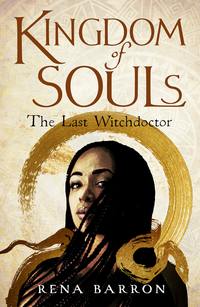
KINGDOM OF SOULS
THE LAST WITCHDOCTOR
Rena Barron

Copyright
HarperVoyager
An imprint of HarperCollinsPublishers Ltd
1 London Bridge Street
London SE1 9GF
www.harpercollins.co.uk
First published in Great Britain by HarperCollinsPublishers Ltd 2019
Copyright © Rena Barron 2019
Jacket design © HarperCollinsPublishers Ltd 2019
Jacket images © PeopleImages/Getty Images (woman)
Rena Barron asserts the moral right to be identified as the author of this work.
A catalogue copy of this book is available from the British Library.
This novel is entirely a work of fiction. The names, characters and incidents portrayed in it are the work of the author’s imagination. Any resemblance to actual persons, living or dead, events or localities is entirely coincidental.
All rights reserved under International and Pan-American Copyright Conventions. By payment of the required fees, you have been granted the non-exclusive, non-transferable right to access and read the text of this e-book on screen. No part of this text may be reproduced, transmitted, down-loaded, decompiled, reverse engineered, or stored in or introduced into any information storage and retrieval system, in any form or by any means, whether electronic or mechanical, now known or hereinafter invented, without the express written permission of HarperCollins.
Source ISBN: 9780008302238
Ebook Edition © September 2019 ISBN: 9780008302252
Version: 2019-07-26
Dedication
To everyone who dares to dream,
dares to live their truths,
dares to stand against atrocities,
dares to say I am enough, this book is for you …
… and for my family.
Contents
Cover
Title Page
Copyright
Dedication
Part I
Prologue
Chapter 1
Chapter 2
Chapter 3
Re’Mec, Orisha of Sun, Twin King
Chapter 4
Chapter 5
Chapter 6
Chapter 7
Chapter 8
Chapter 9
Chapter 10
Chapter 11
Chapter 12
Koré, Orisha of Moon, Twin King
Part II
Chapter 13
Chapter 14
Chapter 15
Chapter 16
Chapter 17
Chapter 18
Fram, Orisha of Life and Death
Chapter 19
Chapter 20
Chapter 21
Fram, Orisha of Life and Death
Chapter 22
Chapter 23
Part III
Chapter 24
Chapter 25
Chapter 26
Chapter 27
Efia
Chapter 28
Chapter 29
Chapter 30
Efia
Chapter 31
Chapter 32
Part IV
Re’Mec, Orisha of Sun, Twin King
Chapter 33
Chapter 34
Chapter 35
Chapter 36
Re’Mec, Orisha of Sun, Twin King
Chapter 37
Chapter 38
Chapter 39
Chapter 40
Part V
Chapter 41
Chapter 42
The Demon King
Acknowledgments
An Interview With Rena Barron
About the Publisher
PART I
For she will rise from the ashes alit in flames.
For no water will ever quell her pain.
For no redemption will befall her.
For we will never speak her name.
—Song of the Unnamed
PROLOGUE
Be still, Little Priestess.
My father kneels before me with a string of teeth threaded between his fingers. They shine like polished pearls, and I square my shoulders and stand a little taller to make him proud. The distant echo of the djembe drums drowns out his words, but it doesn’t tame the twinkle in his eyes as he drapes the teeth around my neck. Tonight I become a true daughter of Tribe Aatiri.
Magic of all colours flutters in the air as gentle as wingbeats. I can’t be still when it dances on my father’s dark skin like lightning bugs. It flits along his jaw and leaps onto his nose. My hand shoots out to catch an ember of gold, but it slips through my fingers. I giggle, and he laughs too.
Girls gossip as their mothers fix their kaftans and bone charms. For every one the magic touches, it skips two, like the rest of us are invisible. My chest tightens, watching it go to others when it’s never come to me – not even once.
The few girls who speak Tamaran ask me what it’s like living so far away in the Almighty Kingdom. They say that I am not a true Aatiri because my mother is not of the tribe. Something twinges in my belly, for there is truth in their words.
I hold my head high as my father straightens my collar. He’s the only man in the tent, and the other girls whisper about that too. I don’t care what they say; I’m glad he’s here. ‘Why doesn’t magic come to me, Father?’
The question comes out too loud, and silence falls upon the tent. The other girls and their mothers stare at me as if I’ve said something bad. ‘Don’t worry, daughter,’ he says, folding the sleeves of my orange-and-blue kaftan, which matches his own. ‘It will come in due time.’
‘But when?’ I stomp.
It isn’t fair that many of the Aatiri children younger than me have magic already. In Tamar, I’m the only one among my friends who can see magic at all, but here, it flocks to the other children and they can make it do things. I can’t.
‘Maybe never, little ewaya,’ says the oldest girl in accented Tamaran. She glares at me and I wrinkle my nose at her. I’m not a baby, and she’s wrong. It will come.
The girl’s mother clucks her tongue and fusses at her in Aatiri. Her words slide over my ears without meaning, like all the strange and beautiful languages in the markets back home.
‘Even if the magic never comes,’ my father says, ‘you’ll still be my Little Priestess.’
I poke my tongue out at the girl. That’ll teach her not to be so mean.
Another girl asks why my mother isn’t here. ‘She has more important things to do,’ I answer, remembering how my father had begged her to come.
‘Why the sad face?’ my father asks, squeezing my cheeks. ‘Imebyé is a time of celebration. Tonight, you begin the long journey into adulthood.’
The djembe drums stop. I bite my lip, and the other girls startle. It’s time to go stand in front of the whole tribe so the chieftain can bless us. But for once, my legs still as the other girls hurry from the tent with their mothers.
‘I want to go home, Father,’ I whisper as the last girl leaves.
Some of the light fades from his eyes. ‘We’ll go home soon, okay?’
‘I want to go home now,’ I say, a little stronger.
He frowns. ‘Don’t you want to take part in Imebyé?’
I shake my head hard enough to make my bone charms rattle.
My father comes to his feet. ‘How about we just watch the ceremony together?’
The chieftain walks into the tent and I tuck myself against my father’s side. Her silver kaftan sweeps about her ankles and stands out against her midnight skin. Salt-and-pepper locs coil on top of her head. ‘Do my son and granddaughter plan to take part in a ceremony they travelled fourteen days to attend?’ she asks, her deep voice ringing in the tent.
My father wraps his arm around my shoulders. ‘Not this year.’
The chieftain nods as if satisfied. ‘May I speak to my granddaughter alone, Oshhe?’
My father exchanges a look with her that I don’t understand. ‘If it’s okay with Arrah.’
I swallow. ‘Okay.’
He squeezes my shoulder before leaving the tent. ‘I’ll save you a spot up front.’
The chieftain flashes me a gap-toothed grin as she squats on the floor. ‘Sit with me.’
The tent flap rustles in my father’s wake. My legs ache to follow, but the sight of the great Aatiri chieftain sitting on the floor roots me in place. I sit across from her as she raises one palm to the ceiling. Sparks of yellow and purple and pink magic drift to her hand.
‘How do you make the magic come to you, Great Chieftain?’
Her eyes go wide. ‘I’m your grandmother before all. Address me as such.’
I bite my lip. ‘How, Grandmother?’
‘Some people can pull magic from the fabric of the world.’ Grandmother watches the colours dancing on her fingertips. ‘Some can coax magic to come with rituals and spells. Many can’t call magic at all. It’s a gift from Heka to the people of the five tribes—a gift of himself—but it’s different for everyone.’
She offers me the magic, and I lean in closer. I hope this time it will come to me, but it disappears upon touching my hand. ‘I can see it,’ I say, my shoulders dropping, ‘but it doesn’t answer me.’
‘That is rare indeed,’ she says. ‘Not unheard of, but rare.’
The feather strokes of Grandmother’s magic press against my forehead. It itches, and I shove my hands between my knees to keep from scratching. ‘It seems you have an even rarer gift.’ Her eyebrows knit together as if she’s stumbled upon a puzzle. ‘I’ve never seen a mind I couldn’t touch.’
She’s only trying to make me feel better, but it doesn’t mean anything if I can’t call magic like real witchdoctors – like my parents, like her.
Grandmother reaches into her pocket and removes a handful of bones. ‘These belonged to my ancestors. I use them to draw more magic to me – more than I could ever catch on my fingertips. When I focus on what I want to see, they show me. Can you try?’
She drops the bones into my hand. They’re small and shiny in the light of the burning jars of oils set on stools beneath the canopy. ‘Close your eyes,’ Grandmother says. ‘Let the bones speak to you.’
Cold crawls up my arm and my heart pounds. Outside, the djembe drums start again, beating a slow, steady rhythm that snatches my breath away. The truth is written on Grandmother’s face, a truth I already know. The bones don’t speak.
Charlatan.
The word echoes in my mind. It’s the name my mother calls the street pedlars in the market, the ones who sell worthless good luck charms because their magic is weak. What if she thinks I’m a charlatan too?
My fingers ache from squeezing the bones so hard, and Grandmother whispers, ‘Let go.’
The bones fly from my hand and scatter on the floor between us. They land every which way, some close to others and some far apart. My eyes burn as I stare at them, straining to hear the ancestors’ message over the djembe drums.
‘Do you see or hear anything?’ Grandmother asks.
I blink and tears prick my eyes. ‘No.’
Grandmother smiles, collecting the bones. ‘Not everyone’s magic shows so early. For some, the magic doesn’t abide until they’re nearly grown. But when it comes so late, it’s very strong. Perhaps you will be a powerful witchdoctor one day.’
My hands tremble as the Aatiri girl’s words come back to me: Maybe never.
‘Come, child, the celebration awaits,’ Grandmother says, climbing to her feet.
Tears slip down my cheeks as I run out of the tent without waiting for Grandmother. I don’t want to be a powerful witchdoctor one day – I want magic to come now. The heat of the desert night hits me, and my bare feet slap against the hard clay. Sparks of magic drift from the sky into the other children’s outstretched arms, but some of it flits away. I dart through the crowd and follow the wayward magic, determined to catch some of my own.
It weaves through the mud-brick huts like a winged serpent, always staying two beats ahead of me. Beyond the tents, the drums become a distant murmur. I stop when the magic disappears. It’s darker here, colder, and the scent of blood medicine burns my nose. Someone’s performed a ritual in the shadows. I should turn back, run away. The wind howls a warning, but I move a little closer. Fingers like crooked tree roots latch on to my ankle.
I yank my leg back, and the hand falls away. My heart beats louder than the djembe drums as I remember all the scary stories about demons. During a lesson, a scribe once warned: Don’t get caught in the shadows, for a demon waits to steal your soul. The younger the soul, the sweeter the feast. A shiver cuts down my arms at the thought, but I remind myself that those are only tales to scare children. I’m too old to believe them.
It isn’t until the outline of a woman comes into focus that I breathe again. Magic lights on her skin, and she writhes and thrashes against the sand. Her mouth twists into an ugly scream. I don’t know what to make of her; she looks both young and old, both alive and dead, and in pain.
‘Give me a hand,’ says the woman, voice slurred.
‘I can get my father,’ I offer as I help her sit up.
Her brown skin is ashen and sweaty. ‘Don’t bother.’ She wipes dirt from her lips. ‘I only need to rest a spell.’
‘What are you doing out here?’ I ask, kneeling beside her.
‘I could ask the same, but I know the answer.’ A flicker of life returns to her vacant eyes. ‘There is only one reason a child does not take part in Imebyé.’
I glance away – she knows.
‘I don’t have magic either,’ she says, her words seething with bitterness. ‘Even so, it answers my call.’
I swallow hard to push back the chill creeping down my spine. ‘How?’
She smiles, revealing a mouth of rotten teeth. ‘Magic has a price if you’re willing to pay.’
CHAPTER 1
Every year, the five tribes of Heka gather for the Blood Moon Festival, and I tell myself that this will be my year. The year that wipes the slate clean. The year that makes up for the waiting, the longing, the frustration. The year that magic lights on my skin, bestowing upon me the gift. When it happens, my failures will wash away and I’ll have magic of my own.
I’m sixteen, near grown by both Kingdom and tribal standards. My time is running out. No daughter or son of any tribe has come into their gifts beyond my age. If it doesn’t happen this year, it won’t happen at all.
I swallow hard and rub my sweaty palms against the grass as the djembe drums begin their slow and steady rhythm. With the tribes camped in the valley, there are some thirty thousand people here. We form rings around the sacred circle near the Temple of Heka, and the fire in the centre ebbs and flows to the beat. The drummers march around the edge of the circle, their steps in sync. The five tribes look as if they have nothing in common, but they move as one, to honour Heka, the god of their lands.
Magic clings to the air, so thick that it stings my skin. It dances in the night sky above endless rows of tents quilted in vibrant colours. My tunic sticks to my back from the heat of so many bodies in tight quarters. The sharp smell in the valley reminds me of the East Market on its busiest days. My feet tap a nervous beat while everyone else claps along with the music.
As Grandmother’s guests, Essnai, Sukar, and I sit on cushions in a place of honour close to the sacred circle. It isn’t because we’re special. We’re quite the opposite: ordinary and outsiders at that. Some people glare at us to make sure we don’t forget. I wish the looks didn’t bother me, but they only raise more doubts. They make me question if I belong here. If I deserve another chance after years of failing.
‘I suppose your gawking means the magic is coming,’ says Sukar, wrinkling his nose. The tattoos on his forearms and across his shaved head are glowing, so he knows as well as I that the magic is already here. ‘Either that, or you’re missing someone back home …’
A flush of warmth creeps up my neck. We both know who he means. I try to imagine Rudjek here, perched on a cushion in his fancy elara. He’d stand out worse than me and love every moment of it. The thought brings a smile to my face and eases my nerves a little.
Sukar, Essnai, and I made the journey from Tamar with the caravan, crossing the Barat Mountains at the western edge of the Almighty Kingdom to reach the tribal lands. Some two hundred people had come, but many more Tamarans of tribal blood hadn’t bothered. ‘We should’ve left you in the Kingdom too,’ I tell Sukar, casting him a scathing look. ‘Some of us are respectful enough to pay attention to the ceremony, so please stop distracting me.’
‘Well, if it’s a distraction you need …’ He winks at me.
‘Back me up, Essnai,’ I beg. ‘Tell him to pay attention.’
She sits cross-legged on the opposite side of Sukar, her face stony as always. My father brewed a blood medicine to colour her hair last night, and the shock of red looks good against her ebony skin. As usual, she’s caught eyes, although she never seems to notice. Instead Essnai looks like a lovesick puppy without her ama Kira at her side.
She shrugs, watching the drummers. ‘He won’t listen anyway.’
I sigh and turn back to the sacred circle. The moon has settled into a crimson hue, deeper red than only an hour before. In Tamar, we’re taught that the moon orisha, Koré, cries blood for her fallen brethren on this night. Five thousand years ago, she and her twin brother, Re’Mec, the sun orisha, led an army to end the Demon King’s insatiable thirst for souls. But the tribes believe the blood moon represents their connection to Heka. For it is only during this time that he returns to give his gift to future generations.
Even from this distance, the fire draws beads of sweat from my forehead. Or at least, I pretend it’s the fire that has me on edge. I wish I could be like Essnai and Sukar. They don’t care about not having magic, but it’s different for them. Neither of their parents have the gift. They don’t have to live up to the legacy of two prominent bloodlines.
When I think of the other reason I’m here – the tests – my belly twists in knots. The drums stop, the sound as sudden as the calm before a storm, and my muscles wind even tighter. The musicians stand almost as still as the statues in the scholars’ district in Tamar. Silence falls upon the crowd. The moment we’ve been waiting for has finally come, but it stretches a beat too long to spite me. In that space of time, the what-ifs run through my mind. What if it doesn’t happen? What if it does, but my magic isn’t strong like my parents’? What if I’m destined to become a charlatan peddling good luck charms?
Would that be so bad?
I draw my knees to my chest, remembering the woman at Imebyé writhing in the sand. Magic has a price if you’re willing to pay. Her words ring in my ears, the words of a charlatan, the words of someone desperate for magic. I push her out of my head. There’s still a chance for me – still time for Heka to give me his gift.
A hum rises from behind me and I crane my neck to see the witchdoctors weaving through the masses. They will perform the dance to start the month-long celebration. The blood moon casts them in eerie crimson shadows. Save for their voices, the entire valley quiets. No whispers, no children fooling around, only the whistle of wind and the rustle of feet in the grass. I want so badly to be in their ranks, to belong, to measure up to my family’s legacy. Instead, I’m stuck on the side watching – always watching.
For the ceremony, seven witchdoctors stand for each of the five tribes. Under their chieftains, the other six make up the edam, the tribal council. Although many of the tribal people have Heka’s grace – his magic – witchdoctors stand apart. The chieftains gifted them the title because they show a mastery of magic above others. Of all the tribal people, only a hundred or so have earned this prestigious appointment. They are the ones that the others revere and the ones I envy the most.
As the witchdoctors grow closer, their chants rattle in my bones. What would it be like to command magic with the ease of taking a breath? To reach into the air to collect it on one’s fingertips, or walk in the spirit world? To not only see magic, to tame it, to bend it, to be magical?
First come the Tribe Litho witchdoctors: four women and three men. Their tribe lies southwest of the Temple of Heka in the woodlands. White dust covers their bodies and vests of rawhide. Their intricate crowns, made of metal and bone and colourful beads, jangle in the breeze. The ground shifts beneath their feet, moving as gentle as ocean waves, gliding them to the sacred circle, which only the edam are allowed to enter.
As the procession draws closer, the djembe drummers start again, moving away from the circle to settle in an open spot on the grass. Their slow beat surges faster when the Litho chieftain enters the sacred circle.
Tribe Kes comes next – the smallest of the five tribes, whose lands border the valley to the northwest. Their diaphanous skin and near-colourless eyes remind me of the Northern people. Two are as white as alabaster and their bright clothes stand out in stark contrast. With each step they take, lightning cuts across the sky and sparks dance on their skin. They fan pouches of smoke that burns my nose. It smells of bloodroot, ginger, and eeru pepper: a cleansing remedy I’ve helped my father make in his shop at home.
The tribe from the mountains south of the Temple arrives next. The Zu witchdoctors leap above our heads, their feet supported by air. Tattoos cover their bodies and they wear crowns of antlers, some curved, some hooked, some large, some small. Some fashioned out of slick metal with edges sharp enough to sever a finger. With one misstep, an antler could fall upon the crowd, and it wouldn’t be pretty. I tuck my fingers between my knees just in case.
Sukar nudges me, a lopsided grin on his face. His family is Zu, and although he’s got at least two dozen tattoos, he doesn’t have nearly as many as the edam from his tribe. ‘As always, the most impressive of the five,’ he whispers.
I swat Sukar’s arm to shush him at the same time Essnai slaps the back of his head. He winces but knows better than to protest. It’s the Aatiri’s turn, which Essnai and I are anticipating the most. Even with her short-cropped hair, there’s no denying that her high cheekbones and wide-set eyes mark her as an Aatiri. We’d become friends after she’d found me in the desert at Imebyé with the charlatan.
Relief washes over me as Grandmother steps from the shadows, leading Tribe Aatiri. I hadn’t expected anyone else, but she’s the first familiar face among the edam. I sit up taller, trying to look like even a shadow of the great Aatiri chieftain.
The Aatiri do not walk or leap, for clouds of magic carry them. Grandmother’s silver locs coil on top of her head like a crown, and she wears a half-dozen necklaces of teeth. The Aatiri are tall and lean with prominent cheekbones and wiry hair braided like mine. Their skin is as beautiful as the hour of ösana.
My father is the last of them to enter the circle, and my heart soars. He’s tall and proud and magical, more so than any of the edam aside from Grandmother. He stands upon his cloud with his traditional staff in one hand and a knife carved of bone in the other.
He is an honorary Aatiri edam as he doesn’t live with his people, but they don’t deny that he’s one of the most powerful among them. I’m not foolish enough to think that if … when … my magic comes I’ll be as talented as he is. But seeing him fills me with pride.
The Mulani come last. They live the closest to the Temple of Heka.
It was a Mulani woman Heka revealed his presence to when he first descended from the stars a thousand years ago. Now the Mulani chieftain serves as his voice. The position would belong to my mother had she not left and never looked back. When she was only fourteen, the tribe named her their next chieftain and emissary to Heka because she’d shown such remarkable powers.
I could never live up to that legend either, but it doesn’t stop me from wanting to.
Unlike the witchdoctors of the other tribes, who vary in gender, Mulani witchdoctors are all women. I cover my eyes before the flashes of light that always come when they enter the sacred circle. Sukar curses under his breath because he’s too busy not paying attention to remember. From the groaning around me, he isn’t the only one. When their auras cool, the Mulani stand facing the crowd. They have broad shoulders, curvy bodies, and skin ranging from deep brown to alabaster. My amber eyes and some of my colour come from them, while my lean build favours the Aatiri.
‘I speak for Heka.’ The Mulani chieftain’s words echo in the valley, silencing all. ‘I speak for the mother and father of magic. I speak for the one who gave of himself when the orishas withheld magic from mortal kind. I speak for he who has no beginning and no end.’
The Mulani chieftain is my mother’s first cousin, and her voice rings with authority. Almost as much authority as my mother’s: Arti is soft-spoken, but she commands as much respect in the Almighty Kingdom as her cousin does in the tribal lands. I tell myself I don’t mind that she’s not here. It isn’t so different from how things are at home. There, she spends most of her time at the Almighty Temple, where she and the seers serve the orishas. When my mother left the tribal lands, she adopted the gods of the Kingdom too.
When I was younger, I begged my mother to spend more time with me, but she was so busy even then. Always busy or unavailable or unhappy – especially about my lack of magic. A pang of resentment settles in my chest. If I’m honest, a part of me still wishes things could be different between us.
‘For a thousand years Heka has come to us at the start of every blood moon,’ the Mulani chieftain says. ‘So it will be again. On this night we gather in worship so that he may show favour to our people. We shall share our kas with him so that he can look into our souls and judge us worthy.’
Anticipation quickens my heartbeat. Every year children from the very young to sixteen come into their powers after Heka’s visit. This year has to be my turn – before I’m too old and it’s too late. Magic will stop my cousins from looking at me like I don’t belong.
Magic will finally make my mother proud of me.
After the Mulani chieftain has delivered her speech, the dance begins. The witchdoctors move around the fire, all thirty-five of them, chanting in their native tongues. Their songs fit into an intricate pattern that’s at once odd and beautiful. The ceremony will go on for hours, and the drummers adjust their tempo to match the edam’s rhythm.
Farther back from the sacred circle, campfires crop up between the tents. The smells of brew and roasted meat fill the air. People pass wooden bowls through the crowd, and when one reaches me, I take a sniff that burns my nose. I recoil before I can stop myself.
‘You of all people should be used to a little blood medicine,’ says Sukar, his voice smug.
‘I’ll take the next pass,’ I say, shoving the bowl into his hands.
He laughs, then takes a dramatic gulp.
Someone thrusts another bowl into my hands, and I almost drop it when my gaze lands on Grandmother. She’s broken ranks and stepped out of the sacred circle. Now she towers above me, and my breath hitches in my throat. No edam has ever left the circle during the dance.
‘Drink, Little Priestess.’
Her voice carries on a secret wind, loud and clear despite the noise from the crowd, the curses, the dirty looks. It’s only a pet name when Oshhe calls me that, but there’s weight in Grandmother’s words. She looks down at me, hopeful and hesitant, as she studies my face.
I’m not a priestess. I’m only going to disappoint her.
Unable to refuse, I take a sip. Heat trails across my tongue and down my throat. It tastes herbal and metallic and rotten. I clench my stomach to keep from gagging. Grandmother nods, takes the bowl, and passes it to Sukar, who swallows hard. ‘Thank you, Honoured Chieftain,’ he says, bobbing his head to her. He looks surprised that she’s here too. None of the other edam have left the sacred circle.
‘Have you been practising?’ Grandmother asks me with a toothy grin.
This is the real reason that I’ve been on edge all night. Each year at the Blood Moon Festival, Grandmother tests whether I have magic, and each year I fail.
‘Yes,’ I stutter as the medicine starts to take hold.
I don’t tell her that for all my practising, with Oshhe and alone, nothing has come of it.
‘Tomorrow we will talk more,’ Grandmother says.
Next to me Sukar falls on his face in the grass as the blood medicine takes him first. Essnai rolls him onto his side with her foot. A rush of warmth spreads through my body and my tongue loosens. ‘I still don’t have magic,’ I blurt out without meaning to, but I’m too drowsy to feel embarrassed.
Grandmother starts to say something else but stops herself. A pang flutters in my stomach. I can’t read her expression and wonder what the ancestors have shown her in my future. In all these years, she’s never told me. ‘Our greatest power lies not in our magic, but in our hearts, Little Priestess.’
She talks in riddles like all the tribal people. Sometimes I don’t mind the way she and Oshhe try to soothe over my worries about not having magic. Sometimes it’s infuriating. They don’t know what it’s like to feel you don’t belong, to feel you’re not worthy. To not measure up to a mother who all the Kingdom admires.
Before I can think of something to say, the blood medicine lulls me into a state of peace. The burning in my throat cools into a smothering heat, and my heartbeat throbs in my ears. Behind Grandmother, the other edam move at an incredible speed. Their faces blur and their bodies leave trails of mist that connect them to one another. Their chants intensify. Before long, most people lie in trances – Essnai, the elders, almost the entirety of the five tribes. The djembe drums fall silent, and the witchdoctors’ song echoes in the valley.
Grandmother grabs my hand and pulls me into the sacred circle. ‘Let Heka see you.’
This is wrong. I don’t belong in the sacred circle. Only the edam, and honoured witchdoctors like my father. Never someone like me – without magic, an outsider.
I shouldn’t be here, but I can’t remember whether I mean in the circle, or in the tribal lands. My mind is too foggy to think straight, but I’m warm inside as I join the dance.
Magic swirls in the air. It’s purple and pink and yellow and black and blue. It’s all colours, tangling and curling around itself. It brushes against my skin, and then I am two places at once, as if the bonds that tether my ka to my body have loosened. No. I’m all places. Is this what it’s like to have magic, to feel it, to wield it? Please, Heka, bless me with this gift.
One by one, the witchdoctors fall into a trance and drop to the ground too. There is no sound save for the crackling of the fires set around camp. The Mulani chieftain – my cousin – sweeps past me, her steps as silent as starlight. She’s the only other person still awake.
‘Wait,’ I call after her. ‘What’s happening?’
She doesn’t answer me. Instead she climbs up the Temple steps and disappears inside. Something heavy pulls against my legs when I try to follow her.
I glance down and my breath catches at the sight of my body lying beneath me. I’m standing with my feet sunk to the ankles in my own belly. I gasp and my physical body mimics me, chest rising sharply, eyes wide. Is everyone else’s ka awake too? I can’t see them. Can they see me? I try to move again, but the same strong pull keeps me rooted in place.
My ka holds on to my body with an iron grip—a chain around my ankles. I wonder how I can let go—and if I want to. According to my father, untethering one’s ka is a tricky business. Only the most talented witchdoctors can leave their bodies. Even they rarely do it, for fear of wandering too far and not finding their way back. The blood medicine alone couldn’t make this happen. Grandmother must have performed some magic when she pulled me into the sacred circle, so I’d have a better chance at being seen by Heka. That has to be it.
My body calls me back. The call is a gentle beckoning at first, then grows in intensity. My eyelids flutter and I fight to stay aware as bright ribbons of light set the night sky on fire. I fall to my knees, the pull growing stronger, the source of the light drawing closer. It’s both warm and cold, both beautiful and frightening, both serene and violent. It knows me and something inside me knows it. It’s the mother and father of magic. It’s Heka.
He’s going to bestow his grace upon me.
I can’t believe it’s happening after all these years. My body lets out a sigh of relief.
My mother would be proud if I showed a sliver of magic. Just a sliver. I shut my eyes against the intense light and let his power wash over my skin, his touch as gentle as brushstrokes. It tastes sweet on my tongue, and I laugh as it pulses through my ka.
Then the light disappears, and I’m left empty as the magic flees my body.
CHAPTER 2
The morning after the opening ceremony, I’m in a foul mood as Oshhe and I deliver gifts to his countless cousins. He watches me like a hawk, but I don’t know why. I’m still the same magicless girl I was the night before. Nothing has changed. I want to believe that some magic rubbed off on me – that this year will be different.
My hands tremble and I keep them busy so he doesn’t notice. I have my tests with Grandmother at the hour of ösana. I can’t face her right now, not after entering the sacred circle. Not after feeling magic at my fingertips, feeling it in my blood, and then feeling it abandon me. That’s when the trembling started – as if the magic snatched away a piece of my ka when it left.
I catch the scent of cinnamon and clove and mint on the air and it reminds me of home. Every year my father brings me here so we can spend time with his family and I can get to know my mother’s tribe better. When older Mulani look at me, they see Arti: it’s only the rich brown of my skin that sets us apart. For my mother was not much older than I am now when she left her tribe for the Kingdom and never looked back. I can’t hide from my own reason for coming, the one fuelling my anticipation.
We only stay for half of the month-long celebration. Oshhe has his shop to run back in Tamar, and I have my studies with the scribes. A part of me is anxious to return home, where I’m not so much of an utter failure, especially after last night.
Our Aatiri cousins bombard Oshhe with questions about the Kingdom most of the morning. They ask if Tamarans are as ridiculous as they’ve heard. If the Almighty One is a bastard like his father before him. If Tamar smells of dead fish. If leaving his tribe for the lure of city life was worth the trouble.
While my father talks to old friends, I eavesdrop. I don’t understand everything they say in Aatiri, but I follow enough to stay abreast. They complain about the council that represents their interests with the Kingdom. They want more in return for the precious metals mined from the caves beneath their desert lands. Many times, friends have asked my father to help with trade negotiations, but he always refuses. He says that Arti is the politician in the family. To call my mother a politician is an understatement.
A witchdoctor asks after the health of the seer from Tribe Aatiri who serves in the Almighty Temple. He is very old and wants to return home. The tribe will meet in three days and Grandmother will ask for a volunteer to replace him. They say that only the very old will go because no one else wants to live in the Kingdom. Oshhe laughs with them, but his eyes are sad.
I thread my fingers together to keep them steady while my father hands out the last of the gifts. They’re still shaking from the ritual, but also because my great-aunt Zee has just asked me about Arti. When a simple shrug doesn’t deter her, I say, ‘She enjoys being Ka-Priestess of the Kingdom very much.’
With a nod and a laugh, Zee tells me that Arti could have married the Almighty One had she been clever enough. Joke or not, this is news to me, but it doesn’t come as a shock. My mother has done well for herself in Tamar. Having risen from nothing, she holds the third most powerful position in the Kingdom, behind the Vizier and the Almighty One himself. Not a day goes by that she lets anyone forget it.
‘If you were a princess,’ Zee says, ‘you wouldn’t need magic then.’
At her slight, I forget her comment about my mother.
You wouldn’t need magic then.
Everyone knows about my little problem. My younger cousins at least pretend they don’t, but some of the elders are blunt about it, their tongues sharp. Zee’s the sharpest of them all.
‘If I were a princess, Auntie,’ I say in a slippery sweet voice, ‘I wouldn’t have the pleasure of seeing you every year. That would be such a shame.’
‘Speaking of shame,’ Zee says, fanning a worrisome fly away, ‘I can’t for the life of me understand why my sister would risk angering the other edam by bringing you into the sacred circle.’ She draws her lips into a hard line. ‘What did she say to you last night?’
Grandmother had said surprisingly little, but I won’t tell Zee so she can spread rumours.
‘I see you still like to gossip,’ Oshhe cuts in, fixing his stony eyes on his aunt. ‘A wonder your tongue hasn’t fallen out from talking too much.’
Several people cluck at Zee and she rolls her eyes.
Late afternoon, my father is asked to step in to mediate a dispute between two friends from his youth. He fusses about leaving me until I tell him that I’m going back to my tent to rest before my tests with Grandmother tonight. I’m supposed to meet up with Essnai and Sukar, but I decide to take a walk to clear my mind first. I’m still seething at my great-aunt and seething at Heka too.
In Tamar, hardly anyone has magic, and no one cares that I don’t either. But here magic plays on the wind like dust bunnies, teasing and tantalizing, forever out of reach. Most tribal people have some magic, even if it’s not as strong as Grandmother’s and the other witchdoctors’.
As I move through the patchwork of bright Aatiri tents, a cousin or an old friend of my father greets me at every turn. They ask about last night, but I want to be alone, so I leave camp, hoping for some peace. I weave through the white Mulani tents nearest the Temple of Heka. The Temple stands on the north edge of the valley, the golden dome shimmering against the white walls. A group of Mulani decorate it with flowers and bright fabrics and infuse the stone with magic. I walk by as a procession of women, each with a basket of water balanced on her head, march across the stone. The art is so detailed that you can see the water sloshing around in the baskets.
I slip between the Zu tents covered in animal hide and pause to watch elders carving masks out of wood. It’s getting late by the time I roam into the maze of Litho tents, separated by sheets draped across wire. There isn’t much privacy in the valley, but the camp is quiet aside from the rustle of the cloth in the wind. Most of the tribe has gathered around the firepits to prepare for the second night of the blood moon.
My wandering doesn’t bring me much peace, not like it does when I lose myself in the East Market back home. There’s always a merchant selling something interesting to keep my mind busy there. Or I can listen to the stories of people who come from neighbouring countries. Meet people like the Estherian, who tosses salt over her shoulder to ward off spirits. Or the Yöome woman who makes shiny boots that patrons line up in the early morn to buy. But most of all, I wish I were lying on the grass along the Serpent River with Rudjek, away from everyone and everything.
If the Aatiri camp was orderly, the Litho tents are a mess of confusion. I become so turned around that I end up in a clearing. By the smell of blood and sweat, I can tell that it’s a makeshift arena. Had Rudjek come to the tribal lands, he’d spend every waking moment here.
I’m halfway across the clearing when two Litho boys around my age step into my path. When I try to move around them, they block me again, stopping me in my tracks. They’re up to no good. It’s written in their white ash-covered faces. Both stand a head taller than me and wear vests of animal hide dyed stark red. We stare at each other, but I don’t speak. I’m not the one sneaking around like a hungry hyena. Let them explain themselves.
‘We want to know why a ben’ik like you got to enter the sacred circle,’ demands the boy with a black dorek tied around his head. He looks down his nose at me. ‘You’re nothing special.’
The way he spits out ben’ik makes my skin crawl. I wander so much in Tamar without fear because of my mother’s reputation. No one would dare cross the Ka-Priestess. In the tribal lands, I should know better. I’m an outsider and people like me, ben’iks, are even less liked for our lack of magic. It can’t help that they’re angry Grandmother broke the rules for me.
My blood boils. I should’ve been more careful. I turn to go as two more boys appear out of the shadows. ‘Don’t make a mistake you’ll regret,’ I say, lacing my words with equal venom. ‘My grandmother is chieftain and won’t take kindly to any trouble.’ I immediately realize my mistake. People shrink upon hearing my mother’s name at home, but here my empty threat only makes things worse. The Litho boys cut me with glares that set my heart racing.
One of them waves his hand and the air shifts to encase the whole clearing in a shimmering bubble. Everything outside it seems to disappear. I suspect that the bubble will keep anyone from seeing or hearing what’s happening inside, too. ‘We know your grandmother and your owahyat mother too,’ the boy says, his face twisted in disgust.
‘We know you as well, Arrah,’ the dorek boy sniggers. ‘It’s rare to meet a ben’ik with a lineage so rich in magic. But then, the sins of the mother often fall on the daughter.’
My eyes land on a staff propped against a rack as sweat glides down my back. It may be useless against them, but at least it’s something. My chances would be better if I had a hint of magic, even a smidgeon. Enough to keep me safe. I clench my hands into fists, thinking of when Heka’s magic touched me last night. It drew my ka from my body, then left me like a fleeting wind. I can almost understand why some charlatans risk so much to lure magic to them.
I keep all four boys in my line of sight. ‘If you call me ben’ik one more time …’
‘We’re going to teach you a lesson,’ the dorek boy says. ‘Ben’ik.’
I run because they have magic and I’m outnumbered. Before I get far, I crash into the edge of the bubble and fall down. They’ve made sure I can’t leave.
My pulse drums in my ears as I climb to my feet and lunge for the staff. It feels balanced in my hands, offering me the faintest feeling of security. If I had a weapon of choice, this would be it. Any Aatiri worth a grain of sand knows their way around a staff, Oshhe would say.
The Litho boys laugh.
Let them.
I shift my stance. ‘Touch me and I will break every bone in your miserable bodies.’
‘The ben’ik can fight?’ The third boy cracks his knuckles. ‘I don’t believe it.’
‘Believe it when you eat dirt, you swine,’ I say.
My words sound braver than I feel, but I mean them. Even if they have magic, I won’t go down without a fight.
‘She’s bluffing,’ says the bubble boy.
Magic crackles in the air like a summer thunderstorm and I brace myself, the staff ready. They close in around me. The third boy pounds his fist in his other hand, and the ground trembles. I take several steps back, keeping the sides of the bubble at my rear.
‘Well, what do we have here?’ someone asks from behind me.
Sukar appears out of thin air. The three tattoos across his forehead sparkle like stars in the night. He runs his hand over his shaven head, looking as amused as ever. The Litho boys take one look at his slight physique and roll their eyes. Their mistake.
Essnai steps into the clearing behind him – statuesque and poised, a head taller than both of us. Purple powder covers her forehead down to her long lashes. The red beneath her midnight eyes and the gold dusted on her nose stand out against her umber skin. Her lips are two different shades of pink. She’s changed her hair back to black. Even the Litho boys are too caught up in her beauty to notice her grip on her staff.
I sigh in relief. My friends never fail to make an entrance.
Essnai clucks her tongue at me. ‘Always wandering off and getting into trouble.’
Heat creeps up my neck, but I answer her accusation with a shrug.
‘Someone forgot to invite us to this little party,’ Sukar says.
‘Your protection tattoos won’t save you, Zu.’ The dorek boy spits on the ground.
Sukar pulls a pair of sickles from scabbards across his chest. ‘They broke through your ward easily enough, but I have these just in case.’
Even his curved blades have magic symbols engraved in them – made by his uncle, the Zu seer in the Almighty Temple.
‘What’s two more ben’iks to beat up?’ the third Litho boy asks with a laugh.
Essnai says nothing as she lifts her staff into the same position as mine.
‘You should leave before you get hurt,’ I warn the Litho swine.
‘You’re bold for the daughter of an owahyat,’ says the bubble boy.
Before the words clear his lips, I hurl a rock, aimed for his face. It’s clear from the malice in his voice exactly what he thinks when he calls my mother a prostitute. He doesn’t know her and if anyone can talk crap about Arti, it’s me, not him. But the boy knocks the rock from its path with a gust of wind.
‘Nice try, ben’ik,’ he says.
I spit in the dirt.
So they’re talented in the elements. Dirty, arrogant swine. They think because we don’t have magic, we’re defenceless. Another mistake.
‘Are we going to talk all night or fight?’ Sukar yawns. ‘I vote fight.’
Even magic isn’t foolproof. I know that better than most from watching my father in his shop. The only way out is through the boy holding the bubble intact. He hasn’t moved a muscle since he conjured it, as if he needs to stand still to keep it steady. That’s my opening. I don’t second-guess as I charge at him. My fingers tighten against the staff, but the ground shifts and I land hard on my face. The fourth Litho boy’s outstretched arm trembles as the dirt under me groans and settles again.
Sukar and Essnai spring into action. My friends bat away the rocks two of the Litho boys hurtle at us with their magic, neither lifting a finger. I catch a rock and send it flying. It hits the boy who knocked me down square in the chest. He lets out a little squeak and I can’t hide my satisfaction. Serves him right.
I’m on my feet again, my eyes narrowed on the bubble boy. He calls for help, but Sukar and Essnai already have his friends battered and bruised on their knees. The bubble falters before I even reach the boy, and he runs away. I don’t bother going after him. He got the point. Once the bubble’s gone, the sounds of the night’s celebrations rush back into the clearing. The rest of the Litho boys run away too.
My hands shake as I clutch the staff. They weren’t even that powerful. Yet, if not for Sukar and Essnai’s help, things could’ve ended much worse. How could Heka bless scum like that with magic and skip me? At the first beats of the djembe drums, dread slips between my ribs like a sharp blade. It’s time to face the thing I’ve been dreading all day.
My tests with Grandmother – the great Aatiri chieftain.
CHAPTER 3
Grandmother’s dome pavilion looms over the smaller, squat tents in the Aatiri camp. Its patchwork of bright cloth billows in the gentle breeze in the valley. My legs ache as I weave through the throng of people preparing for the second night of the blood moon. I wish I could lose myself in them and find a place to hide from my tests. I don’t want to fail again.
I suck in a deep breath as I finally reach the tent. My cousin Nenii pins back the flap and ducks inside. She and Semma clear away teacups and wash down the long, low table. Magic strung in glass beads, draped along the walls, lights the room. I’m always amazed by Grandmother’s endless ways to bend magic to her will.
I press two fingers to my forehead and dip my head in a slight bow. ‘Blessed night, cousins,’ I say in Aatiri. The greeting twists on my tongue, but the girls don’t make fun of my accent. These cousins have always been kind and accepting, even if I’m an outsider. Still, it’s hard not to wonder if it’s only because of Grandmother. Plenty of people are polite to me in Tamar out of respect for my mother.
They chime back, ‘You honour us, granddaughter of our great chieftain.’
‘Join me, Little Priestess,’ Grandmother calls from another room.
Her voice brims with authority, but it’s not unkind.
Nenii and Semma give me encouraging smiles as they fluff pillows. Before I slip into my Grandmother’s private quarters, Nenii whispers, ‘Come by our tent later so we can help braid your hair.’ My cheeks warm, but I’m glad of the offer. It’s long overdue and would take me forever. I shake off my doubts about them. Not everyone cares that I don’t have magic.
I pull back the curtains that separate the salon from Grandmother’s private quarters. She sits cross-legged on a mat in the middle of the floor. She isn’t wearing her bone charms, only a yellow kaftan with coloured beads across her shoulders. Light flickers from the jars of burning oil in the corners and leaves the rest of the room in shadows. Her quarters smell of cloves, cinnamon, and cardamom – the spices of her favourite tea. ‘Grandmother,’ I say, bowing to her. ‘Honoured Chieftain of Tribe Aatiri, blessed night.’
‘Welcome, Granddaughter.’ She smiles. ‘Sit.’
Grandmother clutches her hands on her lap, and when I squat on the reed floor facing her, she flips her wrists and lets the bones fly. They land between us in the same position they did all those years ago when she first tried to teach me magic. As they do every year. Her whispers fill the room as she channels the ancestors’ spirits through the bones. Several voices come across at once. My belly twinges at the clipped, guttural words that are neither Aatiri nor Tamaran. The language doesn’t sound like that of any nation near the Kingdom or the tribal lands. In the corner, one of the candles flickers and goes out.
Grandmother has never told me what the message means. Whenever I ask, she answers, ‘The time is not yet right for me to say.’
Still the question burns on my lips. What does it mean? I almost beg for an answer but bite my tongue. It isn’t fair that she’s keeping it from me. Why would she? Unless it’s something bad, or if it means that I’ll never come into my magic. The blank expression on her face gives nothing away.
‘People are upset about me entering the sacred circle,’ I start, then my words catch in my throat. She had to know they would be. Grandmother stares at me with one eyebrow arched in anticipation. She bears the angular face, prominent cheeks, and proud nose common among the Aatiri. Her look, as always, is one of slight amusement – as if she’s privy to a secret that no one else knows.
The phantom of Heka’s magic still lingers on my skin. It was the first time that magic ever came to me. It didn’t just brush by on its way to answer someone else’s call. It sparked in my soul like a vital organ I hadn’t known was missing. I want to tell Grandmother this, but I’m afraid of what it means that the magic didn’t stay.
She risked angering the other edam and the entirety of the tribal people – for what reason? I bite my lip and drop my gaze to my hands. ‘Why did you do it?’
‘People should mind their own business,’ Grandmother says, her voice sharp. When I meet her eyes again, she smiles. ‘As for your question, let me try to explain.’ She waves her hand over the bones and they arrange themselves into a neat pile. ‘Our magic presents in different ways. It’s no small thing that you can see magic and your mind resists it. I’ve long wondered if, perhaps, your magic is simply asleep. I brought you into the sacred circle in an attempt to awaken it.’
A flush of heat creeps up my neck. ‘I guess there’s only one way to see if it worked.’
‘Take the bones,’ Grandmother says. ‘Tell me what you see.’
So begin my tests.
The bones feel smooth and polished, and slippery against my hands. They don’t hum with magic or speak to me. It’s no different from Imebyé all those years ago, or any blood moon since then. I clutch the bones with my eyes closed, my pulse pounding in my ears. I will them to tell me their secrets. Please let this work.
When I can’t stand waiting any longer, I throw them.
The bones scatter in a random pattern that means nothing to me. Grandmother studies them, her eyes lingering on each bone, then lets out a soft sigh. They don’t mean anything to her either.
Why do I keep failing at this? What am I doing wrong?
She allows me no time to lament, only snaps her fingers. Nenii enters the room carrying a mortar and pestle, a knife, and piles of herbs. Once she’s gone, Grandmother says, ‘Make a blood medicine of your choice.’
That I can do. I’ve learned how to make dozens while helping my father in his shop. But without magic, all blood medicine does is give a person a stomachache. Or a hangover.
I crush herbs, adding a bit at a time to get the right consistency. The medicine calls for white nightshade smoothed into a paste and a dozen other herbs. It isn’t long before I’m lost in the work, my mind at peace for the first time at the festival. I’ve always found making blood medicine calming, even if challenging. Juices stain my fingers green and a pungent odour stings my nose by the time it’s done.
To seal the spell, I need to add my blood, but I hesitate. I don’t want to disappoint Grandmother or myself again. After this, we’ll know if last night had been worth it, if my true magic was only asleep. I nick the tip of my finger, add blood, and whisper the incantation in one breath.
It’s done.
If my measurements were off by the smallest amount, the work would be for nothing. Without magic it is for nothing. I always go through the motions because of Grandmother, but after Heka’s touch, I hope a spark of magic will finally show. This year has to be different. It’s now or never.
Grandmother’s silver locs are loose and reach her waist. Even without her adornments, she still looks every bit the chieftain that she is. She raises an eyebrow. ‘You intend to turn your hair blue?’
‘It’s very popular in Tamar.’ I smile down at the bowl. If it works, I’ll make Essnai all the hair colour she could dream of. I’ll find a thousand frivolous, fun things to do with magic. I’ll be useful in my father’s shop, and one day open a magic shop of my own.
‘Indeed.’ Grandmother gestures at the bowl, a grin dancing on her lips. ‘After you.’
We both drink and nothing happens. Aside from the atrocious taste. Another failure.
On to the next.
We spend hours going through the tests.
I fail to read minds.
I fail to manipulate water.
I fail to see into the future.
I fail to call upon the ancestors.
I fail to heal the cuts on my fingers.
I fail to detect what ails a sick woman.
We work late into the night, people coming and going for various tests. My head throbs and my stomach twists in knots as the hour of ösana approaches. Magic is at its most potent in that space of time between night and sunrise. Grandmother never loses patience and encourages me to keep trying. I wish my mother would be that way instead of voicing her constant disapproval.
‘Are there any easier tests?’ I ask the moment we are alone.
Grandmother throws the bones again. ‘Those were the easier tests, Little Priestess.’
I wince. ‘Please don’t call me that. It only makes things worse.’
She frowns but doesn’t look up. Something in the bones has her full attention. She points to two bones that lie crossed together. This is new. They’ve never landed like that before.
The sacred circle did change something.
My heart races as I lean forward in anticipation. Could this finally be it?
Grandmother’s finger shakes as she speaks in two voices. One is a low hiss that comes from her throat, and the other sounds like glass shattering. Both are so terrible that they send chills down my spine. Her head snaps up. ‘Who are you?’
I shrink when her eyes land on me – only the whites visible. ‘What?’ I ask, not knowing what else to say. I’ve seen her in trances before but never anything like this. Something shifts in the air. ‘Grandmother, what’s wrong?’
‘Leave!’ she shouts, staring over my shoulder. I jump to my feet and whirl around. The tent flutters and the unlit jar of oil sparks to life. I back away. No one’s there, but a new, unfamiliar magic rushes into the room. Magic not coming from Grandmother and definitely not from me. Magic that I can’t see, only feel slithering on my skin. ‘You do not belong here, green-eyed serpent!’
Spittle shoots out of Grandmother’s mouth as she barks the last words. Sparks of magic – tribal magic – fill the room. It lights on her skin. Her whole body begins to glow. The bones rise from the ground and spin, caught in an impossible windstorm.
I clench my fists as her magic sweeps through the tent. It flits against my arms like moth wings. I want to flee, but I don’t move. It won’t hurt me.
Grandmother’s head snaps backwards so hard that her spine cracks. I gasp. Soon we’re both shaking. She leans to one side, sweat pouring down her face. For the first time, she looks old and fragile. I kneel next to her.
‘It will pass,’ she says, straightening herself up again, though she’s still panting.
‘What … what was that?’ I stutter.
‘Have you seen the green-eyed serpent in your dreams, child?’ she asks, her voice sharp.
‘What?’ My teeth chatter, and I hug my shoulders. The tent is cold in the aftermath of the strange magic. The space feels too small, the air too thin. Something bad was here – something powerful enough to challenge Grandmother. ‘I don’t understand.’
She clucks her tongue, then glances at the curtains separating us from the rest of the tent. They stand as stiff as sheets of metal until she draws a loop in the air with her finger and they become cloth again. ‘Enter, Oshhe.’
My father bursts through the curtains with so much force that he halfway rips them from the ceiling. His expression is panicked as he looks between us. Upon seeing that we’re all right, he lets out a deep sigh. ‘Honoured Chieftain,’ he says, bowing. Then his voice softens. ‘Mother, what happened?’
‘It’s hard to put into words,’ Grandmother says. ‘Please join us, son.’
Oshhe squats beside me, his eyebrows pinched together. ‘Are you okay?’
I nod and lean against his side. He wraps his arm around my shoulders. He’s warm and smells of grass and sunshine, and his embrace calms my nerves. ‘To answer your question, Grandmother,’ I say. ‘No, I haven’t seen a serpent, green-eyed or not, in my dreams.’
‘I think you’d better explain, Mother,’ Oshhe says, his voice calm – too calm. He only uses that voice when he’s not happy.
‘There was someone here … something.’ Grandmother shakes her head as if clearing away cobwebs. ‘Someone who does not belong. Perhaps a relic from the past, I do not know, or an omen of the future …’
Again Grandmother speaks in riddles, but her voice shakes a little. Whoever, or whatever, this thing is, it’s rattled the great Aatiri chieftain, and that scares me too.
Бесплатный фрагмент закончился.