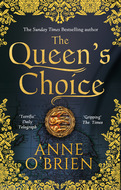
Читать книгу: «The King's Concubine»
‘There was … in England a shameless woman and wanton harlot called Ales Peres, of base kindred … being neither beautiful nor fair, she knew how to cover these defects with her flattering tongue …’
—A historical relation of certain passages about the end of King Edward the Third and of his death
‘It is not fitting that all the keys should hang from the belt of one woman.’
—The Bishop of Rochester
‘… no one dared to go against her …’
—Thomas Walsingham, a monk of St Albans
About the Author
ANNE O’BRIEN taught history in the East Riding of Yorkshire before deciding to fulfil an ambition to write historical fiction. She now lives in an eighteenth-century timbered cottage with her husband in the Welsh Marches, a wild, beautiful place renowned for its black-and-white timbered houses, ruined castles and priories and magnificent churches. Steeped in history, famous people and bloody deeds, as well as ghosts and folklore, the Marches provide inspiration for her interest in medieval England.
Visit her at www.anneobrienbooks.com
Also by
ANNE
O’BRIEN
VIRGIN WIDOW
DEVIL’S CONSORT
The
King’s
Concubine
Anne
O’Brien

This is a work of fiction. References to historical events, real people or real places are used fictitiously. Other names, characters, places and incidents are the product of the author’s imagination, and any resemblance to actual persons, living or dead, events or locales is entirely coincidental.
All Rights Reserved including the right of reproduction in whole or in part in any form. This edition is published by arrangement with Harlequin Enterprises II B.V./S.à.r.l. The text of this publication or any part thereof may not be reproduced or transmitted in any form or by any means, electronic or mechanical, including photocopying, recording, storage in an information retrieval system, or otherwise, without the written permission of the publisher.
This book is sold subject to the condition that it shall not, by way of trade or otherwise, be lent, resold, hired out or otherwise circulated without the prior consent of the publisher in any form of binding or cover other than that in which it is published and without a similar condition including this condition being imposed on the subsequent purchaser.
HQ is an imprint of HarperCollinsPublishers Ltd
Published in Great Britain 2012.
HQ
1 London Bridge Street
London
SE1 9GF
© Anne O’Brien 2012
Fleur Adcock, Poems 1960-2000 (Bloodaxe Books, 2000) reprinted
with kind permission of the publisher on behalf of the author
Map and Family Tree acknowledgement Orphans Press Ltd
ISBN 978-1-408-96981-6
Version: 2019-04-12
Table of Contents
Cover
Praise
About the Author
Title Page
Copyright
Dedication
Acknowledgements
Prologue
Chapter One
Chapter Two
Chapter Three
Chapter Four
Chapter Five
Chapter Six
Chapter Seven
Chapter Eight
Chapter Nine
Chapter Ten
Chapter Eleven
Chapter Twelve
Chapter Thirteen
Chapter Fourteen
Chapter Fifteen
Chapter Sixteen
Chapter Seventeen
Epilogue
Other titles by the author
Extract
Author Note
Read all about it …
About the Publisher

Descendants of Edward III (simplified)

For George, who managed to live comfortably for
a year with both me and Alice Perrers.
As ever, with love and thanks.
ACKNOWLEDGEMENTS
All my thanks:
To my agent Jane Judd who appreciated the possibility of Alice Perrers as an unconventional heroine. Her advice and support, as always, are beyond price.
To Jenny Hutton and the HQ team. Their guidance and commitment were invaluable in enabling Alice Perrers to emerge from infamy.
To Helen Bowden and all at Orphans Press who come to my rescue and continue to create masterpieces out of my genealogy and maps.
To Phia McBarnet who patiently introduced me to the benefits of social media and set my foot on the steep learning curve.
Prologue
‘TODAY you will be my Lady of the Sun,’ King Edward says as he approaches to settle me into my chariot. ‘My Queen of Ceremonies.’
And not before time.
I don’t say the words, of course—I am, after all, a woman of percipience—but I think them. I have waited too many years for this acclaim. Twelve years as Edward’s whore.
‘Thank you, my lord,’ I murmur, curtseying deeply, my smile as sweet as honey.
I sit, a cloak of shimmering gold tissue spread around me, to show a lining of scarlet taffeta. My gown is red, lined with white silk and edged in ermine: Edward’s colours, royal fur fit for a Queen. Over all glitters a myriad of precious stones refracting the light—rubies as red as blood, sapphires dark and mysterious, strange beryls capable of destroying the power of poison. Everyone knows that I wear Queen Philippa’s jewels.
I sit at my ease, alone in my pre-eminence, my hands loose in my bejewelled lap. This is my right.
I look around to see if I might catch sight of the black scowl of the Princess Joan. No sign of her, my sworn enemy. She’ll be tucked away in her chamber at Kennington, wishing me ill. Joan the Fair. Joan the Fat! An adversary to be wary of, with the sensitivity and morals of a feral cat in heat.
My gaze slides to Edward as he mounts his stallion and my smile softens. He is tall and strong and good to look on. What a pair we make, he and I. The years have not yet pressed too heavily on him while I am in my prime. An ugly woman, by all accounts, but not without talent.
I am Alice. Royal Concubine. Edward’s beloved Lady of the Sun.
Ah …!
I blink as a swooping pigeon smashes the scene in my mind, flinging reality back at me with cruel exactitude. Sitting in my orchard, far from Court and my King, I am forced to accept the truth. How low have I fallen. I am caged in impotent loneliness, like Edward’s long-dead lion, powerless, isolated, stripped of everything I had made for myself.
I am nothing. Alice Perrers is no more.
Chapter One
WHERE do I start? It’s difficult to know. My beginnings as I recall them were not moments marked by joy or happiness. So I will start with what I do recall. My very first memory.
I was a child, still far too young to have much understanding of who or what I was, kneeling with the sisters in the great Abbey church of St Mary’s in the town of Barking. It was the eighth day of December and the air so cold it hurt my lungs. The stone paving was rough beneath my knees but even then I knew better than to shuffle. The statue on its plinth in the Lady Chapel was clothed in a new blue gown, her veil and wimple made from costly silk that glowed startlingly white in the dark shadows. The nuns sang the office of Compline and round the feet of the statue a pool of candles had been lit. The light flickered over the deep blue folds so that the figure appeared to move, to breathe.
‘Who is she?’ I asked, voice too loud. I was still very ignorant.
Sister Goda, novice mistress when there were novices to teach, hushed me. ‘The Blessed Virgin.’
‘What is she called?’
‘She is the Blessed Virgin Mary.’
‘Is this a special day?’
‘It is the feast of the Immaculate Conception. Now, hush!’
It meant nothing to me then but I fell in love with her. The Blessed Mary’s face was fair, her eyes downcast, but there was a little smile on her painted lips and her hands were raised as if to beckon me forward. But what took my eye was the crown of stars that had been placed for the occasion on her brow. The gold gleamed in the candlelight, the jewels reflected the flames in their depths. And I was dazzled. After the service, when the nuns had filed out, I stood before her, my feet small in the shimmer of candles.
‘Come away, Alice.’ Sister Goda took my arm, not gently.
I was stubborn and planted my feet.
‘Come on!’
‘Why does she wear a crown of stars?’ I asked.
‘Because she is the Queen of Heaven. Now will you …?’
The sharp slap on my arm made me obey, yet still I reached up, although I was too small to touch it, and smiled.
‘I would like a crown like that.’
My second memory followed fast on my first. Despite the late hour, Sister Goda, small and frail but with a strong right arm, struck my hand with a leather strap until my skin was red and blistered. Punishment for the sin of vanity and covetousness, she hissed. Who was I to look at a crown and desire it for myself? Who was I to approach the Blessed Virgin, the Queen of Heaven? I was of less importance than the pigeons that found their way into the high reaches of the chancel. I would not eat for the whole of the next day. I would rise and go to bed with an empty belly. I would learn humility. And as my belly growled and my hand stung, I learned, and not for the last time, that it was not in the nature of women to get what they desired.
‘You are a bad child,’ Sister Goda stated unequivocally.
I lay awake until the Abbey bell summoned us at two of the clock for Matins. I did not weep. I think I must have accepted her judgement on me, or was too young to understand its implications.
And my third memory?
Ah, vanity! Sister Goda failed to beat it out of me. She eyed me dispassionately over some misdemeanour that I cannot now recall.
‘What a trial you are to me, girl! And most probably a bastard, born out of holy wedlock. An ugly one at that. Though you are undoubtedly a creature of God’s creation, I see no redeeming features in you.’
So I was ugly and a bastard. I wasn’t sure which was the worse of the two, to my twelve-year-old mind. Was I ugly? Plain, Sister Goda might have said if there was any charity in her, but ugly was another world. Forbidden as we were the ownership of a looking glass in the Abbey—such an item was far too venal and precious to be owned by a nun—which of the sisters had never peered into a bowl of still water to catch an image? Or sought a distorted reflection in one of the polished silver ewers used in the Abbey church? I did the same and saw what Sister Goda saw.
That night I looked into my basin of icy water before my candle was doused. The reflection shimmered, but it was enough. My hair, close cut against my skull, to deter lice as much as vanity, was dark and coarse and straight. My eyes were as dark as sloes, like empty holes eaten in wool by the moth. As for the rest—my cheeks were hollow, my nose prominent, my mouth large. It was one thing to be told that I was ugly; quite another to see it for myself. Even accepting the rippling flaws in the reflection, I had no beauty. I was old enough and female enough to understand, and be hurt by it. Horrified by my heavy brows, black as smudges of charcoal, I dropped my candle into the water, obliterating the image.
Lonely in the dark in my cold, narrow cell, the walls pressing in on me in my solitary existence, I wept. The dark, and being alone, frightened me—then as now.
* * *
The rest of my young days merged into a grey lumpen pottage of misery and resentment, stirred and salted by Sister Goda’s admonitions.
‘You were late again for Matins, Alice. Don’t think I didn’t see you slinking into the church like the sly child you are!’ Yes, I was late.
‘Alice, your veil is a disgrace in the sight of God. Have you dragged it across the floor?’ No, I had not, but against every good intention my veil collected burrs and fingerprints and ash from the hearth.
‘Why can you not remember the simplest of texts, Alice? Your mind is as empty as a beggar’s purse.’ No, not empty, but engaged with something of more moment. Perhaps the soft fur of the Abbey cat as it curled against my feet in a patch of sunlight.
‘Alice, why do you persist in this ungodly slouch?’ My growing limbs were ignorant of elegance.
‘A vocation is given to us by God as a blessing,’ Mother Sybil, our Abbess, admonished the sinners in her care from her seat of authority every morning in Chapter House. ‘A vocation is a blessing that allows us to worship God through prayer, and through good works to the poor in our midst. We must honour our vocation and submit to the Rules of St Benedict, our most revered founder.’
Mother Abbess was quick with a scourge against those who did not submit. I remember its sting well. And that of her tongue. I felt the lash of both when, determined to be on my knees at Sister Goda’s side before the bell for Compline was silenced, I failed to shut away the Abbey’s red chickens against the predations of the fox. The result next morning for the hens was bloody. So was the skin on my back, in righteous punishment, Mother Abbess informed me as she wielded the strap that hung from her girdle. It did not seem to me to be fair that by observing one rule I had broken another. Having not yet learnt the wisdom of concealing my thoughts, I said so. Mother Sybil’s arm rose and fell with even more weight.
I was set to collect up the poor ravaged bodies. Not that the flesh went to waste. The nuns ate chicken with their bread at noon the following day as they listened to the reading of the parable of the good Samaritan. My plate saw nothing but bread, and that a day old. Why should I benefit from my sins?
A vocation? God most assuredly had not blessed me with a vocation, if that meant to accept, obey and be grateful for my lot in life. And yet I knew no other life, neither would I. When I reached my fifteenth year, so I was informed by Sister Goda, I would take my vows and, no longer a novice, be clothed as a nun. I would be a nun for ever until God called me to the heavenly comfort of His bosom—or to answer for my sins in some dire place of heat and torment. From my fifteenth year I would not speak, except for an hour after the noon meal when I would be allowed to converse on serious matters. Which seemed to me little better than perpetual silence.
Silent for the rest of my life, except for the singing of the offices.
Holy Mother, save me! Was this all I could hope for? It was not my choice to take the veil. How could I bear it? It was beyond my understanding that any woman would choose this life enclosed behind walls, the windows shuttered, the doors locked. Why would any woman choose this degree of imprisonment rather than taste the freedom of life outside?
To my mind there was only one door that might open for me. To offer me an escape.
‘Who is my father?’ I asked Sister Goda. If I had a father, surely he would not be deaf to my entreaties.
‘God in Heaven is your Father.’ Sister Goda’s flat response dared me to pursue the matter as she turned the page of a psalter. ‘Now, if you will pay attention, my child, we have here a passage to study …’
‘But who is my father here—out there?’ I gestured towards the window that allowed the noise of the town to encroach, its inhabitants gathering vociferously for market.
The novice mistress looked at me, faintly puzzled. ‘I don’t know, Alice, and that’s the truth.’ She clicked her tongue against her teeth. ‘They said when you were brought here there was a purse of gold coins.’ She shook her head, her veil hanging as limp as a shroud around her seamed face. ‘But it’s not important.’ She shuffled across the room to search in the depths of a coffer for some dusty manuscript.
But it was important. A purse of gold? Suddenly it was very important. I knew nothing other than that I was Alice. Alice—with no family, no dowry. Unlike more fortunate sisters, no one came to visit me at Easter or Christmas. No one brought me gifts. When I took the veil, there would be no one to hold a celebration for me to mark my elevation. Even my habit would be passed down to me from some dead nun who, if fate smiled on me, resembled me in height and girth; if not, my new garment would enclose me in a vast pavilion of cloth, or exhibit my ankles to the world.
Resentment bloomed at the enormity of it. The question beat against my mind: Who is my father? What have I done to deserve to be so thoroughly abandoned? It hurt my heart.
‘Who brought me here, Sister Goda?’ I persisted.
‘I don’t recall. How would I?’ Sister Goda was brusque. ‘You were left in the Abbey porch, I believe. Sister Agnes brought you in—but she’s been dead these last five years. As far as I know, there is no trace of your parentage. It was not uncommon for unwanted infants to be abandoned at a church door, what with the plague … Although it was always said that …’
‘What was said?’
Sister Goda looked down at the old parchment. ‘Sister Agnes always said it was not what it seemed …’
‘What wasn’t?’
Sister Goda clapped her hands sharply, her gaze once more narrowing on my face. ‘She was very old and not always clear in her head. Mother Abbess says you’re most likely the child of some labourer—a maker of tiles—got on a whore of a tavern without the blessing of marriage. Now—enough of this! Set your mind on higher things. Let us repeat the Paternoster.’
So I was a bastard.
As I duly mouthed the words of the Paternoster, my mind remained fixed on my parentage, or lack of it, and what Sister Agnes might or might not have said about it. I was just one of many unwanted infants and should be grateful that I had not been left to die.
But it did not quite ring true. If I was the child of a tavern whore, why had I been taken in and given teaching? Why was I not set to work as one of the conversa, the lay sisters, employed to undertake the heavy toil on the Abbey’s lands or in the kitchens and bakehouse? True, I was clothed in the most worn garments, passed down from the sick and the dead, I was treated with no care or affection, yet I was taught to read and even to write, however poorly I attended to the lessons.
It was meant that I would become a nun. Not a lay sister.
‘Sister Goda—’ I tried again.
‘I have nothing to tell you,’ she snapped. There is nothing to tell! You will learn this text!’ Her cane cracked across my knuckles but without any real force. Perhaps she had already decided I was a lost cause, her impatience increasingly replaced by indifference. ‘And you will stay here until you do! Why do you resist? What else is there for you? Thank God on your knees every day that you are not forced to find your bread in the gutters of London. And by what means I can only guess!’ Her voice fell to a harsh whisper. ‘Do you want to be a whore? A fallen woman?’
I lifted a shoulder in what was undoubtedly vulgar insolence. ‘I am not made to be a nun,’ I replied with misguided courage.
‘What choice do you have? Where else would you go? Who would take you in?’
I had no answer. But as Sister Goda’s cane thwacked once more like a thunderclap on the wooden desk, indignation burned hot in my mind, firing the only thought that remained to me. If you do not help yourself, Alice, no one else will.
Even then I had a sharp precocity. Product, no doubt, of a wily labourer who tumbled a sluttish tavern whore after a surfeit of sour ale.
Chapter Two
WHEN I achieved my escape from the Abbey, it was not by my own instigation. Fate took a hand when I reached the age of fifteen years and it came as a lightning bolt from heaven.
‘Put this on. And this. Take this. Be at the Abbey gate in half an hour.’
The garments were thrust into my arms by Sister Matilda, Mother Abbess’s chaplain.
‘Why, Sister?’
‘Do as you’re told!’
I had been given a woollen kirtle, thin, its colour unrecognisable from much washing, and a long sleeveless overgown in a dense brown, reminiscent of the sludge that collected on the river bank after stormy weather. It too had seen better days on someone else’s back, and was far too short, exhibiting, as I had feared, my ankles. When I scratched indelicately, an immediate fear bloomed. I had inherited the fleas as well as the garments. A hood of an indeterminate grey completed the whole.
But why? Was I being sent on an errand? A feverish excitement danced over my skin. A lively fear as well—after all, life in the Abbey was all I knew—but not for long. If I was to escape the walls for only a day, it would be worth it. I was fifteen years old and the days of my transformation from novice to nun loomed, like the noxious overflowing contents of the town drain after heavy rainfall.
‘Where am I going?’ I asked the wagon master to whom I was directed, a dour man with a bad head cold and an overpowering smell of rancid wool. Sister Faith, keeper of the Abbey gate, had done nothing but point in his direction and close the door against me. The soft snick of the latch, with me on the outside, was far sweeter than any singing of the Angelus.
‘London. Master Janyn Perrers’s household,’ he growled, spitting into the gutter already swimming with filth and detritus from the day’s market dealings.
‘Pull me up, then,’ I ordered.
‘Tha’s a feisty moppet, and no mistake!’ But he grasped my hand in his enormous one and hauled me up onto the bales where I settled myself as well as I could. ‘God help th’man who weds you, mistress!’
‘I’m not going to be married,’ I retorted. ‘Not ever.’
‘And why’s that, then?’
‘Too ugly!’ Had I not seen it for myself? Since the day I had peered into my water bowl I had been shown the undisputable truth of my unlovely features in a looking glass belonging to a countess, no less. How would any man look at me and want me for his wife?
‘A man don’t need to look too often at the wench he weds!’
I did not care. I tossed my head. London! The wagon master cracked his whip over the heads of the oxen to end the conversation, leaving me to try to fill in the spaces. To my mind there was only one possible reason for my joining the household of this Janyn Perrers. My services as a maidservant had been bought, enough gold changing hands to encourage Mother Abbess to part with her impoverished novice who would bring nothing of fame or monetary value to the Abbey. As the wagon jolted and swayed, I imagined the request that had been made. A strong, hard-working girl to help to run the house. A biddable girl … I hoped Mother Abbess had not perjured herself.
I twitched and shuffled, impatient with every slow step of the oxen. London. The name bubbled through my blood as I clung to the lumbering wagon. Freedom was as seductive and heady as fine wine.
The noisome overcrowded squalor of London shocked me. The environs of Barking Abbey, bustling as they might be on market day, had not prepared me for the crowds, the perpetual racket, the stench of humanity packed so close together. I did not know where to look next. At close-packed houses in streets barely wider than the wagon, where upper storeys leaned drunkenly to embrace each other, blocking out the sky. At the wares on display in shop frontages, at women who paraded in bright colours. At scruffy urchins and bold prostitutes who carried on a different business in the rank courts and passageways. A new world, both frightening and seductive: I stared, gawped, as naive as any child from the country.
‘Here’s where you get off.’
The wagon lurched and I was set down, directed by a filthy finger that pointed at my destination, a narrow house taking up no space at all, but rising above my head in three storeys. I picked my way through the mess of offal and waste in the gutters to the door. Was this the one? It did not seem to be the house of a man of means. I knocked.
The woman who opened the door was far taller than I and as thin as a willow lath, with her hair scraped into a pair of metallic cylindrical cauls on either side of her gaunt face, as if she were encased in a cage. ‘Well?’
‘Is this the house of Janyn Perres?’
‘What’s it to you?’
Her gaze flicked over me, briefly. She made to close the door. I could not blame her: I was not an attractive object. But this was where I had been sent, where I was expected. I would not have the door shut in my face.
‘I have been sent,’ I said, slapping my palm boldly against the wood.
‘What do you want?’
‘I am Alice,’ I said, remembering, at last, to curtsey.
‘If you’re begging, I’ll take my brush to you …’
‘I’m sent by the nuns at the Abbey,’ I stated.
The revulsion in her stare deepened, and the woman’s lips twisted like a hank of rope. ‘So you’re the girl. Are you the best they could manage?’ She flapped her hand when I opened my mouth to reply that, yes, I supposed I was the best they could offer, since I was the only novice. ‘Never mind. You’re here now so we’ll make the best of it. But in future you’ll use the door at the back beside the privy.’
And that was that.
I had become part of a new household.
And what an uneasy household it was. Even I, with no experience of such, was aware of the tensions from the moment I set my feet over the threshold.
Janyn Perrers—master of the house, pawnbroker, moneylender and bloodsucker. His appearance did not suggest a rapacious man but, then, as I rapidly learned, it was not his word that was the law within his four walls. Tall and stooped with not an ounce of spare flesh on his frame and a foreign slur to his speech, he spoke only when he had to, and then not greatly. In his business dealings he was painstaking. Totally absorbed, he lived and breathed the acquisition and lending at extortionate rates of gold and silver coin. His face might have been kindly, if not for the deep grooves and hollow cheeks more reminiscent of a death’s head. His hair—or lack of—some few greasy wisps around his neck, gave him the appearance of a well-polished egg when he removed his felt cap. I could not guess his age but he seemed very old to me with his uneven gait and faded eyes. His fingers were always stained with ink, his mouth too when he chewed his pen.
He nodded to me when I served supper, placing the dishes carefully on the table before him: it was the only sign that he noted a new addition to his family. This was the man who now employed me and would govern my future.
The power in the house rested on the shoulders of Damiata Perrers, his sister, who had made it clear when I arrived that I was not welcome. The Signora. There was no kindness in her face. She was the strength, the firm grip on the reins, the imposer of punishment on those who displeased her. Nothing happened in that house without her knowledge or her permission.
There was a boy to haul and carry and clean the privy, a lad who said little and thought less. He led a miserable existence, gobbling his food with filthy fingers before bolting back to his own pursuits in the nether regions of the house. I never learned his name.
Then there was Master William de Greseley. He was a man who was and was not of the household since he spread his services further afield, an interesting man who took my attention but ignored me with a remarkable determination. A clerk, a clever individual with black hair and brows, sharp features much like a rat, and a pale face, as if he never saw the light of day. A man with as little emotion about him as one of the flounders brought home by Signora Damiata from the market, his employment was to note down the business of the day. Ink might stain Master Perrers’s fingers but I swore that it ran in Master Greseley’s veins. He disregarded me to the same extent as he was deaf to the vermin that scuttled across the floor of the room in which he kept the books and ledgers of money lent and reclaimed. I was wary of him. There was a coldness that I found unpalatable.
And then there was me. The maidservant who undertook all the work not assigned to the boy. And some that was.
Thus my first introduction to the Perrers family. And since it was a good score of miles away from Barking Abbey, it was not beyond my tolerance.
‘God help th’man who weds you, mistress!’
‘I’m not going to be married!’
Holy Mother! My vigorous assertion returned to mock me. Within a se’nnight I found myself exchanging marriage vows at the church door.
Given the tone of her remonstration, Signora Damiata was as astonished as I, and unpleasantly frank when I was summoned to join brother and sister in the parlour at the rear of the house, where, by the expression on the lady’s face, Master Perrers had just broken the news of his intent.
‘Blessed Mary! Why marry?’ she demanded. ‘You have a son, an heir, learning the family business in Lombardy. I keep your house. Why would you want a wife at your age?’ Her accent grew stronger, the syllables hissing over each other. ‘If you must, then choose a girl from one of our merchant families. A girl with a dowry and a family with some standing. Jesu! Are you not listening?’ She raised her fists as if she might strike him. ‘She is not a suitable wife for a man of your importance.’
Did I think that Master Perrers did not rule the roost? He looked briefly at me as he continued leafing through the pages of a small ledger he had taken from his pocket.
‘I will have this one. I will wed her. That is the end of the matter.’
I, of course, was not asked. I stood in this three-cornered dialogue yet not a part of it, the bone squabbled over by two dogs. Except that Master Perrers did not squabble. He simply stated his intention and held to it, until his sister closed her mouth and let it be. So I was wed in the soiled skirts in which I chopped the onions and gutted the fish: clearly there was no money earmarked to be spent on a new wife. Sullen and resentful, shocked into silence, certainly no joyful bride, I complied because I must. I was joined in matrimony with Janyn Perrers on the steps of the church with witnesses to attest the deed: Signora Damiata, grim-faced and silent; and Master Greseley, because he was available, with no expression at all. A few words muttered over us by a bored priest in an empty ritual, and I was a wife.
You have by law forty days in which to vacate the house to allow the heir to take his inheritance. You will be evicted within the day.
As your legal man my advice: take what you can. It is your right. You will get nothing else that is due to you.
A stark warning. A chilling one. Leaving Janyn in a restless sleep, I began to search.
Nothing! Absolutely nothing!
Signora Damiata had done a thorough job of it while her brother lay dying. His room of business, the whole house was empty of all items of value. There were no bags of gold in Janyn’s coffers. There were no scrolls, the ledgers and tally sticks had gone. She had swept through the house, removing everything that might become an attraction for looters. Or for me. Everything from my own chamber had been removed. Even my new mantle—especially that—the only thing of value I owned.
I had nothing.
Above me in his bedchamber, Janyn shrieked in agony, and I returned to his side. I would do for him what I could, ruling my mind and my body to bathe and tend this man who was little more than a rotting corpse.
In the end it all happened so fast. I expect it was Janyn’s wine that saved me, but the decoction of green sage—from the scrubby patch in Signora Damiata’s yard—to dry and heal the ulcers and boils did nothing for him. Before the end of the second day he breathed no more. How could a man switch from rude health to rigid mortality within the time it took to pluck and boil a chicken? He never knew I was there with him.
Did I pray for him? Only if prayer was lancing the boils to free the foul-smelling pus. Now the house was truly silent around me, holding its breath, as I placed the linen gently over his face, catching a document that fell from the folds at the foot of the bed. And then I sat on the stool by Janyn’s body, not daring to move for fear that death noticed me too.
It was the clatter of a rook falling down the chimney that brought me back to my senses. Death had no need of my soul, so I opened the document that I still held. It was a deed of ownership in Janyn’s name, of a manor in West Peckham, somewhere in Kent. I read it over twice, a tiny seed of a plan beginning to unfurl in my mind. Now, here was a possibility. I did not know how to achieve what I envisaged, but of course I knew someone who would. How to find him?
I walked slowly down the stairs, halting halfway when I saw a figure below me.
‘Is he dead?’ Signora Damiata was waiting for me in the narrow hall.
‘Yes.’
She made the sign of the cross on her bosom, a cursory acknowledgement. Then flung back the outer door and gestured for me to leave. ‘I’ve arranged for his body to be collected. I’ll return when the pestilence has gone.’
‘What about me?’
‘I’m sure you’ll find some means of employment.’ She barely acknowledged me. ‘Plague does not quench men’s appetites.’
‘And my dower?’
‘What dower?’ She smirked.
‘You can’t do this,’ I announced. ‘I have legal rights. You can’t leave me homeless and without money.’
But she could. ‘Out!’
I was pushed through the doorway onto the street. With a flourish and rattle of the key, Signora Damiata locked the door and strode off, stepping through the waste and puddles.
It was a lesson to me in brutal cold-heartedness when dealing with matters of coin and survival. And there I was, sixteen years old to my reckoning, widowed after little more than a year of marriage, cast adrift, standing alone outside the house. It felt as if my feet were chained to the ground. Where would I go? Who would give me shelter? Reality was a bitter draught. London seethed around me but offered me no refuge.
‘Mistress Perrers.’
‘Master Greseley!’
For there he was—I hadn’t had to find him after all—emerging from a rank alley to slouch beside me. Never had I been so relieved to see anyone, but not without a shade of rancour. He may have lost a master too, but he would never be short of employment or a bed for the night in some merchant’s household. He eyed the locked door, and then me.
‘What did the old besom give you?’ he asked without preamble.
‘Nothing,’ I retorted. ‘The old besom has stripped the house.’ And then I smiled, waving the document in front of his eyes. ‘Except for this. She overlooked it. It’s a manor.’
Those eyes gleamed. ‘Is it, now? And what do you intend to do with it?’
‘I intend you to arrange that it becomes mine, Master Greseley. Enfeoffment for use, I think you called it.’ I could be a fast learner, and I had seen my chance. ‘Can you do that?’
He ran his finger down his nose. ‘Easy for those who know how. I can—if it suits me—have it made over to you as the widow of Master Perrers, and now femme sole.’
A woman alone. With property. A not unpleasing thought that made my smile widen.
‘And will it suit you, Master Greseley?’ I slid what I hoped was a persuasive glance at the clerk. ‘Will you do it for me?’
His face flushed under my gaze as he considered.
I softened my voice, adding a plea. ‘I cannot do this on my own, Master Greseley.’
He grinned, a quick slash of thin lips and discoloured teeth. ‘Why not? We have, I believe, the basis of a partnership here, Mistress Perrers. I’ll work for you, and you’ll put business my way—when you can. I’ll enfeoff the manor to the use of a local knight—and myself.’
So that was it. Master Greseley was not entirely altruistic, but willing with a little female enticement. How easily men could be seduced with a smile and outrageous flattery offered in sweet tones. He extended his hand. I looked at it: not over clean but with long, surprisingly elegant fingers that could work magic with figures far more ably than I. There on the doorstep of my erstwhile home, I handed over the document and we shook hands as I had seen Janyn do when confirming some transaction with a customer.
As I felt the grip of his rough clasp, I considered what I had just done. And how astonishing it was to me that an unpleasing face was no detriment to my achieving it. I had—as Greseley would say—a business partner.
‘You’ll not cheat me, will you?’ I frowned and made my voice stern.
‘Certainly not!’ His outrage was amusing. And then his brows twitched together suspiciously. ‘Where will you go?’
‘There’s only one place.’ I had already made my decision. There really was no other to be made. It would be a roof over my head and food in my belly, and far preferable to life on the streets or docks as a common whore. ‘Back to St Mary’s,’ I said. ‘They’ll take me in. I’ll stay there and wait for better times. Something will turn up.’
Greseley nodded. ‘Not a bad idea, all in all. But you’ll need this. Here.’ He rummaged in the purse at his belt and brought out two gold coins. ‘I’ll return these to you. They should persuade the Abbess to open the doors to you for a little time at least. Remember, though. You now owe me. I want it back.’
‘Where do I find you?’ I shouted, coarse as a fishwife, as he put distance between us, the proof of ownership of the manor at West Peckham stowed in his tunic.
‘Try the Tabard. At Southwark.’
That was as much as I got.
So I went back, where I had vowed I would never return, wheedling a ride in a wagon empty of all but the rank whiff of fish. I might own a manor and a house in London—I left both precious documents in Greseley’s care—but I was in debt to the tune of two gold nobles. Needs must. The coins did indeed open the doors of the Abbey to me, but they bought me no luxury. It was made clear to me that I must earn my keep and so I found myself joining the ranks of the conversa. A lay sister toiling for the benefit of the Brides of Christ. Perhaps it was the stink of salt cod clinging to my skirts that worked against me.
Why did I accept it?
Because the sanctuary it offered me was a temporary measure. I knew it, deep within me. I had supped in the outside world and found it to my taste. In those days of silent labour, a determination was born in me. I would never become a nun. I would never wed again at anyone’s dictates. At some point in the future, in Greseley’s clever hands, my land would bring me enough coin to allow me to live as a femme sole in my own house with my own bed and good clothing and servants at my beck and call.
I liked the image. It spurred me on as I scrubbed the nun’s habits and beat the stains from their wimples to restore them to pristine whiteness. I would make something of my life beyond the governance of others, neither nun nor wife nor whore. I would amount to something in my own right. But for now I was safe in the familiar surroundings of the Abbey, accepting the unchanging routine of work and prayer.
I’ll wait for better times, I had said to Greseley.
And I would wait with as much patience as I could muster. But not for too long, I prayed as my arms throbbed from wielding the heavy hoe amongst the Abbey cabbages.
I regretted the loss of my warm mantle.
Chapter Three
‘SHE’S here. She’s come.’ The whispers rustled like a brisk wind through a field of oats.
It was Vespers. We entered the Abbey church, the hush of habits and soft shoes a quiet sound against the paving, and we knelt, ranks of black veils and white wimples, I in a coarse fustian over-kirtle and hood with the rest of the conversa. Nothing out of the ordinary. The mind of every sister, choir or lay, centred on the need for God’s grace in a world of transgression. But not tonight. The sin of self-indulgence was rife, bright as the candle flames. Excitement was tangible, shivering in the air. For in the bishop’s own chair, placed to one side of the High Altar, sat the Queen of England.
From my lowly place in the choir stalls I could see nothing of Majesty, neither could I even hazard a guess as to why she would so honour us, the service proceeding as if that carved chair were unoccupied. The observance complete, the final blessing given, nuns and conversa stood as one, heads bowed, hands folded discreetly within sleeves. Mother Sybil genuflected before the altar and Majesty, still outside my vision, moved slowly through our midst towards the transept.
Slowly. Very slowly. Unobtrusively, I glanced out of the corner of my eye, my anticipation keen. In my life I had had only one brief acquaintance with a lady of the royal court. The Countess of Kent was a woman of some brilliance, a woman difficult to forget. She had taught me to mend her pens, and she taught me much else besides, mostly to my personal humiliation. As the Queen approached, I considered how the Countess had arrived at St Mary’s with dash and flair, announcing her arrival by courier and trumpet blast. How much more magnificent must be the Queen of England?
Even today I can recall my astonishment. I had envisaged a noble bearing, a gown in rich colours, sumptuous materials stitched with embroidery, with train and furred over-sleeves. A crown, a gold chain, gold and silver rings heavy with jewels. A presence of authority. I looked at the Queen of England, and looked again. She was well nigh invisible in her anonymity.
Philippa of Hainault.
The years had not treated this woman with gentleness. All trace of youth, any beauty she might have had as that young bride who had come to England from the Low Countries to wed our vigorous King Edward, more than thirty years ago now, all were lost to her. And where was the expression of regal power? She was not elegant. She was not tall. She did not overawe. She wore no jewels. As for her hair, it was completely obscured, every wisp and curl, by a severe wimple and veil. Queen Philippa was neither a handsome woman nor a leader of fashion.
Who could admire this aging, shuffling woman?
Majesty halted. There was the faintest gasp for breath. The Queen must be even older than I had thought. I looked again—longer than a glance—and chided myself for my lack of compassion. There was a reason for the excruciatingly slow progress. She was ill. She was in pain. With a hand resting heavily on the arm of her attendant, the Queen continued to make her small halting steps because each one pained her beyond endurance. It seemed to me that she could barely move her head, her neck and shoulders were so rigid with a spasm of the muscles. The hand that clutched the arm of her woman was swollen, the flesh as tight and shiny as the skin of a drum. No wonder she wore no rings. How would she push them beyond her swollen knuckles without unbearable discomfort?
Her Majesty was nearly level with me when she paused to draw another breath, and we curtseyed. I saw the substantial bosom of her gown rise sharply on the inhalation, her nostrils narrow and a crease deepen between her brows. Then the royal feet moved on—only to stumble on the uneven paving so that she fell. Without her grip on the arm of the young woman at her side, it would have been a disaster. As it was, she sank to her knees with a cry of agonised distress. Horrified by her suffering, I was unable not to look.
‘Help me,’ she murmured, of no one in particular, eyes closed tight in agony, her free hand outstretched to snatch at some invisible aid. ‘Dear God, help me!’ And Queen Philippa dropped her rosary beads. They slid from her fingers to fall with a little clatter of pearls and carved bone on the stones before her.
‘Help me to my feet …’
And because it seemed the obvious thing to do, the only thing to do, I stretched out my hand, and took hers in mine. I froze, my breath held hard. To take the hand of the Queen of England on sheer impulse? I would surely be punished for my presumption. I fell to my knees beside her as she gripped me as hard as she could. There was not much force in it, but she groaned as the skin covering her swollen flesh tightened with the effort.
‘Blessed Virgin!’ she murmured. ‘The pain is too much!’
The tension around us, the shocked stillness, held for a moment. Then all was movement and sound: the lady-in-waiting lifting Her Majesty to her feet in a flutter of anxiety; the Queen’s feverish clasp of my hand broken; the distress of her laboured breathing deepening. Looking up from where I was still on my knees, I discovered Queen Philippa in the midst of all the fuss regarding me. Once those eyes might have sparkled with happiness but now their rich brown hue was strained with years of suffering. I could not bear to see it, and lowered my gaze to where the rosary still lay on the floor. She was quite unable to stoop to recover the beads for herself, even if a woman of such rank would deem to pick up her own belongings.
So I picked it up for her.
I lifted the rosary and held it out, startled at my temerity, even without the sharp warning murmur of Mother Abbess, who was approaching, her habit billowing with the speed of her passage like a cloak in a gale, intent on snatching the rosary from me.
‘Thank you. I am very clumsy today, and you are very kind.’
Incredibly, the Queen’s words were for me. I felt the touch of her fingers on my hand. For a brief moment the devastation in her face was overlaid by a softness of gratitude.
‘Accept my apologies, Majesty.’ Mother Abbess directed toward me a look that boded ill for me in Chapter House the following day. ‘She should not have pushed herself forward in this manner. She has no humility.’
‘But she has come to my aid, like the good Samaritan to the traveller in distress,’ the Queen observed. ‘The Holy Virgin would honour such help to an old lady …’ She cried out, more sharply than before, one hand spread across the damask folds over her abdomen. ‘I need to sit down. My room, Isabella—take me to my room.’
And her attendant, with a fierce frown and a firm grip, lifted her to her feet.
‘I am so sorry, Isabella.’ The Queen’s voice caught on a sob.
‘You’re tired, Maman. Did I not say this was too much for you? You should listen to me!’
‘I am aware, Isabella. But some things needed to be done, and I could not wait.’
For the first time I did more than give passing cognisance to the Queen’s companion. So this was her daughter, the Princess Isabella. A tall, fair young woman with a sprightly demeanour and a barely disguised expression of utter boredom. How could I have ever mistaken her for a mere attendant? The Queen might be clothed in muted colours, but the Princess proclaimed her position in every embroidered thread and jewel from her gold crispinettes to her gilded shoes.
‘Some things could be left until you are recovered,’ Princess Isabella remarked crisply. I watched with pity as the little group made their way along the nave. At the Abbey door the Princess looked back, briefly, over her shoulder. Her gaze landed on me.
‘Don’t just stand there. Bring the rosary, girl.’
‘Something will turn up,’ I had said to Greseley. I did not need telling twice.
In spite of her daughter’s determination, the Queen refused to be put to bed.
‘I’ll be in my bed long enough when death takes hold of me.’
I stood inside the door of the Abbess’s parlour as the Queen was made comfortable in a high-backed chair with sturdy arms that would give her body some support. I could have put the rosary down on the travelling coffer beside the door and left, invisible to all as Isabella issued orders for a cup of heated wine and a fur mantle to warm the Queen’s trembling limbs. Stay! my instincts urged. So I stayed. If I stayed, perhaps the Queen would speak to me again. The kindness in her voice had stirred me, and now as I saw the woman behind the face of royalty, my heart hurt for her. She was ill, and her suffering was not only that of physical pain but also of grief. She was worn with it: black-cloaked death seemed to hover behind her shoulder. Never did I think to feel sorrow for a Queen, but on that evening I did.
‘Don’t tell the King, Isabella,’ she ordered, her voice harsh with exhaustion.
‘Why not?’ Isabella took her mother’s hand and pressed the wine cup into it.
‘Don’t speak of this. I forbid it. I do not wish him to be worried.’
Her eyes might still be closed, her voice a mere thread, but her will was strong. My admiration for her was profound, and my compassion. Did the King still love her? Had he ever loved her? Perhaps it was not expected between those of royal blood whose marriage had been contracted for political alliance. What must it be like to feel old and unwanted? And yet the Queen would protect her husband from concern over her pain.
It was as if she sensed the direction of my thoughts. Impatiently pushing aside Isabella’s hand with the cup, she straightened herself in the chair. And there it was after all. There was royalty. There was authority. In spite of the pain she could give her attention to me and smile. Her face warmed, the harsh lines smoothing, until she became almost comely. Had I thought her broad features lacked charm and beauty? I had been wrong.
She stretched out her hand with difficulty. ‘You have brought my rosary.’
‘Yes, Majesty.’
‘I told her to.’ Isabella poured a second cup of wine and drank it herself. ‘We were too busy with you to worry about a string of beads, if you recall, trying to prevent you from falling on the floor before a parcel of ignorant nuns.’
‘Nevertheless, it was well done.’ The Queen beckoned and I came to kneel before her. ‘A conversa, I see. Tell me your name.’
‘Alice.’
‘You have no desire to become a nun?’ Putting a hand beneath my chin, she lifted it and studied my face. ‘You have no calling?’
No one had ever asked me that before, or addressed me in so gentle a manner. There was a world of understanding in her eyes. Unexpectedly, unsettlingly, tears stung beneath my eyelids.
‘No, Majesty.’ Since she seemed interested, I told her. ‘Once I was a novice. And then a servant—who became a wife. Now I am a widow. And returned here as a lay sister.’
‘And is that your ambition? To remain here?’
Well, I would not lie. ‘No, Majesty. I will not stay longer than I must.’
‘So you have plans. How old are you?’
‘Almost seventeen years, I think. I am not a child, Majesty,’ I felt compelled to add.
‘You are to me!’ Her smile deepened momentarily. ‘Do you know how old I am?’
It seemed entirely presumptuous of me to even reply. ‘No, Majesty.’
‘Forty-eight years. I expect that seems ancient to you.’ It did. It seemed to me a vast age, and suffering had added a dozen more years to the Queen’s face. ‘I was younger than you when I came to England as a bride. Yet it seems no time to me. Life flies past.’
‘Take another drink, Maman.’ Isabella replaced the cup into the Queen’s hand, folding the swollen fingers gently around it. ‘I think you should rest.’
I expected to be dismissed, but the Queen was not to be bullied.
‘Soon, Isabella. Soon. But you, Alice. Have you no family?’
‘No, Majesty.’
‘And your father?’
‘I don’t know. A labourer in the town. A tiler, I think.’
‘I understand.’ And I felt that she did, despite the distance between us in years and rank. ‘How sad. You remind me of my own daughters. Margaret and Mary. Both dead of the plague September last.’
Isabella sighed heavily. ‘Maman …!’ How could I remind anyone of a Princess of the Blood?
‘You are of a similar age,’ she explained, as if I had spoken my doubt. ‘You are young to be a widow. Would you seek to wed again?’
‘Who would have me? I have no dowry,’ I stated with little attempt to hide my dissatisfaction. ‘All I can offer is …’ I closed my mouth.
‘What can you offer?’ the Queen asked as if she were genuinely interested.
I considered the sum of my talents. ‘I can read and write and figure, Majesty.’ Since someone actually showed an interest, there was no stopping me. ‘I can read French and Latin. I can keep accounts.’ Ingenuously, I was carried away with my achievements.
‘So much …’ I had made her smile again. ‘And how did you learn to keep accounts?’
‘Janyn Perrers. A moneylender. He taught me.’
‘And did you enjoy it? So tedious a task?’
‘Yes. I understood what I saw.’
‘You have a keen mind, Alice of the Accounts,’ was all she said. Perhaps I amused her. I wished I had not boasted of my hard-won skills. She took hold of one of my hands, to my embarrassment running her fingers over the evidence of hard digging in the heavy soil. My nails were cracked, the skin broken and the aroma of onions was keen, but she made no comment. ‘If you could choose your future path, Alice, what would it be?’
I replied without hesitation, thinking of Greseley, of the hopes that kept me from despair in the dark hours of the night. ‘I would have my own house. I would buy land and property. I would be dependent on no one.’
‘An unlikely ambition!’ Isabella’s remark interrupted, redolent of ridicule.
‘But a commendable one for all that.’ The Queen’s voice trembled. Isabella was instantly beside her. ‘Yes. I will rest now. Today is not a good day.’ She allowed her daughter to help her to her feet and moved slowly toward the bedchamber. Then she stopped and despite the discomfort looked back at me.
‘Alice, keep the rosary. It was a gift to me from the King when I gave birth to Edward, our first son.’ She must have read astonishment on my face. ‘It is not very valuable. He had little money to spend on fripperies in those days. I would like you to keep it as a memento of the day when you rescued the Queen from falling in public!’
The rosary. It was still gripped in one hand, the gold-enamelled beads of the Aves clutched so tight that they left impressions in my palm. The pearls that marked the Paternosters and Glorias were warm and so smooth. The Queen would give this to me? A gift from her husband? I coveted it—who would not? I wanted it for my own.
‘No …’ I said. I could not. I was not courteous, but I knew what would happen if I kept it. ‘We are not allowed possessions. We take a vow of poverty.’ I tried to explain my refusal, knowing how crude it must seem.
‘Not even a gift from a grateful Queen?’
‘It would not be thought suitable.’
‘And you would not be allowed to keep it?’
‘No, Majesty.’
‘No. I was thoughtless to offer it.’ The tormenting pain gripped her again and I was forgotten. ‘By the Virgin, I am tried beyond endurance today—take me to my bed, Isabella.’
Isabella manoeuvred the Queen through the doorway into the bedchamber, and I was left alone. Before I could change my mind I placed the rosary on the prie dieu and backed out of the room until I was standing outside the door. Quietly I closed it, leaning against it. I had refused a gift from a Queen. But what would be the good in my accepting what I would not be allowed to keep? The rosary, if I had it, would fall into the hands of Mother Abbess. I could see it in my mind’s eye attached to her silver-decorated girdle. As I could imagine my mantle gracing the shoulders of Signora Damiata.
If ever I accepted anything of value in my life, I must be certain it remained mine.
Queen Philippa and her sharp-tongued daughter did not stay beyond the night. As soon as the service of Prime was sung next morning, they made ready to depart, the Queen helped into her well-cushioned travelling litter by Sister Margery, who had made up a draught of tender ash leaves distilled in wine against the agony of a bone-shaking journey. I knew what was in it. Had I not helped to make the infusion?
‘Her Majesty suffers from dropsy,’ Sister Margery had pronounced with certainty. ‘I have seen it before. It is a terrible affliction. She will feel the effect of every rut and stumble.’
Sister Margery instructed Lady Isabella: too much would cripple the digestion; too little and the pain would remain intense. And here was a little pot of mutton fat pounded with vervain root. Smoothed on the swollen flesh of hands and feet, it would bring relief. I had done the work but it was not I who held the flask and offered the little pot. It was not I who received the Queen’s thanks. I was not even there. I heard the departure from the cellar where I was engaged in counting hams and barrels of ale.
Take me with you. Let me serve you.
A silent plea that she did not hear.
Why would she remember me? It was an occasion of moment in my life, it had no bearing on what a Queen might remember. She would have forgotten about me within the quarter-hour of my returning the rosary. But I did not forget Queen Philippa. She had the loving kindness in her homely face of the mother that I had never known.
I wondered what Greseley was doing, and if I would ever see him again. If he was taking care of the houses in Gracechurch Street and the little manor in West Peckham. Surely he could raise enough money from them for my own needs.
I prayed even more fervently over the hams than I had over the cabbages that it would be soon before my hopes died.
The hams and the cabbages were eaten, one with more relish than the other, the ale drunk and replaced by an inferior brew that brought down the ire of Mother Sybil on the brewer. Such tedious, unimportant events that barely ruffled my existence as high summer came and went, the early blossom on the gnarled trees in the orchard long gone. My patience ebbed and flowed, reaching painful depths in the nights when the silence closed around me like a shroud.
And then! Mother Abbess was in conversation with a tall, well-dressed man, perhaps a courier, to judge from his riding gear of fine wool and leather, accompanied by an elderly thick-set groom who held the reins of a fine gelding, and a small but well-armed escort, sword and bow very evident.
I took it all in at a glance. Barely had I considered why I had been summoned when the courier turned a penetrating stare toward me.
‘You are Alice?’
‘Yes, sir.’ Conscious of my dishevelled state and the mud on my shoes—I had been kneeling beneath the low branches in the orchard to collect the fallen plums and damsons when I had been fetched—I made a desultory attempt to beat soil and grass from my skirts. The shoes were beyond remedy.
‘You are to go with me, mistress.’ He looked me up and down and from the narrowing of his eyes found me wanting. ‘You will need a cloak.’ And to the Abbess, ‘Provide one for her, if you please.’
I looked to Abbess Sybil for instruction. Mother Abbess lifted a shoulder as if denying any complicity in what had been arranged. Had my labours been bought again? Holy Virgin! Not another marriage. The man continued to address me, impervious and uninformative.
‘Can you ride, mistress?’
‘No, sir.’
He motioned to the groom. ‘She’ll ride pillion behind you, Rob. She’s no weight to speak of.’
Within minutes I was bundled into a coarsely woven cloak and hoisted onto the broad rump of the groom’s mare, as if I were a cord of firewood.
‘Hold tight, mistress,’ growled the man called Rob.
I clutched the sides of his leather jerkin as the animal stamped and sidled. The ground seemed far away and my balance was awry. At a signal from the man who had so smoothly rearranged my future, the escort fell in and we rode through the streets of the town and into the open country without a further word.
‘Sir?’ I addressed the back of the courier, who was now riding a little way ahead of me. No reply, so I raised my voice. ‘Sir? Where are we going?’
He did not turn his head. He might have addressed me as mistress, but it seemed I was not worthy of any further respect. ‘To Havering-atte-Bower.’
It meant nothing to me. ‘Why?’
‘The Queen has sent for you.’
I could not believe it. What had caused her to remember me, when I had done nothing but pick up her rosary? Nevertheless, the thrill of unknown adventure placed a cold hand on my nape and I shuddered. ‘Is Havering-atte-Bower, then, a royal palace?’ I asked.
Бесплатный фрагмент закончился.