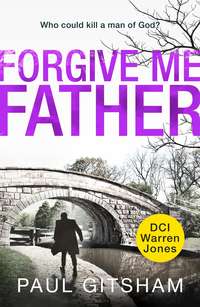
Читать книгу: «DCI Warren Jones»
About the Author
PAUL GITSHAM started his career as a biologist, working in such exotic locales as Manchester and Toronto. After stints as the world’s most over-qualified receptionist and a spell making sure that international terrorists and other ne’er do wells hadn’t opened a Junior Savings Account at a major UK bank (a job even less exciting than being a receptionist) he retrained as a Science teacher. He now spends his time passing on his bad habits and sloppy lab-skills to the next generation of enquiring minds.
Paul has always wanted to be a writer and his final report on leaving primary school predicted he’d be the next Roald Dahl! For the sake of balance it should be pointed out that it also said ‘he’ll never get anywhere in life if his handwriting doesn’t improve’. Over twenty-five years later and his handwriting is worse than ever but millions of children around the world love him.*
You can learn more about Paul’s writing at www.paulgitsham.com or www.facebook.com/dcijones
*This is a lie, just ask any of the pupils he has taught.
Forgive Me Father
PAUL GITSHAM

HQ
An imprint of HarperCollinsPublishers Ltd.
1 London Bridge Street
London SE1 9GF
First published in Great Britain by HQ in 2019
Copyright © Paul Gitsham
Paul Gitsham asserts the moral right to be identified as the author of this work.
A catalogue record for this book is available from the British Library.
This novel is entirely a work of fiction. The names, characters and incidents portrayed in it are the work of the author’s imagination. Any resemblance to actual persons, living or dead, events or localities is entirely coincidental.
All rights reserved under International and Pan-American Copyright Conventions. By payment of the required fees, you have been granted the non-exclusive, non-transferable right to access and read the text of this e-book on-screen. No part of this text may be reproduced, transmitted, downloaded, decompiled, reverse engineered, or stored in or introduced into any information storage and retrieval system, in any form or by any means, whether electronic or mechanical, now known or hereinafter invented, without the express written permission of HarperCollins.
E-book Edition © June 2019 ISBN: 9780008314385
Version: 2019-05-16
Table of Contents
Cover
About the Author
Title page
Copyright
Dedication
Prologue
Chapter 1
Saturday 21st February
Chapter 2
Chapter 3
Chapter 4
Chapter 5
Sunday 22nd February
Chapter 6
Chapter 7
Chapter 8
Monday 23rd February
Chapter 9
Chapter 10
Tuesday 24th February
Chapter 11
Chapter 12
Chapter 13
Chapter 14
Wednesday 25th February
Chapter 15
Chapter 16
Chapter 17
Chapter 18
Chapter 19
Thursday 26th February
Chapter 20
Chapter 21
Chapter 22
Chapter 23
Chapter 24
Friday 27th February
Chapter 25
Saturday 28th February
Chapter 26
Chapter 27
Sunday 1st March
Chapter 28
Chapter 29
Chapter 30
Monday 2nd March
Chapter 31
Chapter 32
Tuesday 3rd March
Chapter 33
Chapter 34
Wednesday 4th March
Chapter 35
Chapter 36
Thursday 5th March
Chapter 37
Chapter 38
Chapter 39
Chapter 40
Friday 6th March
Chapter 41
Chapter 42
Chapter 43
Chapter 44
Saturday 7th March
Chapter 45
Sunday 8th March
Chapter 46
Monday 9th March
Chapter 47
Tuesday 10th March
Chapter 48
Wednesday 11th March
Chapter 49
Chapter 50
Thursday 12th March
Chapter 51
Chapter 52
Friday 13th March
Chapter 53
Chapter 54
Saturday 14th March
Chapter 55
Chapter 56
Chapter 57
Sunday 15th March
Chapter 58
Chapter 59
Chapter 60
Monday 16th March
Chapter 61
Chapter 62
Chapter 63
Tuesday 17th March
Chapter 64
Chapter 65
Chapter 66
Chapter 67
Wednesday 18th March
Chapter 68
Chapter 69
Chapter 70
Chapter 71
Chapter 72
Chapter 73
Thursday 19th March
Chapter 74
Chapter 75
Chapter 76
Friday 20th March
Chapter 77
Chapter 78
Chapter 79
Chapter 80
Chapter 81
Saturday 21st March
Chapter 82
Chapter 83
Chapter 84
Chapter 85
Chapter 86
Chapter 87
Chapter 88
Chapter 89
Chapter 90
Wednesday 25th March
Chapter 91
Epilogue
Acknowledgements
Extract
Dear Reader …
Keep Reading …
About the Publisher
For those who weren’t believed.
Prologue
Scaling the ancient stone wall wasn’t difficult. The metal spikes that lined the crumbling edifice were over three hundred years old and those that hadn’t been lost were rusting to nothingness. The whole wall needed major repair work, but the cost of restoring the medieval brickwork to its former glory would run into hundreds of thousands and the fundraising had barely started. Besides, who would want to break into the ruins of a deserted abbey?
Nathan Adams gallantly laid his coat over the top of the wall in the gap created by two missing spikes, then cupped his hands. The wall was about five feet tall and his companion, Rebecca Hill, easily pushed herself up. Nathan enjoyed the view as her short black skirt briefly rode up, exposing more of the snow-white flesh already tantalisingly revealed by the strategically placed rips in her black tights.
Nathan passed up the plastic carrier bag of cheap cider, before attempting to pull himself over as well. It was harder than it looked, and he wondered if he was going to have to drop back down and take a run-up, when his scrabbling feet found purchase. Rebecca grabbed the handle on the top of his backpack and with her help he finally flopped onto the wall, the rough stone scraping his stomach where his jacket had opened. The drop to the grass on the other side was slightly less, and he rolled clumsily over the wall, landing in an untidy heap.
‘Are you OK?’ hissed Rebecca.
‘Fine.’ he said, ignoring the pain in his shoulder. The weed in his pocket and the booze would take the edge off it, and if all went to plan, he might even get a shoulder rub later. He put that thought quickly to one side, lest he embarrass himself.
Raising his arms and suppressing a wince, he helped her down to the ground – for a brief instant, their faces were bare millimetres apart. He froze. Should he kiss her or should he wait until they were a bit more mellow? His indecision lasted just seconds and then the moment was gone. Was that a flash of disappointment in her eyes?
Rebecca had been here before and she took charge, taking his hand and leading him further into the abbey grounds.
An evening in the graveyard of a ruined abbey, in winter, wouldn’t be Nathan’s first choice for a romantic date, but he was happy to let Rebecca call the shots; he’d spent most of the previous week persuading her to give him a chance tonight and he wasn’t going to ruin it with a bit of squeamishness. An afternoon spent trawling through her Facebook and Instagram posts had revealed her favourite music – death metal bands, all of which sounded the same to him when he’d streamed their albums on Spotify. The T-shirt he’d ordered online had arrived that morning – all shiny and smelling of plastic packaging. He hoped it wasn’t obvious that a week ago he’d never even heard of Flesh Kitchen.
The graveyard was in the centre of the abbey’s grounds. Nathan dimly remembered the layout from school visits, but it looked different in the dark with only a sliver of moon to light their way. The glow of Middlesbury town centre behind them did little to pierce the gloom. He stumbled along behind Rebecca, hoping it wasn’t much further. The weather had been dry and the skies clear, but February was February and the cold was beginning to bite. Rebecca had promised that she knew a cosy spot inside one of the crypts, and that they could light a fire with no one noticing.
His mates were right. She was definitely weird.
But she was also cute and interested in him, and right now, that was all that mattered.
Finally, the low wall that surrounded the graveyard started to emerge out of the gloom. A few more paces and the ghost-like statues adorning the tombs of Middlesbury’s most prominent citizens from centuries past also appeared. Nathan repressed a shudder. Rebecca was marching confidently onwards and he wasn’t going to show any sign of weakness.
To the left, a squat building was black against the night sky. Suddenly, Rebecca stopped dead and Nathan barely avoided knocking her over.
‘Can you smell that?’
He sniffed the air.
‘Smoke.’
He groaned internally. Somebody else had clearly had the same idea as them. He doubted Rebecca would want to get too … cosy … if there were other people about. He started frantically thinking of a plan B, somewhere else they could go. His mum and dad were both in, vegetating in front of the TV, and her place was out of the question – she’d said her parents were really strict.
‘I think the fire is in that building.’
She was right. A faint orange glow was visible through ground-level windows.
‘We should go, before somebody calls the fire brigade.’
If somebody had set the building on fire, it wouldn’t look good for them if they were found trespassing with a bag full of fire-making equipment. Not to mention the weed in his back pocket.
Rebecca ignored him, taking a few more paces towards the building, as if drawn to the light and warmth.
‘I think that’s the old chapel. There’s an undercroft, that’s where the glow is coming from.’
The crackling of the flames was now clearly audible, the glow becoming brighter.
‘We need to go,’ repeated Nathan.
The evening was ruined already. It was too cold to go and sit on the common and the youth club would be packed full of losers this time on a Friday night. Besides, they wouldn’t get in if they were drunk or stoned. The best he could hope for was a slow walk home and a goodnight kiss. The last thing Nathan wanted was for the evening to end in a police cell.
‘Becky?’
She let out a sigh. At least she sounded as disappointed as he did.
They turned to leave the way they had come, before she stopped again.
‘Did you hear that?’
Nathan heard nothing; he shook his head.
‘There it is again.’
He strained his ears.
Still nothing.
No, wait.
They both heard it now.
Louder.
Clearer.
‘Oh my, God, Nathan. There’s somebody in there!’
Chapter 1
The light drizzle had started within minutes of DCI Warren Jones’ arrival at the scene of the fire. He’d almost welcomed the phone call at first, an hour and a half after the alarm had been raised at twenty past nine that night; he was well on his way to yet another comprehensive Scrabble defeat by his wife Susan. Now, even though the precipitation slid off his plastic-coated paper suit, he’d changed his mind.
‘You’re clear to enter the scene, sir.’ The familiar, portly figure of Crime Scene Manager Andy Harrison was easily identifiable, even with his facemask on. ‘Professor Jordan has done his preliminary examination of the body, and it’s ready to be transported.’
‘Tony, do you and Moray want to join us?’
DI Tony Sutton was standing a little way off, also dressed in a paper scene suit. Beside him stood DC Moray Ruskin – whose huge bulk meant he had to bring his own suits to crime scenes in case the CSIs didn’t have his size in the back of their van.
The path between the outer cordon and the doors to the old chapel was shielded from the rain by a hastily erected tent, and the proscribed route to the front entrance was covered by raised plastic boarding to protect any undiscovered shoe prints or other trace evidence.
‘What did the kids who phoned it in have to say for themselves?’ asked Warren as the three police officers carefully picked their way along the walkway. A slip now would not only be undignified, it might also destroy evidence.
‘Not much.’ Ruskin had replaced his facemask. This combined with his thick beard and broad Scottish accent, meant Warren had to listen carefully to the man’s report.
‘They were a bit cagey about why they were here; they’ve admitted that the carrier bag of nasty-looking cider is theirs. They also had some matches and fire-lighters, both still sealed in their original packaging and unused. They’re only fifteen and wearing death metal T-shirts, so I’m guessing tonight’s plan was a bit of drinking in the local graveyard, perhaps a bonfire to keep warm, and if all went well, a bit of hanky panky.’
‘Hanky panky? I’m pretty sure the last time anyone used that phrase was before you were born,’ scoffed Sutton.
‘I was trying to use language that you old folks would understand.’
‘Cheeky sod.’
‘What did they see?’
‘Very little. It was dark and they were trying not to trip over, so they weren’t really paying attention. Neither of them saw anyone or heard anything. The first they knew of the fire was the smell of smoke, then they spotted a glow from the undercroft windows. It wasn’t until they heard the screams from the victim that they realised it was serious. They claim to have phoned the fire brigade immediately.’
The three men were now at the entrance to the chapel. The heavy, wooden door was wide open. More plastic boarding covered the ancient stone floor.
To the left of the doorway was the entrance to chapel proper; to the right, a low archway led to a flight of steep, stone steps that descended into the original, medieval undercroft. Portable lights running off a generator chased away the shadows. Nevertheless, the shiver that ran through Warren wasn’t only due to the late-night chill.
‘Did the witnesses step into the chapel or disturb the scene?’
‘The young man tried to open the chapel door, but it was locked,’ said Ruskin. ‘He walked around trying to find another entrance. His companion stayed back by the tree-line and called 999.’
‘We’ll need their fingerprints and shoeprints to exclude them,’ said Warren. He looked at his watch. ‘It’s getting pretty late. Where are they now? Have their parents been informed?’
‘They’re in the back of a car. I believe there is some debate over whether we should phone their parents or just drop them off outside their homes.’
‘I’ll bet,’ said Sutton.
‘It’s not a pretty sight, officers,’ said the CSI that greeted them at the entrance. ‘The stairs are only wide enough for one person at a time; make sure you don’t trip over the hoses or the power cables. Try not to brush against the walls, or the door, in case there are any loose fibres we haven’t collected yet and mind your head, the folks that built this place were tiny by modern standards.’
The instructions were easier said than followed, especially for Ruskin, who eyed the narrow stairwell dubiously.
Taking the lead, Warren stepped carefully into the space. Despite his facemask, the lingering smoke was starting to make his eyes sting. As he descended, a familiar smell joined the odour of singed wood. Petrol? A few more steps and another aroma entered the mix. The smell of burnt meat. Behind him, he heard Tony Sutton breathing through his face mask.
‘I hate bloody fires,’ he grumbled.
The undercroft was huge, its farthest reaches fading to invisibility beyond the few square metres illuminated by the CSIs working the area closest to the stairwell.
‘Stay inside the marked area, we’re going to need to do a fingertip search of the rest of the room once we’ve removed the body,’ instructed CSM Harrison, who’d joined them.
The figure curled in the foetal position next to the toppled chair was dead. Of that there could be no doubt. Most of the corpse’s clothes had been burnt away, along with much of the skin on the torso and the legs; that which remained was charred and split. The hair on the victim’s head was all but gone.
The sight of the burnt flesh seemed unreal underneath the powerful lamps, yet it wasn’t that sight which Warren knew would dominate his dreams. Warren knew that fire caused the tendons and connective tissue in a body to shrink, but that knowledge failed to make the corpse’s rictus grin and protruding tongue any less haunting.
‘The flames were pretty much out by the time the firefighters broke in. A paramedic first responder confirmed the victim was deceased.’ Warren recognised the American accent of Professor Ryan Jordan, one of Hertfordshire’s registered Home Office pathologists.
‘What else can you tell us, Prof?’ asked Sutton, as he circled the body.
‘Not much until we get him back to the morgue and I do the post-mortem. I can’t tell if he died of burns, smoke inhalation or something else, although I’m told the kids that discovered the body heard screaming, so I suspect he was conscious at some point. Like I said, I’ll know more later.’
‘“He?” Definitely male then?’ asked Ruskin.
‘Almost certainly, although again I’ll be more confident after the PM. The muscles have contracted, which makes it difficult to estimate build; I’d be prepared to go out on a limb and say he’s not a child, but anything more will have to wait.’
Warren looked at the chair lying next to the man; a sturdy affair, the wood looked scorched but not burnt.
‘One of the seats from the chapel, you can see the kneeler fixed to the back,’ offered Harrison.
‘Why didn’t it catch fire?’ asked Ruskin.
‘The fire investigators will tell us for sure, but my nose suggests that the body was doused in petrol before being set alight. You can see that his clothes clearly caught, and then his skin, but the petrol probably vaporised and didn’t soak into the wood sufficiently for it to catch.’
Ruskin’s voice was thick when he spoke.
‘Who would do such a thing?’
Before Warren could answer the young officer’s rhetorical question, Harrison spoke up.
‘Don’t jump to conclusions, son.’
‘What do you mean?’ asked Sutton.
‘We found a petrol canister and matches next to the body, alongside some whiskey and a pill container. The container was melted from the heat and only part of the label is visible. I reckon you’ll get the prescription details but not the patient’s name. They’ve been sent off for analysis. And I’ve not seen any sign that the deceased was restrained.’
‘What are you suggesting?’ asked Warren.
‘Well, the door from the chapel to the undercroft was locked; I’m no locksmith, but the large metal key we found next to the chair looks like it matches the only entrance to this place.’
It took a few moments for the importance of the discovery to sink in.
When Ruskin finally spoke, his voice was filled with horror.
‘You mean the victim did this to himself?’
Saturday 21st February
Chapter 2
Warren stifled a yawn. He’d arrived home very late the night before, the adrenaline of the night’s activities soon giving way to a bone-weary exhaustion. He could have handed over the 8 a.m. briefing to DI Sutton, but his second-in-command had been up just as late as his DCI. And what would be the point? Despite his tiredness, sleep had proven elusive. The nightmares that had plagued him since the events of the summer had returned, and he’d eventually given up and driven into work, trying his best not to disturb Susan.
At the back of the room, he spied Moray Ruskin busy regaling another detective constable with a no-holds-barred description of the body from the previous night. He at least looked refreshed – a fact that had more to do with him going straight home than the resilience of youth, Warren told himself.
‘Dunno where the kid gets his energy,’ muttered Sutton. ‘He’s already been for a run and a session in the gym this morning. He’s helping train Mags Richardson for her first half-marathon.’
‘It’s just because he had a good night’s sleep.’
‘Keep telling yourself that, sir.’
Warren chose not to respond, instead bringing the room to order. After briefly summarising the events of the previous night, he projected a photograph of the body onto the briefing room screen.
‘We have yet to identify the victim, however preliminary indications are that the fire was self-inflicted. But until that is confirmed we’ll be treating the death as unexplained.’
Detective Sergeant Mags Richardson beat DS David Hutchinson to the first question.
‘Have we eliminated the kids who called it in? Some folks get a kick out of these things.’
‘That’s underway. Forensics are analysing their clothing and belongings for traces of accelerant and have finger-printed them and taken impressions of their shoes. The locked door is supposedly the only entrance into the undercroft large enough for a person to fit through, although we will be checking the state of the bars on the windows.’ Warren smiled. ‘Moray, they might respond better to someone closer to their own age. Can you do a follow-up interview with them later today?’
Ruskin acknowledged the thinly veiled reference to his own cheeky comments the night before with a grin.
‘Have English Heritage been contacted?’ asked Hutchinson.
‘We managed to get hold of them late last night, Hutch, and they referred us to St Cecil’s Home for Retired Clergy, who are actually responsible for the maintenance and upkeep of the abbey,’ said Sutton, referring to his notebook. ‘The retirement home is actually situated within the abbey grounds, but at the far end from the chapel, and shielded by trees, so none of the residents were aware of what was happening until the fire engine turned up. A Deacon Gabriel Baines is in charge of the whole site, and he called the groundsman. The property was secured and I’ve arranged for a meeting with him first thing.’
‘I’ll take that,’ said Warren. ‘I want to get out there again.’
‘Any indications who the victim might be?’ asked DS Rachel Pymm.
‘All we have so far is that it’s an adult male,’ said Warren. ‘When we have a better description, we’ll contact missing persons and homeless shelters. I’m going to visit the abbey immediately after this briefing, and see if they can help. Any further questions?’
When none were forthcoming, Warren started assigning roles to the team.
‘Mags take charge of collecting CCTV; I’m sure they have cameras inside the grounds for security; our victim may have driven or walked, see what’s available from the surrounding area. Hutch, scope out any residential properties nearby and see if there are any witnesses. I’d also like you to arrange a team to interview any of the residents that live on site after I’ve visited.
‘Moray, bring the kids that called it in down to the station and sweat them a bit. At the moment it’s looking like a suicide, but I want us to keep an open mind. Rachel, I’d like you to set up an incident desk and get information inputted into HOLMES; if this does turn out to be something more sinister, I want us ready to react quickly.’ Warren suppressed a grimace as he remembered his early morning meeting with his superior, Detective Superintendent John Grayson. ‘Somebody burning to death in the crypt of Middlesbury’s number one tourist attraction is likely to generate headlines for all the wrong reasons. The sooner we deal with this the better.’
Chapter 3
Deacon Gabriel Baines was a sparsely built man with a full shock of white hair and a ruddy complexion. He’d greeted Warren at the main entrance to the abbey grounds, unlocking the trades’ entrance next to the imposing double doors that served the public. A printed sheet pinned to the door apologised for the abbey’s unexpected closure.
‘These doors date back to the eighteenth century and are pretty much impregnable – it’s just a shame the same can’t be said about the rest of the perimeter walls.’
‘I saw that there have been a number of complaints of trespassing and criminal damage going back several years,’ said Warren.
‘We’ve given up reporting all but the most serious cases. Our groundsman chases people out of here at least once a month; mostly kids like those two last night, but occasionally we find drug paraphernalia in some of the open tombs. Every once in a while, somebody sprays graffiti or damages some of the gravestones.
‘It’s upsetting, but what can we do? We’re raising money to repair the walls, in part to stop this sort of thing, but at the rate we’re going it’ll be another thirty years before we can even make a start.’
‘I thought English Heritage were responsible for the abbey’s upkeep?’ said Warren.
‘Unfortunately, we aren’t, strictly speaking, owned by English Heritage. I’m assuming from your accent that you never had the obligatory primary school visit to the ruins?’
Warren admitted his ignorance; he’d been brought up in Coventry which had too much local history to justify a trip all the way to Middlesbury to see an old church. And somehow, he’d never found time in the three-and-a-half years since he’d moved to Middlesbury to take a tour.
‘Then let me give you a quick tour,’ suggested Baines as they walked into the grounds. ‘The area inside the walls was the original site of the thirteenth-century Middlesbury Abbey. It was founded in 1220, by a group of Andalusian monks from what is now Granada in modern Spain and for three hundred odd years, it served Middlesbury and the surrounding villages. When the plague came to town in the mid-fourteenth century, the brothers expanded their priory to become an infirmary and built a new gatehouse so that sick people could receive medical care without infecting the rest of the abbey and complex – remarkably prescient given that they didn’t have any understanding of germ theory at the time.’ Baines paused and directed Warren to a gap in the tree line.
‘You can see the new gatehouse there.’ He pointed to an imposing set of double wooden gates in the far perimeter wall. ‘It’s on the opposite side of the grounds to the visitors’ entrance we’ve just come from, and is still used by staff and residents. Unfortunately, the old infirmary building was knocked down and built over a couple of hundred years ago.’
Baines continued to lead the two men up a roughly tarmacked path, just wide enough for a single vehicle to drive down without brushing the trees and shrubs either side. A signpost directed visitors to turn right along a narrow pathway for the chapel or left for the education centre. The road continued straight on, but another signpost marked it as ‘Private. Staff only beyond this point.’ Baines continued walking straight ahead.
‘Of course, daily life came to a halt in 1539 during the dissolution of the monasteries by Henry VIII. The monks abandoned the abbey and returned, we presume, to Andalusia. The abbey fell into disrepair and was basically the ruins that you see today until 1700 when Sir Howard Langton bought the grounds. He was ostensibly a respectable Anglican landowner and businessman, making his fortune from sourcing locally produced textiles to sell at the market, but we know now that he was really a Roman Catholic. At that time, Catholicism was still a crime, punishable by death, but he was careful to make donations to the right people and didn’t proselytize, so if anyone suspected his true faith, they said nothing.’
Baines pointed towards the chapel where the fire had taken place the previous night. Partially visible through the trees and the lingering mid-morning mist, the building took on a moody, almost sinister appearance. Even during daylight hours, Warren could see the fascination it would hold for some; he suspected that without a major upgrade to the site’s perimeter walls, they were fighting a losing battle against trespassers, with the previous night’s tragedy likely to increase the attraction.
White and blue police tape demarked a cordon twenty metres beyond the chapel’s perimeter. As they watched, a couple of white-suited CSIs emerged from the tent protecting the chapel entrance.
‘Despite its older appearance, the chapel was actually built by Langton in the first years of the eighteenth century, over the top of what had been the original abbey’s undercroft. He took care to preserve the walls that originally formed the abbey’s kitchen and scullery and there is also evidence to suggest that the undercroft was used to hold illegal Catholic services. When Catholicism was no longer a crime, the chapel became Middlesbury’s first public place of worship for Catholics. We still serve a small, but loyal parish.’
‘How do worshippers access the chapel?’
‘We open the main visitors’ gate and let them through.’ Baines smiled tightly. ‘In anticipation of your next question, we take it on trust that they are attending the chapel, not trying to get into the site for free.’
Warren filed the fact away for future reference. Although the policy meant that potentially anyone could have been wandering around the site, it also meant that everyone that entered would be caught by the cameras on the main entrance. He’d make certain to have the CCTV checked thoroughly.
‘So where does English Heritage come into this?’ asked Warren. The organisation’s distinctive red, crenelated square logo was prominently displayed on the signage leading into the abbey grounds.
‘English Heritage, or the Ministry of Works as it was back then, first became interested in the site in the Fifties. Langton and his descendants had lived here from about 1700 to the early years of the 1900s. They built a large house overlapping the ruins of the old infirmary, expanded the graveyard, resurrected the walled vegetable gardens and planted an apple orchard. Much of this was done before the 1791 act effectively decriminalised Catholicism, and so the house has a number of hidden rooms and priest holes. All boarded-up due to health and safety concerns now, of course,’ Baines said ruefully.
‘By the turn of the last century however, a combination of no suitable heirs and bad financial decisions meant the family were all but bankrupt. The house was abandoned, and aside from being requisitioned during the Second World War, was left empty.’
‘Which was when you took it over?’
‘Pretty much. The Catholic Church had always had an interest in the site, as it is part of our heritage and one of the few monasteries and abbeys founded by the Granadians, whose influence has largely disappeared even from their own region of Andalusia. However, the land had been seized during Henry VIII’s power grab and exactly who owned it was a bit of a legal quagmire. English Heritage were interested, but didn’t really want to do anything beyond preserve the ruins as they were. In the end a deal was brokered, whereby English Heritage would manage the upkeep of the actual historic ruins and run it as a visitor attraction, whilst the church would pay a symbolic one-pound annual rent and maintain the rest of the grounds, using proceeds from the gardens and other business ventures.’
‘Which is why all the staff working here are priests?’
‘Not all, but you are right that many of the staff are members of the church.’
He gestured towards a large building just visible in the distance behind a clutch of trees. ‘That was the original family home built by Howard Langton. It was extended several times and was part of the land bought by the church. We didn’t do much with it at first, most of our efforts were focused on the original medieval abbey, and we ignored the later additions. But by the Nineties the church was starting to face a retirement problem. Lots of our clergy were getting old or ill, leading to a shortage in priests, as well as increasing the numbers of our brothers needing care.
‘We’d wanted a dedicated retirement home in the area for some time. Many of our priests have lived in the area for fifty years and don’t want to give up their ties to the community. Renovating the house was the most cost-effective option and it was opened in 2004; the name St Cecil is an anglicised version of Caecilius of Elvira, the patron saint of Elvira, modern day Granada. Now we have up to twenty priests at any time, ranging from those who are still quite fit and healthy, and still say Mass occasionally, to the fully-retired who need some day-to-day assistance. We are also providing hospice care for a couple of our brothers who are soon to receive their eternal reward. Those that are well enough are encouraged to help in the grounds. We also have three sisters who support us.’
‘Are any of the residents likely to have been outside in the grounds at the time of the fire?’
Baines pursed his lips. ‘Unlikely, I’d have thought. I will ask Bishop Fisher of course, but most of our brothers typically rise before six to take part in the breviary and so tend not to stay up late. I don’t live in the house, so I knew nothing of what had happened until I was called at about a quarter to ten. The old warden’s house and orchard block most of the view of the chapel and graveyard so nobody in the house had any idea what was going on.’
‘Who is Bishop Fisher?’
‘Bishop Emeritus Nicholas Fisher was the driving force behind the conversion of the house into a retirement home. When he reached 75 and it came time for him to slow down himself, he opted to live amongst his fellow brothers and attend to their pastoral care, rather than take up residency somewhere more in keeping with his office.’ Baines smiled. ‘His Grace might be elderly, but he’s still very much in charge.’
‘So what is your role?’
‘I am, for want of a better term, our business manager.’
Warren raised an eyebrow.
‘I was called to serve God later than many, after a career in business. Bishop Fisher asked me to make the community and abbey more financially self-sufficient. It’s why all the food in our gift shop and most of our café dishes are made from produce grown on our own grounds. We have an apiary producing honey and we’ve recently resurrected Middlesbury Abbey cider. Quite a kick, if you ever get the chance.’
‘Would I be able to speak to Bishop Fisher? And I’d also like to have a word with the groundsman.’
‘Of course.’ Baines looked at his watch. ‘Bishop Fisher will probably be in his office, I can get Rodney to join us there.’ He pulled out an iPhone, and gave Warren an amused glance. ‘It is the twenty-first century, Chief Inspector. We even have wireless broadband.’
* * *
The house was even bigger up close than it appeared and Baines was clearly very proud of the community he had helped build.
‘We have twenty-eight bedrooms spread over three floors. At present we have nineteen residents, not including Bishop Fisher. We are also fortunate to have Father Boyce, a trained medic, who helps care for our sicker brothers when the care assistants go home for the day, and Sisters Clara, Angela and Isabella who assist Father Boyce and are responsible for cooking and cleaning. The remaining rooms are guest rooms for visiting relatives. The Langton family liked to entertain and so the kitchen and dining room are big enough for us all to eat together as a community.
‘Below us is the basement. The Granadians were well-educated by the standards of the day, and very keen diarists. They recorded everything that happened, no matter how inconsequential. Nobody is really sure why. Howard Langton was very keen to preserve these records and so he made the basement secure and dry. We have been working with a local historian to write a history book, and those original records have been invaluable, providing a remarkable insight into day-to-day life at the abbey.’
The inside of the building reminded Warren of many of the stately homes that he and Susan had toured with her parents, keen members of the National Trust. The ceilings of the entrance hallway were easily fifteen feet high, the walls painted bright red, with gold edging. Wide, south-facing windows filled the room with bright, early morning sunlight.
‘Is this house open to the public?’
‘No. We considered it, but in the end we felt it would be too disruptive for some of our residents.’
The wooden floors creaked as Baines led Warren deeper into the house, pointing out the small room used by the community for their daily worship.
‘Don’t you use the chapel?’
‘No, we attend Mass there on a Sunday and take it in turns to lead the service on weekday mornings, but the local lay congregation is too small for us to justify the cost of opening it up at other times, especially very early in the morning or last thing at night for divine office. Besides which, it’s a bit of a trek for some of our less-mobile brothers, especially in the winter.’
Warren couldn’t blame them. He’d not noticed any lighting on the paths and could only imagine what it would have been like in the dark, with the trees pressing in on all sides and the rustle of unseen animals in the bushes … He pushed away the thought, repressing a shudder.
Bishop Fisher’s office looked much like Warren would expect. The walls that weren’t hidden by six-foot wooden bookcases filled with academic-looking volumes, were the same red as the hallway outside. The faint smell of furniture polish mingled with fresh coffee. The bishop himself sat behind a large wooden desk, opposite a picture of the current pope and a small, porcelain statue of the Virgin Mary. An elderly looking desktop computer and an even older inkjet printer took up only a small proportion of the available desk space.
Portraits of earlier popes covered a wall to his right. Warren recognised Pope Francis, Pope Benedict XVI and Pope John Paul II. The remaining images probably represented others that had also held the position of Bishop of Rome since Bishop Fisher’s own ordination.
Bishop Nicholas Fisher trembled slightly as he stood, his back stooped. Nevertheless, his handshake was firm and his gaze steady. He wore the first dog collar that Warren had seen since arriving that morning; Deacon Baines’ thick fleece jacket hid his.
‘Welcome to St Cecil’s, DCI Jones. I’m sorry that it is under such sorrowful circumstances. I understand that it is believed to have been a suicide?’
‘Thank you for seeing me, Your Grace. We are keeping an open mind at the moment, however it is looking that way.’
The bishop shook his head. ‘Such a terrible affair. Let us hope that he has found peace from whatever was troubling him. If there is anything we can do to help his loved ones at this time, please don’t hesitate to let us know. We will of course be praying for his soul.’
‘That’s very kind, Your Grace. In the meantime, I wondered if it would be possible to question the residents and staff to see if anyone saw anything?’
‘Of course. I spoke to about half of the residents at breakfast this morning, nobody mentioned seeing anything. I will arrange for anyone who thinks they may be of assistance to speak to you.’
‘What about staff who live off-site, such as the groundsman? Do you know who was present last night, or who may have been in the grounds?’
‘Gabriel can get you a full list, but I believe the volunteers who help in the abbey visitor centre typically go home about five-thirty?’
Baines nodded. ‘And they use the old infirmary gatehouse exit behind the house, rather than the public entrance, so they wouldn’t have gone past the chapel anyway. The same goes for the carers that tend to Fathers Kendrick and Ramsden during the day – they’d have been here until about 8 p.m. – I’ll get their contact details for you.’
A quiet knock on the door signalled the arrival of the groundsman.
Rodney Shaw was a fit-looking middle-aged man, dressed in a grubby green fleece and black corduroy trousers.
‘I’ve been planting bulbs ready for the summer,’ he said, by way of an apology for not shaking Warren’s hand.
He’d finished work at his normal time of 5 p.m. the day before, then headed to his small flat on the other side of Middlesbury. He’d been watching the end of the news, and planning on an early night when his mobile phone had rung.
‘Deacon Baines called me as soon as he was called, and I arranged to meet him here. At first I assumed that it was just kids.’ He shrugged. ‘It wasn’t until I got there and saw the ambulance that I realised that it was a bit more serious. I had no idea that some poor bastard had died in there. Excuse my language, Your Grace.’
‘The doors to the chapel and the undercroft had been locked. These keys were found with the deceased. Do you recognise them?’ Warren showed the man a photo on his phone of the keys retrieved from the scene. Forensics hadn’t finished with them yet, and it was still speculation that they fitted the doors.
‘Yes, they’re the ones. Those locks are over a century old; I must have taken them apart and fixed them a half-dozen times over the last twenty years.’
‘Are these the only copies of the keys?’
The groundsman shook his head. ‘No, those are the ones that hang in the vestry. I have a second set at my house for safekeeping.’
‘Are the keys in the vestry accessible?’
‘Yeah, they’re hidden and you need to know the code to the door, but the brothers take it in turns to open the chapel for morning service, so everyone knows where they are.’
‘What about this key? It was found in the deceased’s trouser pocket.’ Warren flicked to the next image.
Groundsman squinted, then pointed at the screen. ‘That’s the key to the padlock for the main tool shed. I recognise that red blob of emulsion.’
‘Is that also in the vestry?’
‘Yeah, although I use my own copy so I don’t know how long it’s been missing.’
‘One final thing.’ Warren flicked to the next image.
‘Yeah, that’s the petrol can for the lawnmower. It’s kept in the main tool shed.’
‘Dear Lord, it would seem that the victim, whoever he may be, might be one of our community.’
Fisher’s tone suggested that he hadn’t considered that possibility until now.
‘I’m afraid that is quite possible, Your Grace – either one of your residents or a regular volunteer.’
The room fell silent for a moment.
After an appropriate pause, Warren asked if anyone had checked the whereabouts of everyone living in the house. He also requested a full list of volunteers and regular visitors who might have the necessary knowledge to find the keys to the chapel and undercroft. Identifying the victim was his first priority.
Before anyone could reply, there came a soft knock at the door.
Shaw answered it, before announcing the visitor needed to speak to Baines urgently. Warren caught a glimpse of a grey, ankle-length skirt and matching blouse before the door closed behind him.
A few seconds later Baines returned, ashen-faced. ‘I think that list might not be necessary. Father Nolan didn’t come down to breakfast this morning. Sister Clara says his bed hasn’t been slept in.’
Chapter 4
It took less than an hour for CSIs from the Scenes of Crime team working down at the chapel to seal off Father Nolan’s room and do a preliminary sweep for evidence. Tony Sutton supervised the search, whilst Warren continued interviewing Bishop Fisher and Deacon Baines. Until the body found in the chapel was positively identified as Father Nolan and the cause of death determined, it was still regarded as unexplained, and so the room was being treated as a potential crime scene.
The note was written in a spidery script, on lined paper, and had been placed folded on the dresser. A photograph of it was on Sutton’s tablet computer, sitting on the bishop’s antique desk.
‘Forgive me Father, for I have sinned.’
The seven-word opening refrain was familiar to any Catholic who had ever partaken in the sacrament of confession. Warren felt the slightest twinge of guilt – the typical following statement, detailing how long it was since the penitent’s last confession, would be measured in decades, rather than years, for him.
‘Sinned in what way? In a general sense or something more specific?’ asked Sutton.
Fisher shrugged wearily. ‘I have no idea.’
‘Did Father Nolan give any indication that anything may be troubling him?’ asked Warren.
‘I shall ask others if he had said anything in public, but I had not heard him say anything openly.’
‘What about privately?’ asked Sutton, casually.
Fisher fixed him with a stare. ‘If you are referring to the holy sacrament of Penance, then you are no doubt aware that the seal of confession is sacrosanct.’
Sutton looked as though he had more to say, but a glance from Warren stopped him.
‘There was an open, empty container of medication next to the body. The part of the label that we could still read indicates that it originally contained Doxepin, which according to the internet is usually given to patients to combat depression and help with sleep. Was Father Nolan suffering with any mental health issues?’
Fisher paused before answering.
‘Father Nolan had struggled with depression for a number of years. I’m sure that his doctor can furnish you with more details.’
‘Do you know what lay behind the depression?’ asked Sutton.
Fisher shrugged again. ‘As I am sure you aware, clinical depression is a medical condition, it does not necessarily have a “cause”. His doctor may be able to shed more light on his condition.’
‘Deacon Baines tells me that Father Nolan was 76 years old,’ said Warren, ‘you said that he has been a resident here for eight years. That would make him 68 years old when he retired. My understanding is that priests normally retire at 75 or later, especially if they are physically fit and able to continue in their ministry. Was the depression the reason for his moving here?’
‘In part.’
Warren paused, but no more was forthcoming.
‘Thank you for your time, Bishop Fisher. I don’t suppose that you have a sample of Father Nolan’s handwriting?’
‘I am certain that we can find one.’ The elderly bishop hesitated before continuing. ‘Will it be necessary for somebody to identify the body?’
An image of the burnt corpse, with its rictus grin, appeared in Warren’s mind’s eye.
‘Unlikely. We should be able to confirm his identity from his dental records and a DNA match from his toothbrush.’
With nothing more to do until Forensics had completed their search, Warren and Sutton left the bishop’s office and headed outside, into the cool, winter air.
‘Let’s work on the assumption that the body is Father Nolan for the time being. Liaise with Deacon Baines and arrange for statements to be taken from Father Nolan’s acquaintances. Also, chase down his GP and see if we can find out if he was suicidal.’
‘For all the good it will do.’
‘What do you mean?’ asked Warren, picking up on the edge in Sutton’s voice.
‘They’re all bloody Catholic priests. You heard what Bishop Fisher said in there. “The seal of confession is sacrosanct” – they’ll use that as an excuse to tell us what they want us to know and hide behind their vows for the rest.’
‘That’s a bit harsh, don’t you think? The seal only applies to what is said in the confessional, and I can’t imagine Father Nolan confessing to suicidal thoughts. Anything said outside of that relationship is open for discussion,’ countered Warren. ‘It’s no different to the privileged status given to clients and their solicitors.’
‘I disagree. Solicitors are duty-bound to report serious crimes to the authorities – Catholic priests think they are above the law.’
Warren eyed his friend with concern.
‘This really bothers you, doesn’t it?’
Sutton let out a puff of air.
‘I just don’t like the implication that the law applies differently to some people.’
Chapter 5
Warren wasn’t a big fan of autopsies. Ordinarily he would just wait for the results to be emailed or phoned to him, or rely on a summary from someone like Tony Sutton. Unfortunately, Sutton was busy and Moray Ruskin hadn’t seen a burn victim up close. With all his detective sergeants otherwise occupied, Warren took it upon himself to oversee this part of the probationary constable’s training. His own mentor, Bob Windermere, had done the same for Warren in the dim and distant past. On the way over he’d grilled the young officer about the interviews he’d conducted with the two teenage witnesses who’d reported the fire; from the sounds of it, Ruskin’s questioning had been thorough, but hadn’t uncovered anything new.
Professor Jordan greeted them at the door to the morgue, situated under the Lister Hospital in Stevenage, where the pathologist’s office was located. The two officers had already slipped protective clothing over their street clothes when Warren’s phone vibrated.
‘Good to see you again, Constable Ruskin. Shall we begin?’ said Jordan.
Warren motioned for them to carry on without him.
The text from Susan was brief and to the point.
Scan fine, everything looking good. Just waiting for blood test. Sxx
Warren responded with a simple ‘Wxx’, before going to re-join Ruskin, who by now was peering eagerly at the body, which lay on its left side in a similar position to how it had been found at the scene. A discreetly placed metal wastepaper bin stood to the left of the table, in case the sight and smell were too much. That didn’t look as if it would be a problem, at least not for Ruskin. Warren had been breathing through his mouth since entering the cooled room.
‘Tell me what you see, Constable,’ invited Jordan.
‘The skin on the upper torso is badly charred, probably third-degree burns. Skin that isn’t charred is swollen and split. The crown of the head is so badly burnt it’s unclear if the victim had hair or was bald.’
Ruskin did a complete circuit of the body, before bending over to look more closely.
‘The skin on the front of the thighs is very badly burnt, with little evidence of the clothes that he was wearing, whereas the clothing on the backs of the thighs is scorched but intact.’
‘Suggesting what?’ asked Jordan.
‘That the deceased was sitting down initially – if an accelerant was used it was probably poured over the top of his head, splashing down to cover his torso and upper thighs.’
‘Good. What about the position of the body? Describe its position.’
‘Classic pugilistic or boxer’s pose, hands up as if defending his face from attack.’
‘Which implies what?’
Ruskin’ eyes crinkled, betraying the smile beneath his mask.
‘Nothing. The positioning is caused by the heat shortening the ligaments and tendons.’
‘Good.’
Lesson over for the time being, Jordan summarised his findings.
‘DC Ruskin is correct; the deceased was likely sat down on the chair when the accelerant – probably petrol – was poured over his head. That could have been self-inflicted or by persons unknown. The deceased remained seated for at least some time, whilst the fire took hold; the accelerant will have burnt off fairly quickly but remained long enough to ignite his clothing. In the final stages the clothing and accelerant had gone, but the deceased’s skin and tissues continued to burn until he was extinguished. At some point he toppled off the chair onto his left side.’
‘Was he alive?’
Jordan nodded. ‘I believe that the witnesses reported screams, which only lasted a few seconds. If accurate, then assuming that they came from the deceased, he was almost certainly alive for at least some time – presumably until the fire took hold. Pathologically, I’ve found traces of soot below the larynx which indicates that he was breathing in the smoke.’
‘Christ,’ muttered Warren. ‘Do you have a cause of death?’
‘Fire is the best I can do at this stage,’ said Jordan flatly.
Ruskin frowned.
‘It’s impossible to be more precise. I measured his carbon monoxide concentration at 42 per cent. That’s on the low end of fatal. Similarly, the intense temperature of the fire did serious damage to his internal organs and ultimately clotted his blood. Unfortunately, I can’t tell you if that killed him, or if he died of other causes before the damage reached a fatal level.’
‘What other causes?’ asked Ruskin.
‘He had moderate cardiovascular disease. It’s possible that the stress of the situation triggered a cardiac event. It’s difficult to tell what damage to the heart was pre-mortem and what was post-mortem – regardless I’d still regard that as being caused by the fire.
‘I’ve sent off for toxicology reports. There was a significant volume of alcohol in his stomach and there was an empty container of medication near to his body. Doxepin has sedative properties, enhanced by alcohol. It’s always possible that he succumbed to their combined toxicity before the fire killed him.’
Ruskin shook his head slowly. ‘All the other evidence suggests that it was suicide. But how is that possible? The burns on his thighs make it look as though he remained sitting for at least some time before falling off his chair. The witnesses I spoke to are clear that they heard screaming, so he must have been conscious at some point. I’ve seen the videos on YouTube of those monks setting themselves on fire. They shrieked and ran around.’
‘Could the alcohol and doxepin have numbed him?’ asked Warren.
‘Possible, and he could have passed out quickly from the initial pain,’ said Jordan. ‘The witnesses did claim that the screams only lasted for a few moments. Much of the burning is also third-degree, full-depth, which destroys the nerve endings. Falling out of the chair may have happened after he died, from the post-mortem muscle contraction caused by the fire.’
‘I assume that asking for a time of death is pointless, Ryan.’
‘I’m afraid so, Inspector. Time of death is a mug’s game at the best of times, but fire messes up everything. I can’t assess rigor mortis since his muscles are already contracted, and the damage to his skin makes it impossible to look for staining due to blood pooling. You’ll have to settle for witness reports.’
‘What about positive identification?’
‘My investigations so far are consistent with a man of Father Nolan’s age and build. I’ve sent off for dental records and taken a DNA sample if you need it.’
Warren looked closely at the man’s hands, the skin was charred and split.
‘I’m not even going to ask about fingerprints.’
Sunday 22nd February
Chapter 6
‘Bad news on the CCTV front, sir.’
Mags Richardson screwed the lid back on her ever-present bottle of water. It was first thing Sunday morning, and most of the team were already hard at work. Richardson was Warren’s first visitor that morning.
‘Broken?’ asked Warren.
‘Worse. Almost all the cameras inside the abbey grounds are fake, just a deterrent. There are cameras above the main entrance, so we have a record of paying visitors, but once you’re in the grounds, there’s pretty much nothing. According to Deacon Baines, they recently installed covert cameras in the gift shop and the café, but they are focused on the tills – they don’t pick up anything outside.’
‘Above the tills? Do they suspect the staff of theft?’
‘He was reluctant to use that word, but he reckons there is a mismatch between the takings recorded at the various till points and the money deposited in the bank. The cameras are there to help them figure out if anyone is “making a mistake”. His words, not mine.’
‘How much?’ asked Warren.
‘Not much. He reckons it’s twenty quid after each daily take, as it’s a hundred and forty on each weekly bank run, but that soon adds up. Deacon Baines figured it was probably some sort of systematic error, since the figure was always exactly one hundred and forty pounds, and made all the till staff undergo fresh training. When that didn’t work, he installed the cameras. So far he hasn’t spotted anything obvious, like people slipping their hand in the till. He still thinks it’s likely to be a mistake. The money is kept in a locked safe, before delivery to the bank, so he thinks it’s at the point of sale.’
‘Have they reported the thefts?’
‘Like I said, he didn’t want to use that word.’
‘Twenty quid every day could be systematic error, I suppose,’ mused Warren. ‘Maybe they are inputting the wrong figure for the daily float? But it sounds like he’s being naïve. If there is a thief, either they’re in every day and stealing from the till, or the money is going missing between cashing up and going to the bank, which is surely a much shorter list of suspects.’
‘I think Baines is in denial. And if there is a thief, I suspect that they will want to deal with it themselves, rather than bring in the police.’
‘What does the missing total stand at now?’
‘Six hundred and eighty pounds.’
Warren let out a whistle, ‘That’s not insignificant. Why haven’t English Heritage called in the police?’
‘I get the impression that the loss is being deducted from the gift shop takings that go to the abbey, not the money deposited into English Heritage’s account from the entry charges.’
‘So they are keeping them in the dark?’
‘Sounds like it.’
‘Well, if they aren’t willing to report it to the police, then there isn’t a lot we can do about it. I’m not sure what the link is to our death, but keep me posted. How much footage have you secured from the wider neighbourhood?’
‘I’ve got teams knocking on doors. There’s a row of shops nearby that looks promising, and it’s a rough neighbourhood, so some of the houses have cameras outside; we’ll seize what we can. There are a number of junctions with ANPR cameras in the vicinity of the abbey and a petrol station.’
‘Stay on it,’ instructed Warren.
He leant back in his chair, and sucked on the tip of his pen, contemplating what Richardson had just told him.
The note in Father Nolan’s room had read, ‘Forgive me Father, for I have sinned.’
Stealing was a sin …
* * *
‘I appreciate that our Scenes of Crime teams can be unsettling, but we will try to keep the disruption to a minimum, Your Grace. Hopefully, it won’t take much longer. We’ll restrict our access to the side entrance, where possible.’
Two days after the fire and dental records had confirmed Father Nolan as the victim. The final cause of death would be determined by the coroner at inquest, but Warren was already under pressure to dismiss it as a suicide. The sooner Warren advised DSI Grayson that the death was non-suspicious, the sooner the priest’s body could be released and arrangements made for his funeral, and the sooner St Cecil’s retirement home could return to its usual, peaceful routine, and Middlesbury’s main tourist attraction could reopen.
Before that happened though, Warren was still treating Father Nolan’s room as a potential crime scene, and he had decided to visit the home in person again to reassure Bishop Fisher that they were progressing as quickly as possible.
Father Nolan’s room had been on the ground floor, furthest from the main entrance. The room next to him was occupied by Father Carlos, a frail, stooped, octogenarian with poor eyesight and poorer hearing. The room directly above was an empty guestroom. Not only did this mean that nobody was likely to have heard anything, it also meant that anyone coming or going via the fire exit at the end of the corridor was unlikely to have been spotted. Nor, for that matter, were the CSIs dusting for prints and looking for other evidence likely to be disturbed.
Father Nolan’s room had been simply furnished, but clean and tidy. He shared a bathroom with the other occupants in his wing of the house, but had his own small sink and mirrored medicine cabinet. A tall bookcase filled with a mixture of weighty academic tomes and fiction paperbacks, was one of the few furnishings that hadn’t been removed by the CSIs. A quick perusal revealed that the late priest’s recreational tastes ran toward classic science fiction, with well-thumbed copies of Arthur C. Clarke and Isaac Asimov vying for space with Kurt Vonnegut and Philip K. Dick.
On top of the bookcase, a number of framed pictures were neatly arranged. A faded black and white wedding photo was probably of the late priest’s parents. Next to that, a less faded image contained the same couple; recognisable but significantly older, flanking a younger man dressed as a priest. Father Nolan’s ordination, Warren assumed. A few other photographs, these newer and in colour, depicted Father Nolan surrounded by different groups of people. In one, he was blowing candles from a cake decorated with a ‘25’ pattern. Judging by his age in the photograph, Warren guessed that it was the twenty-fifth anniversary of his ordination.
The single bed had been neatly made, the pillows plumped up and it had clearly been unslept in when the priest’s disappearance had been discovered. However, a dent at the foot of the bed suggested that somebody may have sat there, facing the room’s single wooden chair, and so the bed had been stripped and the bedding taken away for forensic analysis. A wooden chair had also been removed, after being dusted for fingerprints.
According to Deacon Baines, the rooms were cleaned once a week by one of the sisters that helped at the home and so he was assisting the forensic team in obtaining exclusionary prints. Sister Clara who had reported that Father Nolan was missing had already been questioned by Tony Sutton, but had been unable to give any more details.
The small wooden table underneath the window had been dusted, and two glass tumblers, that appeared to have been recently rinsed out, had been sealed in plastic evidence bags and removed for processing.
Professor Jordan had suggested that the victim had taken prescription drugs and drunk whiskey before the fire. If the pills were dissolved in the drink, that potentially shone a whole different light on things. For completeness, the sink trap was in the process of being dismantled to see if anything had been discarded down there.
Hopefully the findings would come back soon, and Warren could sign the death off as a tragic suicide and everyone could move on.
Chapter 7
‘I’ve completed those PNC checks.’ Pymm drained her glass tea cup. Sutton looked at the dregs with dismay.
‘Are those twigs in there? Comic Relief raises millions so that people in Africa don’t have to drink water that looks like that. Would you like me to email Lenny Henry for you?’
‘Piss off, it’s chamomile and rosehip. Caffeine-free, organic and 50 per cent off this week. It’s a hell of a lot better for you than that over-priced coffee that you and the rest of the team guzzle all day.’
‘Palpitations are a small price to pay for the performance boost,’ sniffed Sutton. ‘Anyway, enough of the backchat, Sergeant, let’s see what you’ve got.’
‘I’ve run the names of the residents, Inspector, and as you’d expect, nothing’s come up. I’ve also done the volunteers and staff. Most of them are in the clear too. Nothing more exciting than a couple of driving offences and one old caution from thirty years back for being drunk and disorderly.’
‘You said “most”.’
‘Well spotted. Rodney Shaw, the groundsman. He was sentenced to twenty-eight months back in 1984 for possession of class A drugs, multiple counts of burglary and wounding with intent.’
Sutton let out a whistle.
‘When did he start working there?’
‘1996. He did casual work in the abbey grounds at first, before becoming groundsman shortly before the home opened in 2004.’
‘Anything since?’
‘Nothing, not so much as a speeding ticket.’
‘Would his employers have known about his convictions?’
‘Not necessarily, they would have been classed as “spent” under the Rehabilitation of Offenders Act, so they couldn’t ask about it at interview.’
Sutton scratched his chin. ‘A history of violence from decades ago, hidden from his employers – a connection or a coincidence?’
‘If he hadn’t voluntarily disclosed it to his employers and it looked as though it was likely to come out, he could have been worried that he was going to lose his job. Could Father Nolan have got wind of it and tried to blackmail Shaw?’ The look on Pymm’s face showed her own scepticism.
‘Why? What would he have achieved? And how could he have found out? Blackmail’s not exactly priestly behaviour, is it?’
The pair lapsed into silence, before Sutton straightened.
‘Well, good work anyway, Rachel. See if you can find out any more details about his original conviction. I’ll take it to the boss and see what he thinks. It’s our only lead so far.’
* * *
Rodney Shaw officially became a ‘person of interest’ an hour later when DS Hutchinson returned to the office.
‘Father Nolan was generally popular,’ started Hutchinson. ‘Nobody had a bad word to say about him. At least not directly.’
‘Go on,’ Warren blew across his mug of coffee. He’d forgotten to buy milk and was slurping the coffee black; the caffeine hit was good, but Warren had already burnt his tongue that morning.
‘Apparently, Father Nolan had a loud disagreement with Rodney Shaw a couple of weeks ago.’
‘About what?’
‘Well, that’s where we have a problem. It seems the disagreement is common knowledge amongst the staff and residents. A couple of the sisters also mentioned it, but nobody is sure what it was about, or even who overheard them. To be honest, it has the feel of a bit of gossip; I guess small communities are all the same, even those based on holy orders. So much for “thou shalt not bear false witness.”’
‘It depends if it’s false, I suppose,’ said Sutton.
Warren puffed his lips out.
‘It’s still pretty tenuous. It seems a bit far-fetched that Father Nolan would suddenly discover Shaw’s murky past, then threaten to expose him. For what reason? Blackmail? If it was murder it wasn’t a spur of the moment thing so this threat, if it existed, hung over him for at least as long as it took to plan it. Why would Father Nolan hold onto that knowledge?’
‘And if it was blackmail, what did he want in return?’ asked Sutton, playing Devil’s Advocate against his own theory.
‘What does any blackmailer want?’ asked Hutchinson.
‘Most obvious is monetary or material gain,’ answered Sutton.
Warren shook his head slowly. ‘Shaw is two steps up from a gardener. Before then, he was a homeless drug addict, stealing to maintain his habit. He’s hardly going to be rolling in money.’
‘He could be dealing again,’ suggested Hutchinson. ‘Besides, how much money does a Catholic priest need or want? You’ve seen Father Nolan’s room, he was a man of frugal tastes. His food and board is paid for. He has no family to speak of and so far we’ve found no evidence of expensive mistresses.’
‘What about vices? He wouldn’t be the first priest who developed a taste for Communion wine outside of church,’ said Sutton.
‘The autopsy was inconclusive in terms of liver damage, although the fire makes the results unreliable,’ said Warren. ‘Do a bit more discreet poking around, Hutch. Find out if he had any expensive habits.’
‘Will do.’
‘Why else do people blackmail?’ asked Warren.
‘Control? Is there something that Shaw could do for Nolan that he couldn’t do himself?’ said Hutchinson.
‘Again, what does a retired Catholic priest need or want?’ asked Warren.
‘I can’t imagine Father Nolan standing around on street corners buying drugs,’ said Sutton, ‘although you never can tell.’
‘Hopefully the toxicology screen will answer that question,’ said Warren, ‘but if it’s not booze, drugs, money or favours, then that leaves secrets. Keep your mouth shut about my transgressions, or I’ll expose yours.”
‘And what might Nolan’s transgressions be?’ asked Sutton. ‘With all of these ongoing inquiries into abuse and cover-ups in the Catholic Church, you have to wonder …’
The silence stretched as they contemplated the uncomfortable implications of Sutton’s statement.
‘This is all speculation,’ said Warren finally. ‘We need a lot more before we even treat the death as suspicious let alone make Shaw a suspect. Hutch, see what you can find out about Father Nolan’s finances and carry on looking into his background. Keep an eye out for any hints or allegations of inappropriate behaviour. Meanwhile, I think a discreet chat with Bishop Fisher may be in order.’
‘Good luck with that,’ muttered Sutton.
Бесплатный фрагмент закончился.