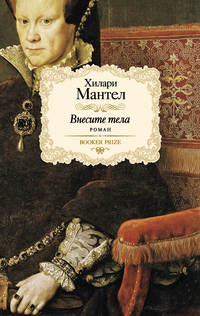
Цитаты из книги «Внесите тела», страница 3

Глядя, как Генрих смеётся, как молится, как скачет в окружении свиты лесной дорогой, недолго решить, что на троне тот сидит так же крепко, как и в седле. Видимость обманчива. По ночам король не может уснуть, смотрит на резные стропила, считает свои дни. Спрашивает: «Кромвель, Кромвель, что мне делать?» Кромвель, спаси меня от императора. Кромвель, спаси меня от Папы. Потом зовёт своего архиепископа Кентерберийского, Томаса Кранмера, и вопрошает: «Проклята ли моя душа?»
- Нет, - отвечает он.
- Почему?
- Это не моя цель и не мои методы.
Порой мое воображение не поспевает за событиями, но я усердно тружусь, чтобы нагнать их.
Если выбрал путь, не оправдывайся.
Angels are messengers. They are creatures with a mind and a will. We do not know for a fact that their plumage is like the plumage of falcons, crows, peacocks. They hardly visit men nowadays. Though in Rome he knew a man, a turnspit in the papal kitchens, who had come face to face with an angel in a passage dripping with chill, in a sunken store room of the Vatican where cardinals never tread; and people bought him drinks to make him talk about it. He said the angel’s substance was heavy and smooth as marble, its expression distant and pitiless; its wings were carved from glass.
It is not easy to explain to a young man like Wriothesley why he values Wyatt. He wants to say, because, good fellows though you are, he is not like you or Richard Riche. He does not talk simply to hear his own voice, or pick arguments just to win them. He is not like George Boleyn: he does not write verses to six women in the hope of bundling one of them into a dark corner where he can slip his cock into her. He writes to warn and to chastise, and not to confess his need but to conceal it. He understands honour but does not boast of his own. He is perfectly equipped as a courtier, but he knows the small value of that. He has studied the world without despising it. He understands the world without rejecting it. He has no illusions but he has hopes. He does not sleepwalk through his life. His eyes are open, and his ears for sounds others miss.
A widow well-provided can cut a figure in the world. A merchant’s wife can with diligence and prudence take business matters into her hands, and squirrel away a store of gold. A labouring woman ill-used by a husband can enlist robust friends, who will stand outside her house all night and bang pans, till the unshaven churl tips out in his shirt to chase them off, and they pull up his shirt and mock his member. But a young married gentlewoman has no way to help herself. She has no more power than a donkey; all she can hope for is a master who spares the whip.
Once he had watched Liz making a silk braid. One end was pinned to the wall and on each finger of her raised hands she was spinning loops of thread, her fingers flying so fast he couldn’t see how it worked. ‘Slow down,’ he said, ‘so I can see how you do it,’ but she’d laughed and said, ‘I can’t slow down, if I stopped to think how I was doing it I couldn’t do it at all.’
But Parliament cannot see how it is the state’s job to create work. Are not these matters in God’s hands, and is not poverty and dereliction part of his eternal order? To everything there is a season: a time to starve and a time to thieve. If rain falls for six months solid and rots the grain in the fields, there must be providence in it; for God knows his trade. It is an outrage to the rich and enterprising, to suggest that they should pay an income tax, only to put bread in the mouths of the workshy. And if Secretary Cromwell argues that famine provokes criminality: well, are there not hangmen enough?
‘Gregory, you know St Uncumber? You say that women pray to her to be rid of useless husbands. Now, is there a saint that men can pray to if they wish to be quit of their wives?’
‘I don’t think so.’ Gregory is shocked. ‘The women pray because they have no other means. A man can consult a cleric to find why the marriage is not licit. Or he can chase her away and pay her money to stay in a separate house. As the Duke of Norfolk pays his wife.’